Sacrificial Anode Cathodic Protection
Sacrificial anode cathodic protection technology is a long-lasting metal corrosion prevention technology based on the principles of electrochemical corrosion. It has become a core technological solution for metal corrosion protection in ships, offshore structures, buried pipelines, storage tank facilities, and water conservancy projects.
- Zinc Anode
- Aluminum Anode
- Magnesium Anode
- Customized Anode
- Quality Report
- Bolt Sacrificial Anode
- Welded Sacrificial Anode
- Bracelet Sacrificial Anode
- Ribbon Sacrificial Anode
- Plate Sacrificial Anode
- EN 12496
- ASTM B843
- ASTM B418
- DNVGL-RP-B401
- MIL-DTL-18001L
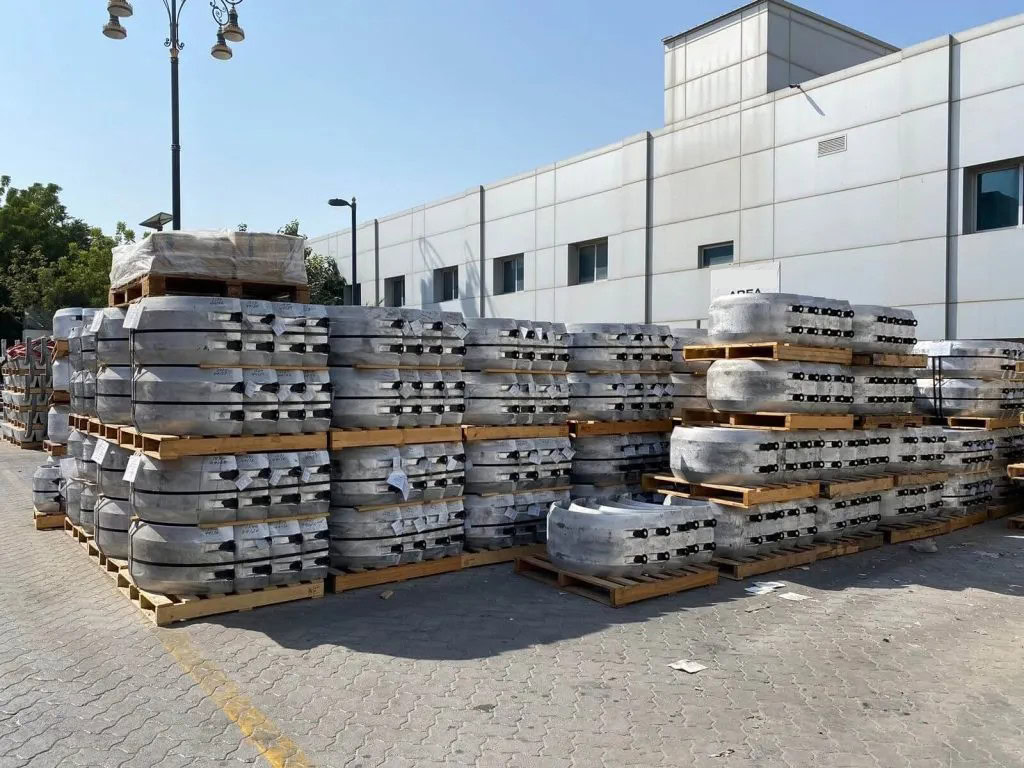
Manufacturing Full Range of Sacrificial Anodes
Wstitanium is a leading manufacturer of sacrificial anodes in China, focusing on three main sacrificial anode systems: zinc, aluminum, and magnesium. Our products cover cathodic protection in marine, soil, and freshwater environments, adhering to international standards such as EN 12496, ASTM B418/B418M-20, ASTM B843, DNVGL-RP-B401, AS 2239, and MIL-DTL-18001L. Quality inspection reports include (elemental composition, potential, current efficiency, etc.), meeting CE and RoHS requirements.






Zinc, aluminum, and magnesium sacrificial anodes cover application requirements ranging from low resistivity (seawater, ≤10 Ω·m) to high resistivity (dry soil, >1000 Ω·m). Zinc anodes are suitable for medium to low resistivity environments, aluminum anodes for high-salinity seawater environments, and magnesium anodes for high-resistivity soil environments. The structural design of sacrificial anodes has been continuously optimized, evolving from welded types to include bolted, bracelet, ribbon, and rod-shaped structures to meet the special installation requirements of irregularly shaped components, removable components, and long-distance pipelines.
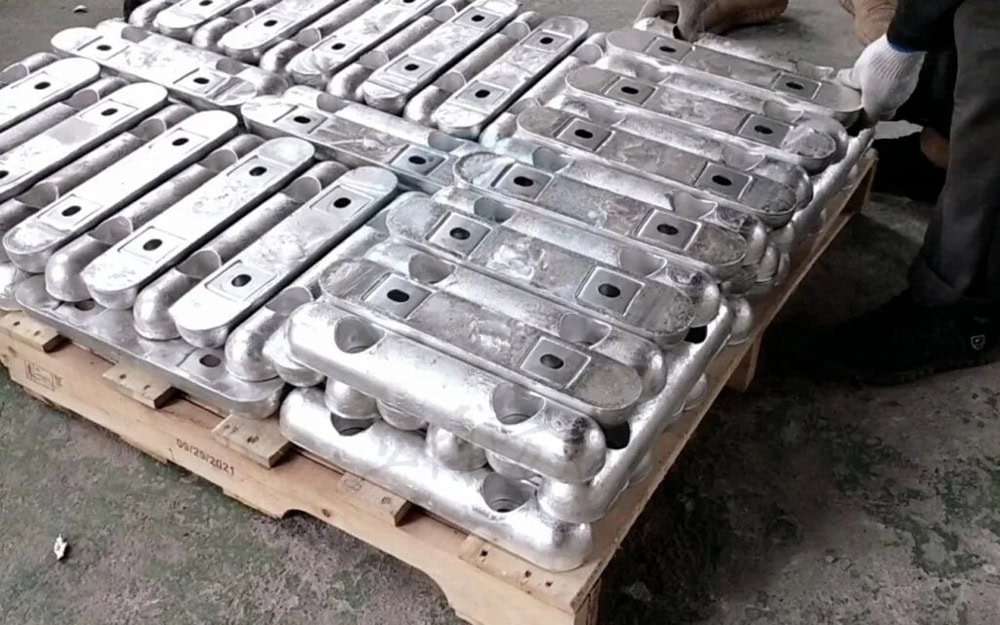
Aluminum anode (cadmium-free and environmentally friendly). It is suitable for media such as seawater and saline mud (resistivity ≤ 1000 Ω·m). Open-circuit potential: -1.05V to -1.12V (vs CSE), actual capacity ≥ 2400 Ah/kg, current efficiency ≥ 85%, theoretical consumption rate 0.8 kg/(A·year). Impurities are strictly controlled: Fe ≤ 0.1%, Cu ≤ 0.01%. It is not suitable for high-purity freshwater.
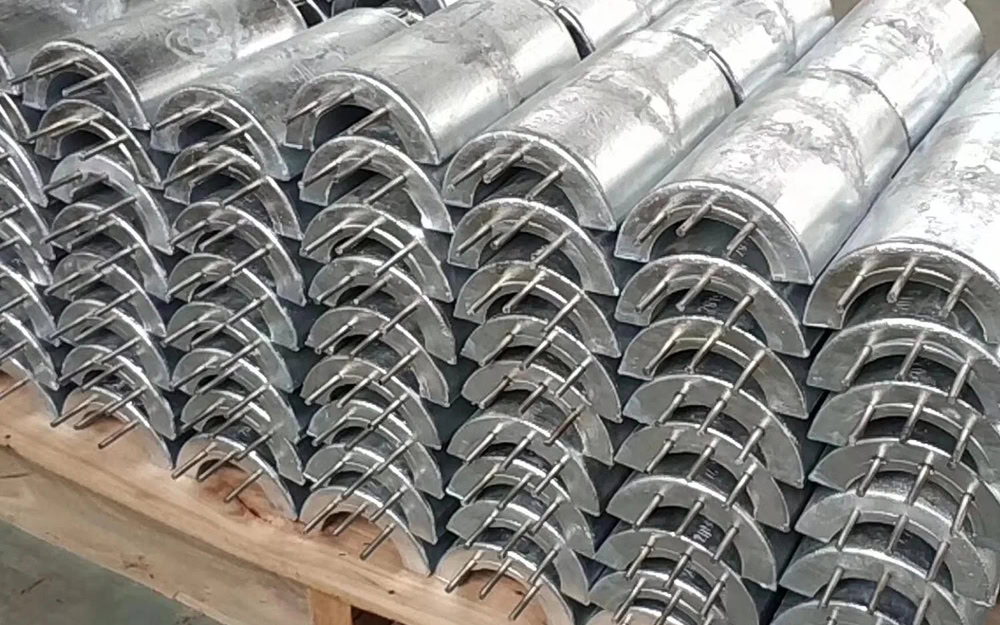
Zinc anode substrate is high-purity zinc, and the main alloy systems are Zn-Al and Zn-Al-Cd, suitable for seawater (resistivity ≤ 15 Ω·m) and soil (resistivity ≤ 500 Ω·m). Open-circuit potential: -1.05V to -1.15V (vs CSE), actual capacity ≥ 780 Ah/kg, current efficiency ≥ 95%, soil environment capacity ≥ 530 Ah/kg, efficiency ≥ 65%. Impurities: Fe ≤ 0.005%, Cu ≤ 0.005%. It is the most popular anode.
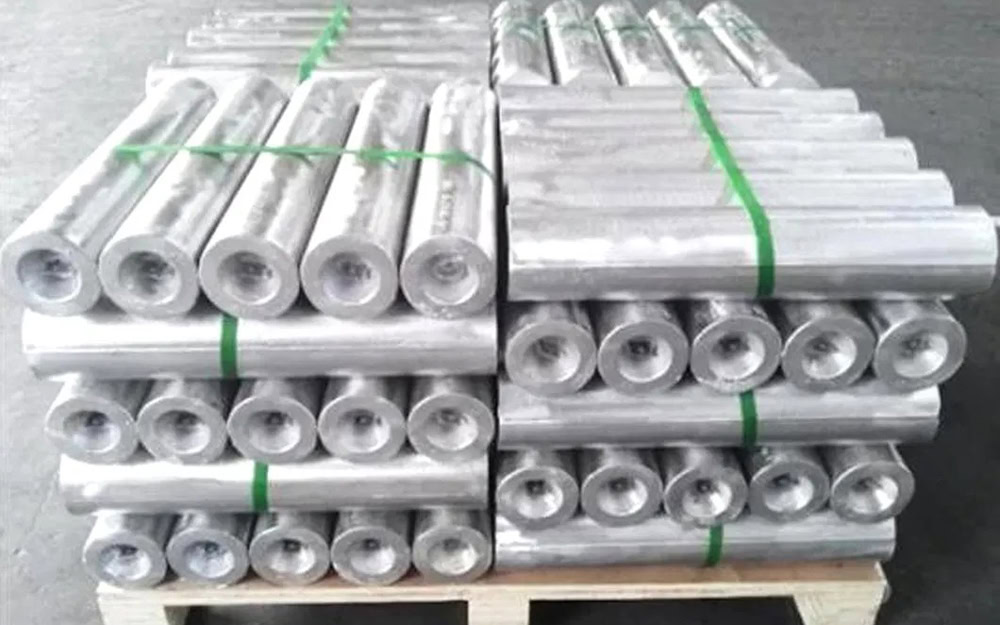
Magnesium anodes have a very strong driving potential and are suitable for high-resistivity media (soil ≥ 500 Ω·m, freshwater ≥ 1000 Ω·m). They are the only viable sacrificial anodes for high-resistance environments. Open circuit potential is -1.55V to -1.82V (vs CSE), with an actual capacity of ≥1100 Ah/kg and current efficiency of ≥50%. Impurity: Fe≤0.02% and Cu≤0.004%. They are not suitable for seawater.
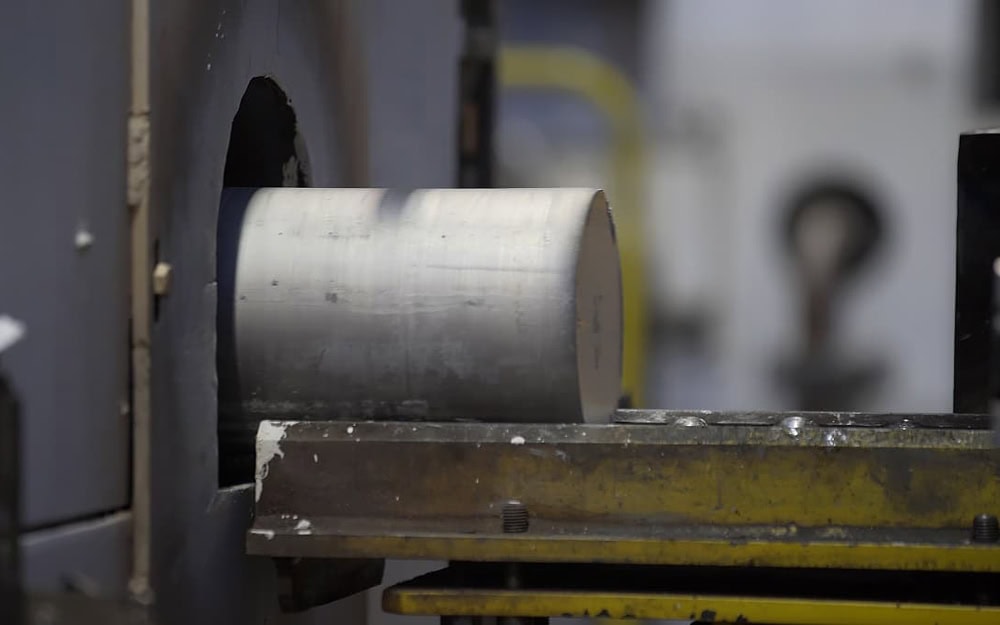
Extruded Sacrificial Anodes
The grain size is refined to 5-10 μm, the density is ≥99.5%, and there are no casting defects. The extruded aluminum anode (Al-Zn-In) exhibits a seawater current efficiency of ≥90% and a capacity of ≥2750 Ah/kg; zinc: ≥88%, ≥760 Ah/kg; magnesium: ≥55%, ≥1200 Ah/kg. The extruded zinc strip anode has an 8% lower consumption rate than the cast anode, extending its lifespan by 15%. Disadvantage is that the cost is 20% to 30% higher.
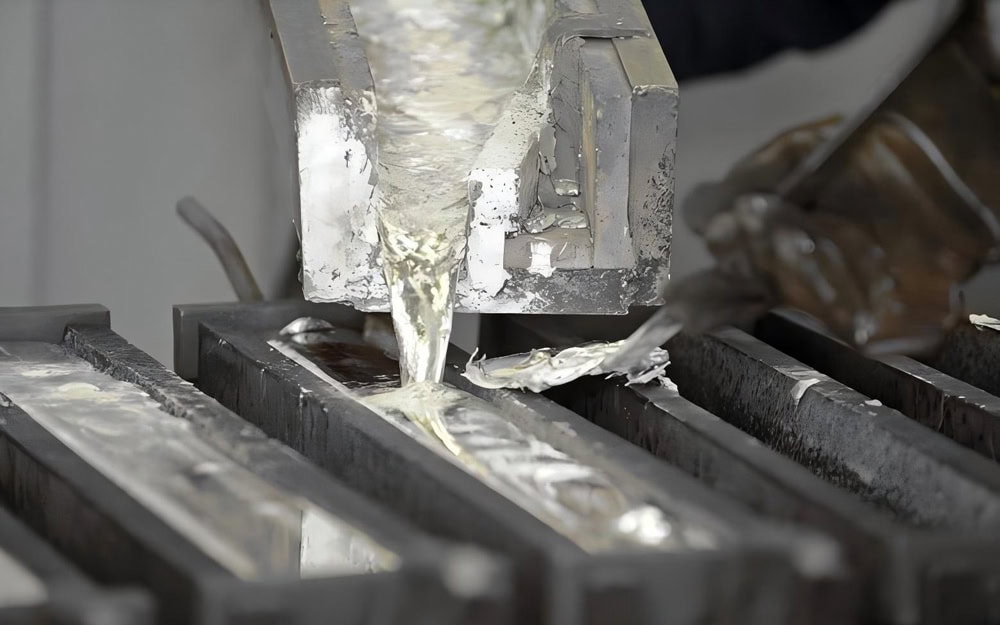
Cast Sacrificial Anodes
Density ≥ 98.5%. Aluminum cast anodes have a current efficiency of ≥ 85% and a capacity of ≥ 2400 Ah/kg; zinc ≥ 90%, ≥ 780 Ah/kg; magnesium ≥ 50%, ≥ 1100 Ah/kg. Defect depth ≤ 2 mm, dimensional tolerance ±3 mm, weld strength ≥ 180 MPa. Advantages include low cost and flexible shape; disadvantages include coarse grain structure, slightly higher self-corrosion, and a current efficiency 5% to 10% lower than extruded anodes.
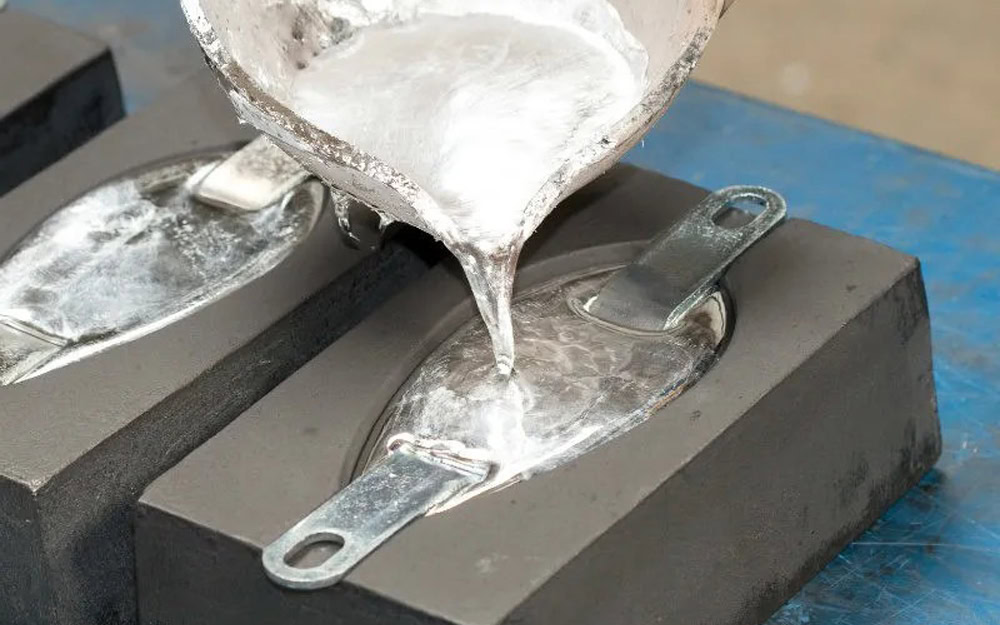
Bolted Sacrificial Anodes
The anode has pre-drilled bolt holes, especially suitable for applications requiring regular anode replacement, such as ship ballast tanks, freshwater cooling systems, and storage tank inner walls. Contact resistance ≤0.002Ω. Bolts require anti-corrosion coating. Advantages: easy installation, removable and replaceable, no welding damage; disadvantages: slightly inferior electrical connectivity compared to welded anodes.
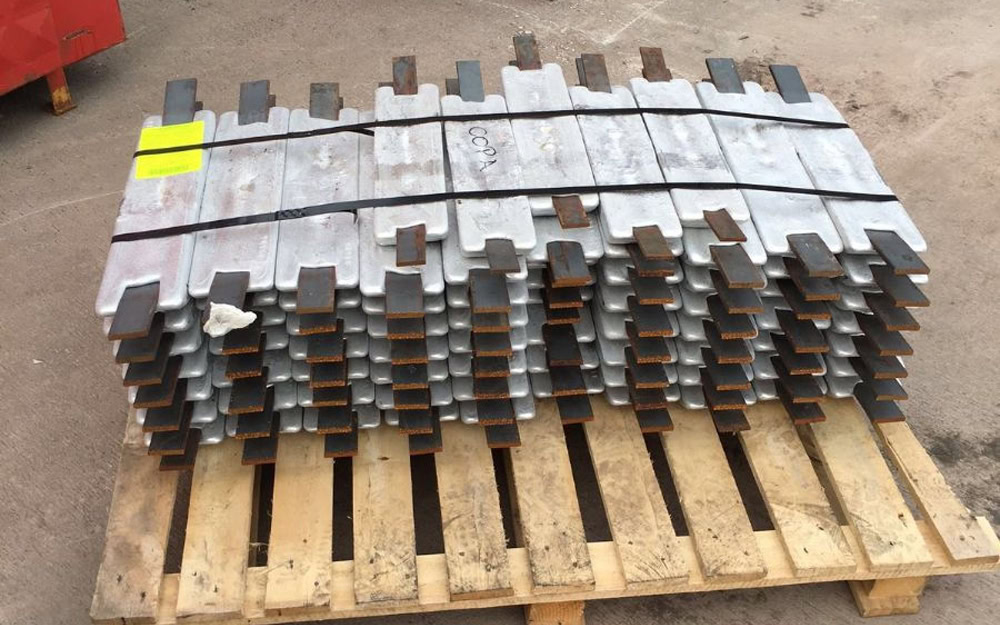
Welded Sacrificial Anodes
The anode has a built-in hot-dip galvanized steel core, which is directly welded to the protected structure. Weld strength ≥180MPa (zinc anode), ≥200MPa (aluminum anode). Electrochemical performance is consistent with cast anodes of the same base material: zinc open-circuit potential -1.05V~-1.15V (vs CSE), capacity ≥780Ah/kg; aluminum -1.05V~-1.12V (vs CSE), capacity ≥2400Ah/kg. Contact resistance ≤0.001Ω.
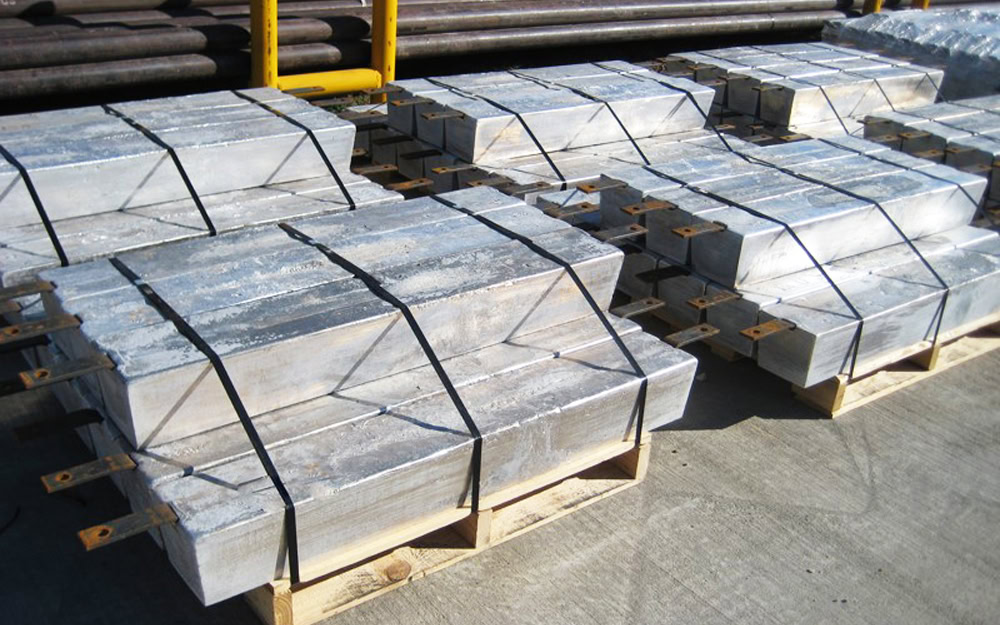
Plate Sacrificial Anodes
Customizable dimensions (common size: 500×300×50mm), suitable for large flat components. Installation can be done by welding or bolting, with a spacing of 50-100cm when multiple units are installed in parallel. Advantages include strong adaptability to large areas and uniform current distribution; disadvantages include high rigidity, making it unsuitable for curved components.
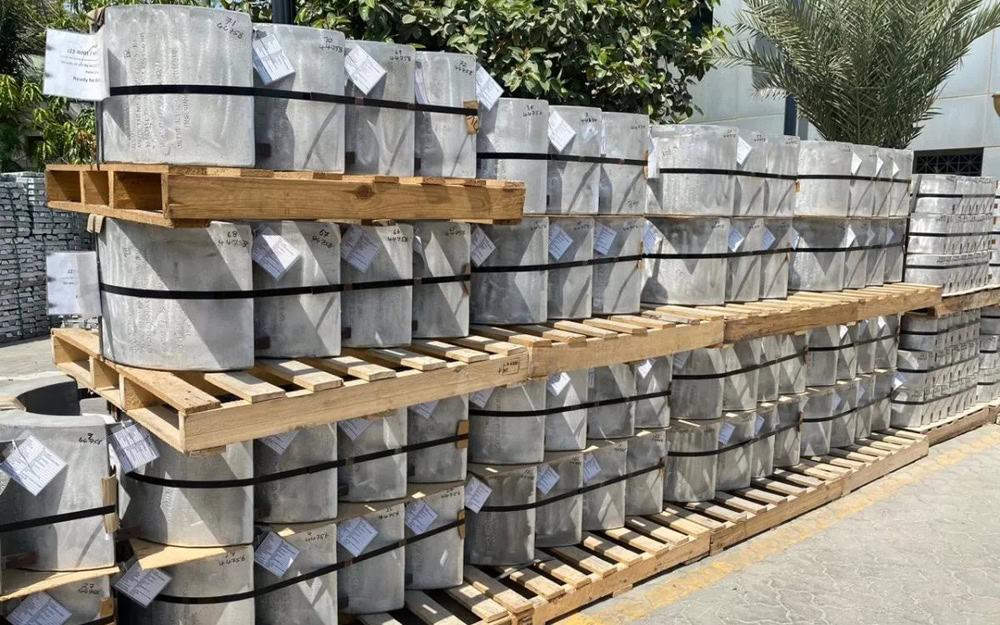
Bracelet Sacrificial Anodes
Designed specifically for tubular components, it features a two-part, semi-circular structure. When assembled, it forms a bracelet-like structure that wraps around the pipe. The inner diameter matches the pipe diameter with a tolerance of ±5mm. Secured with bolts, it is suitable for subsea and river-crossing pipelines. Its advantages include a tight fit to the pipe and uniform current distribution.
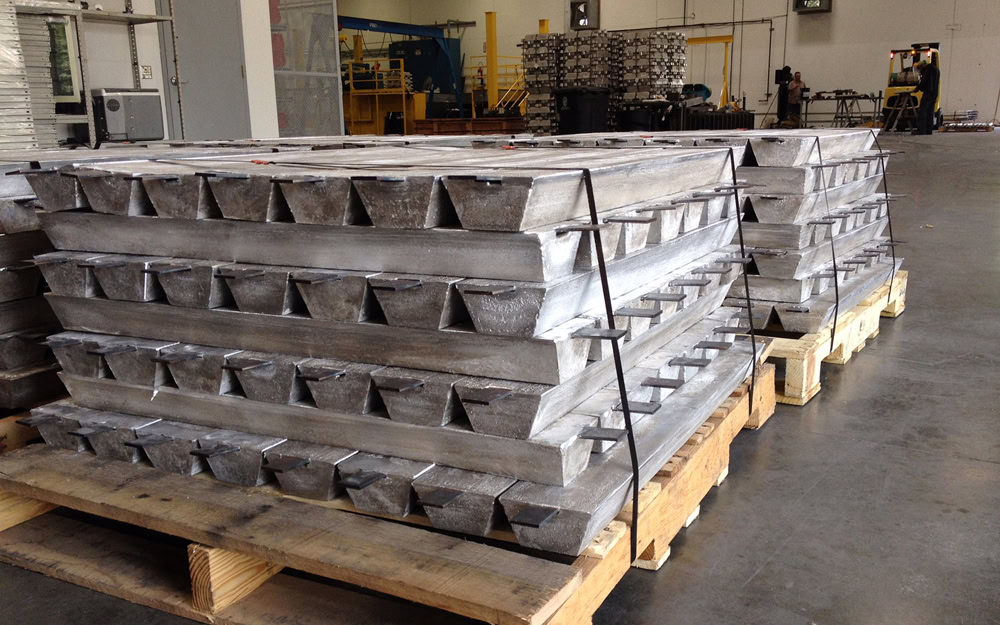
Block Sacrificial Anodes
Flexible installation options: weldable, bolt-on, or buried. When buried, the anode must be placed 0.5m below the frost line and surrounded by backfill material (zinc-based: gypsum:bentonite:sodium sulfate = 7:2:1; aluminum-based: bentonite + calcium sulfate = 3:1). Advantages include low cost; disadvantages include concentrated current density and potential protection blind spots.
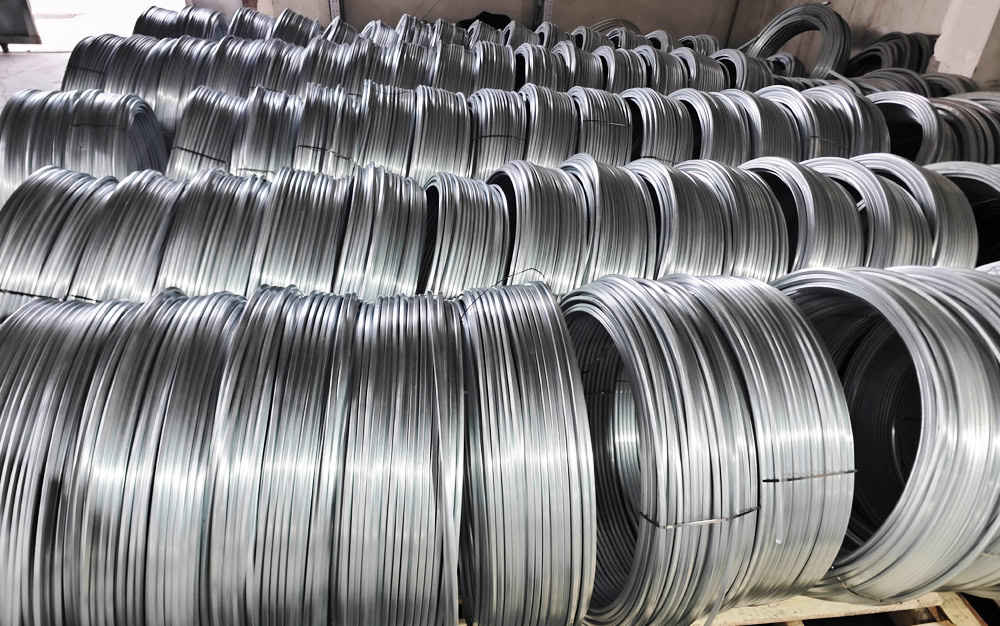
Ribbon Sacrificial Anodes
Extruded, with a thickness of 3-8mm and a width of 50-150mm, containing a continuous steel or copper core, and a density of ≥99.5%. It can be bent and wrapped, adapting to complex structures such as pipe crossings, pipes inside casings, tank corners, and concrete reinforcement. Advantages include lightweight and continuous installation; disadvantages include low mechanical strength.
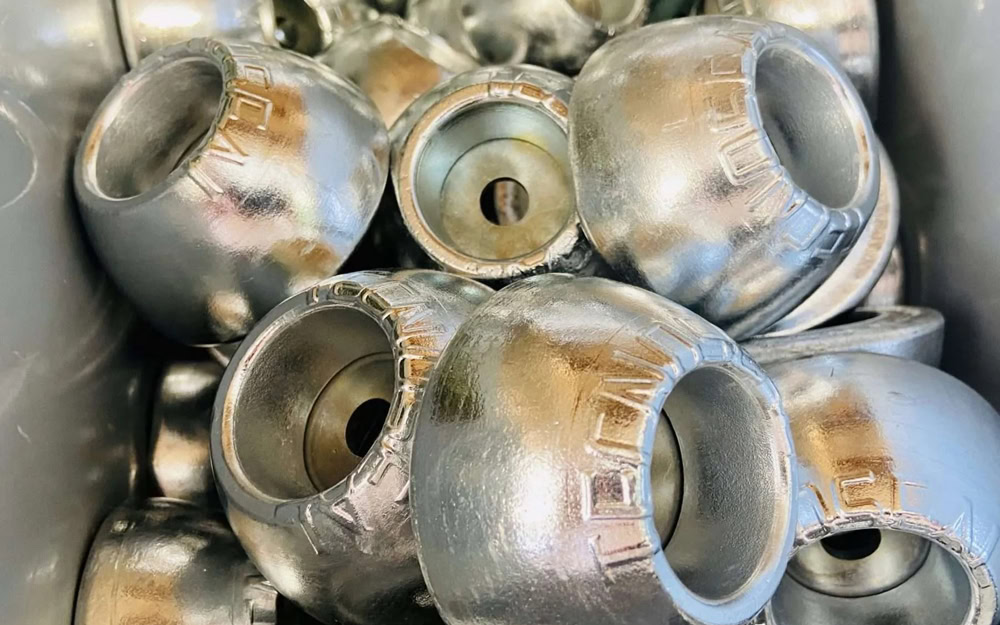
Disc Sacrificial Anodes
Diameter 100~500mm, suitable for local protection of planar or curved components. Suitable for seawater cooling systems, tank bottoms, and rudder blade end faces. Bolted installation, tightly fitted to the protected object, contact resistance ≤0.002Ω. Advantages: precise local protection; Disadvantages: not suitable for long-distance, large-area protection.
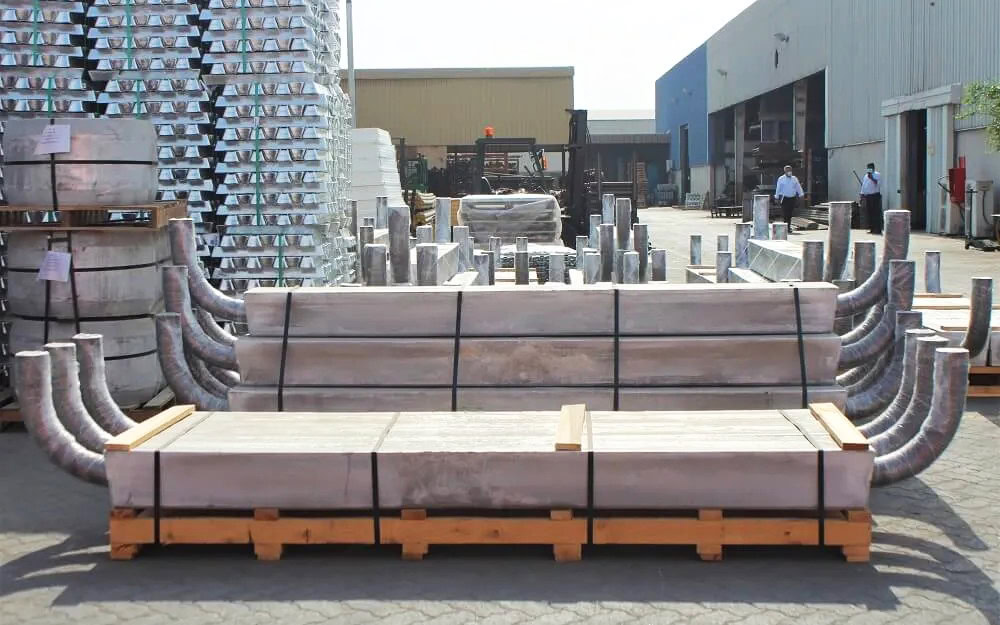
Aluminum-zinc-indium-cadmium
Al (balance), Zn 4.0%~6.0%, In 0.01%~0.03%, Cd 0.02%~0.05%, impurities Fe≤0.08%, Cu≤0.008%. Current efficiency is 2%~3% higher than aluminum-zinc-indium anodes. Suitable for harsh marine environments (deep sea, high salinity). Note: Cadmium is a heavy metal and is prohibited in environmentally sensitive applications; it must comply with RoHS restrictions.
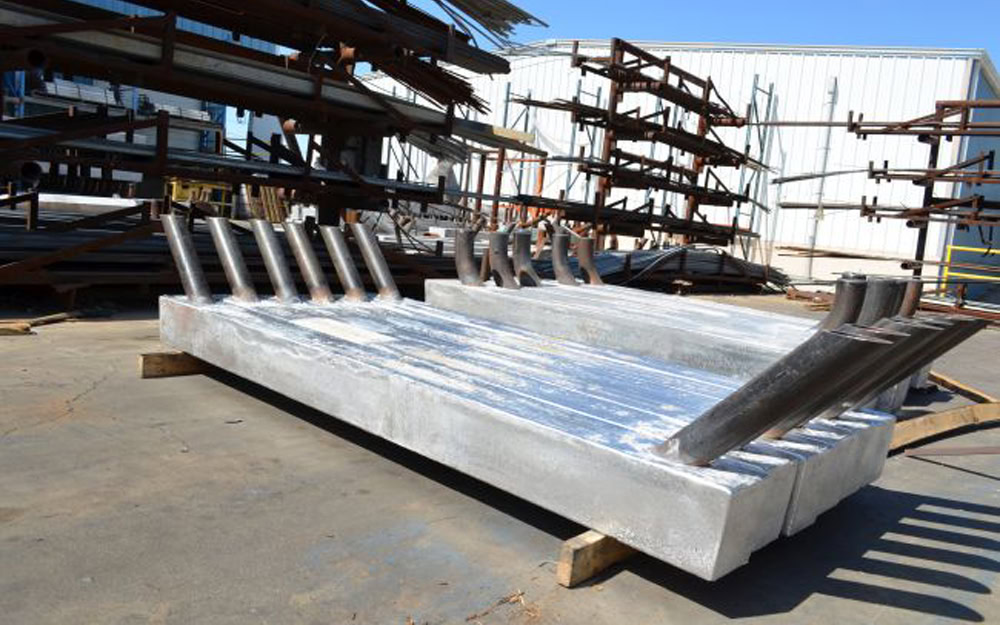
Aluminum-zinc-indium anodes
Aluminum-zinc-indium sacrificial anodes are a mainstream category of aluminum-based anodes. Composition: Al balance, Zn 2.0%~6.0%, In 0.01%~0.02%, impurities Fe≤0.1%, Cu≤0.01%, Si≤0.1%, cadmium-free and environmentally friendly, suitable for seawater and saline mud environments. Grain size refined to 10~20μm, mechanical strength ≥130MPa, elongation ≥3%.
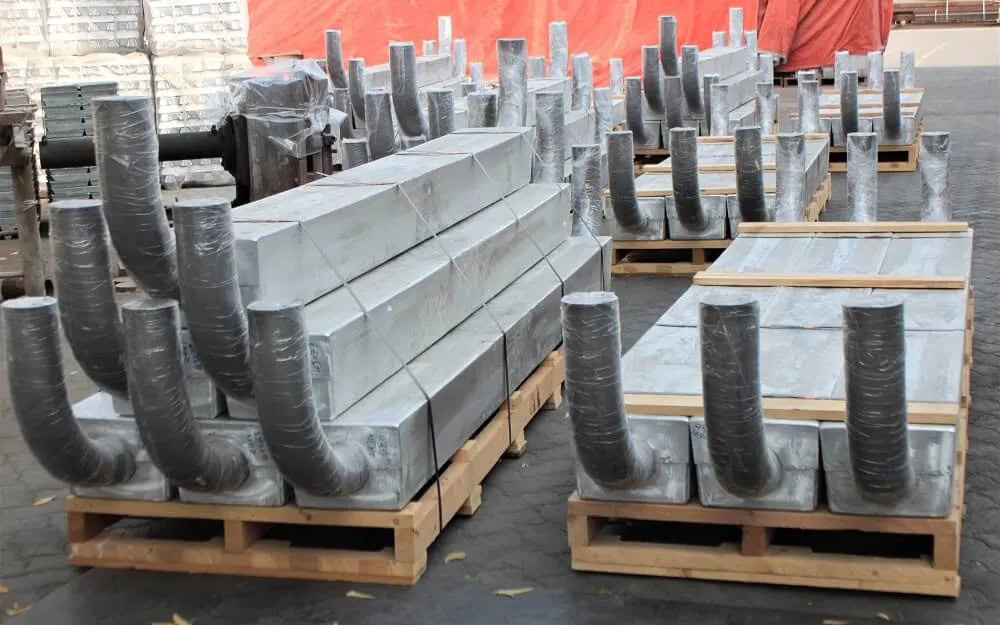
Aluminum-zinc-indium-silicon
Al (balance), Zn 3.0%~5.0%, In 0.01%~0.02%, Si 0.1%~0.3%. Silicon improves the surface hardness and wear resistance of the anode. Impurities Fe≤0.1%, Cu≤0.01%. Suitable for high-flow rate (≥5m/s) seawater and sandy seawater environments (such as navigation channel gates). Manufacturing: Casting + aging treatment, refining the silicon phase distribution to avoid localized passivation.
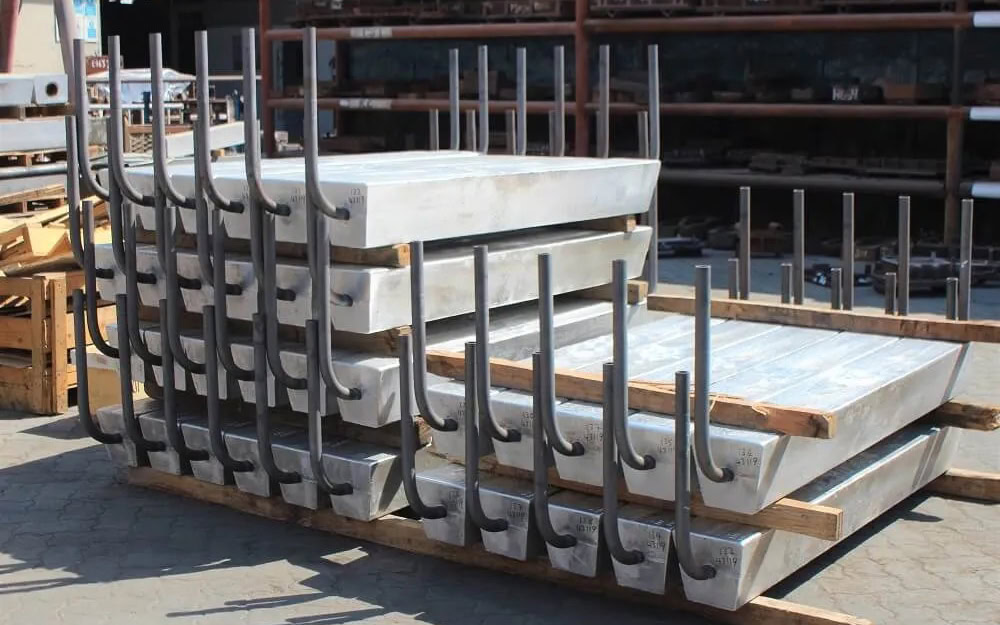
Al-Zn-In-Ma-Ti Sacrificial Anodes
Al balance, Zn 2.5%~4.5%, In 0.015%~0.03%, Mg 0.2%~0.5%, Ti 0.05%~0.1%. Magnesium refines grain size, titanium improves corrosion resistance, and impurities are strictly controlled: Fe≤0.05%, Cu≤0.005%. Tensile strength ≥150MPa, elongation ≥4%, can withstand high pressure and low-temperature impact in deep-sea environments. High cost, only suitable for extremely harsh conditions.
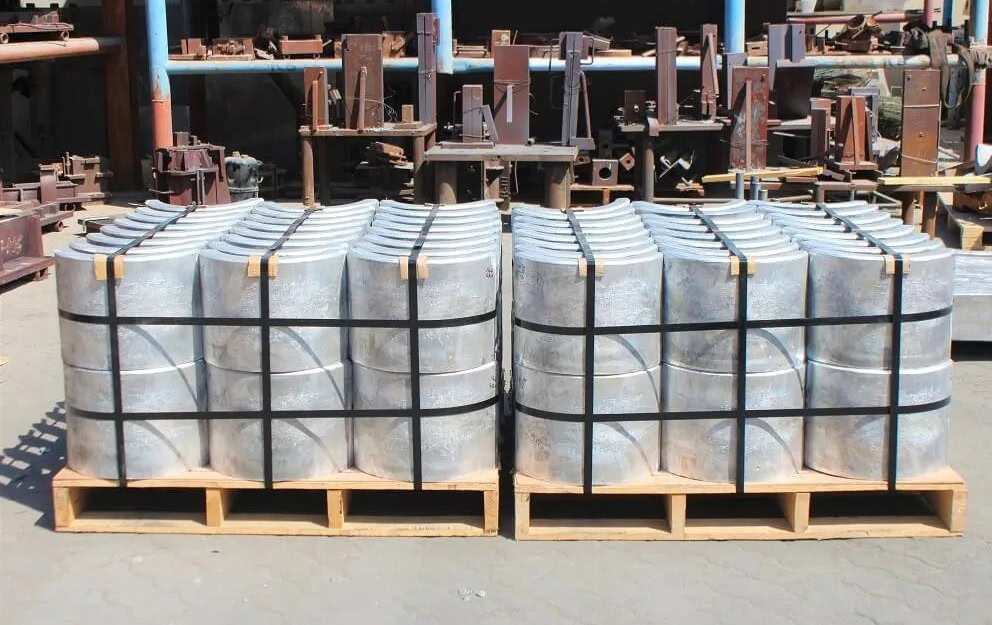
Aluminum-zinc-indium-tin anode
Al balance, Zn 4.0%~6.0%, Sn 0.01%~0.05%, impurities Fe≤0.1%, Cu≤0.01%, suitable for seawater, freshwater, soil. Especially suitable for environmentally sensitive areas (drinking water sources, coastal protected areas). 15% lower cost than aluminum-zinc-indium anodes. Freshwater temperature must be ≤60℃ during installation. Buried backfill material (bentonite + calcium sulfate = 3:1).
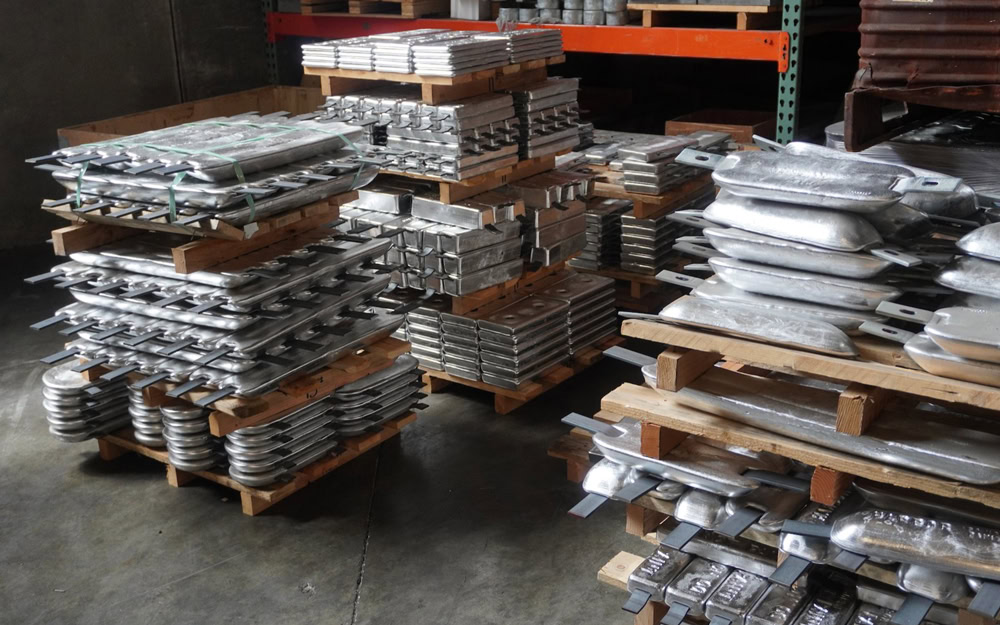
Pure zinc sacrificial anode
Zn≥99.99%, impurities Fe≤0.003%, Cu≤0.002%, Pb≤0.003%, suitable for low-current applications (such as freshwater storage tanks, small pipelines in low-resistance soil). Excellent compatibility with steel substrates, especially suitable for thin-walled components. Installation: bolted or directly buried; no backfill material required in freshwater environments. Lowest cost among zinc anodes.
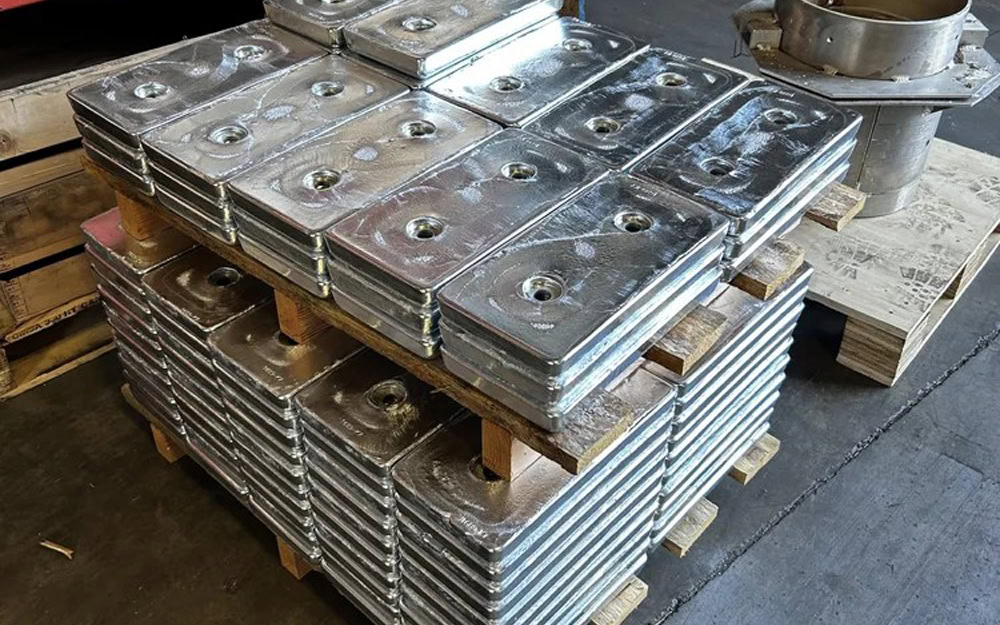
Zinc-aluminum (cadmium-free)
Environmentally friendly zinc-based anode. Zn balance, Al 0.1%~0.5%, cadmium-free and lead-free, impurities Fe≤0.005%, Cu≤0.005%, suitable for environmentally sensitive scenarios (drinking water sources, urban pipelines, offshore protected areas). Manufacturing: casting + annealing treatment, refined grain structure, density ≥98.5%. Cost is 5%~8% higher than zinc-aluminum-cadmium anodes.
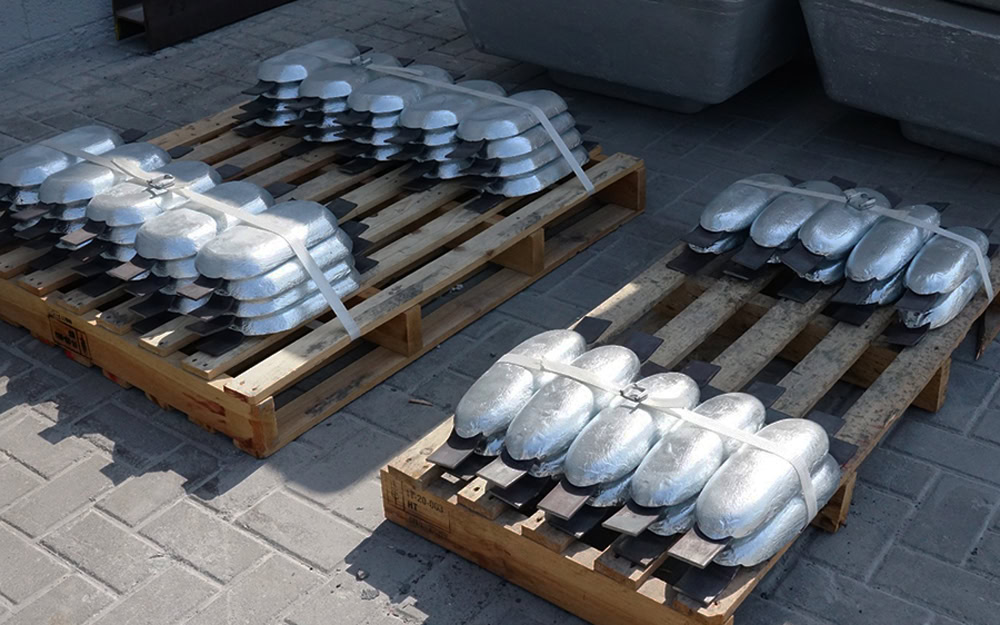
Zinc-aluminum-cadmium anode
Zn balance, Al 0.3%~0.6%, Cd 0.025%~0.07%, impurities Fe≤0.005%, Cu≤0.005%, Pb≤0.006%. Cadmium optimizes dissolution uniformity, suitable for seawater and low-resistivity soil (≤500Ω・m). Dissolution is uniform and sponge-like, without nodule formation. Density ≥98.5%, best compatibility with steel. Note: Cadmium is a polluting metal, restricted by EU RoHS regulations.
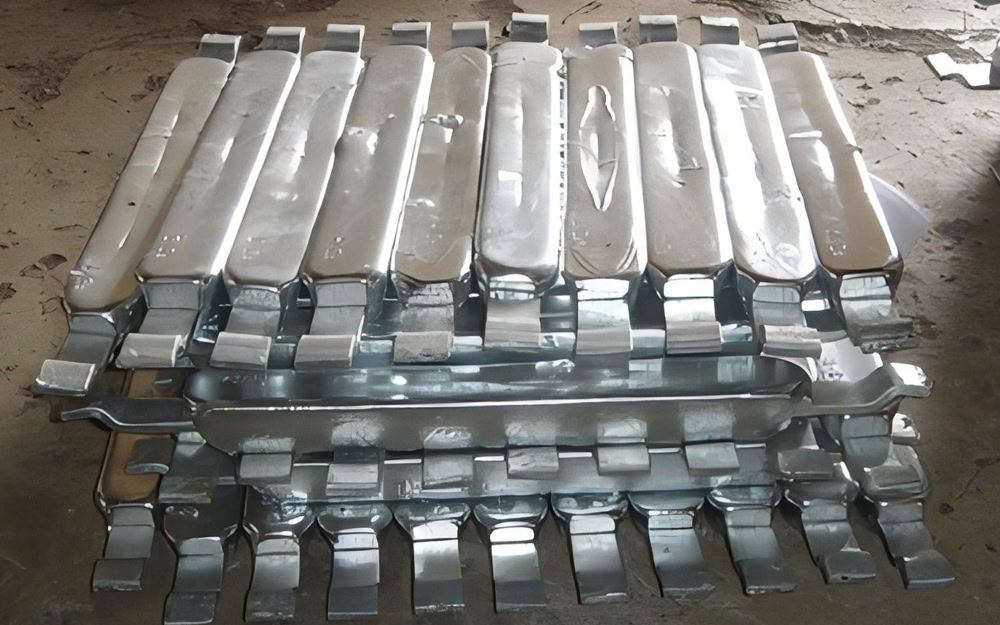
Zinc-aluminum-magnesium anode
Zinc-aluminum-magnesium sacrificial anodes perform exceptionally well in harsh corrosive environments such as marine environments and low-resistivity soils. The composition is Zn ≥ 95%, aluminum (Al: 0.3%~1.5%), and magnesium (Mg: 0.05%~0.2%). The content of impurities such as lead, iron, and copper is ≤ 0.1%. Zinc-aluminum-magnesium sacrificial anodes are more expensive than pure zinc anodes.
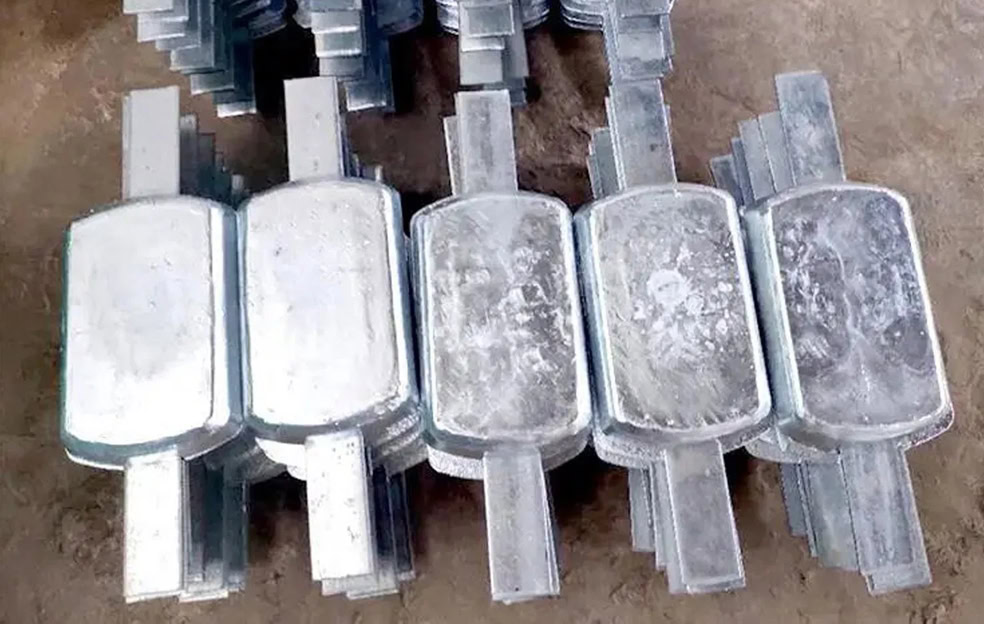
Pure magnesium sacrificial anode
Mg content ≥99.95%, impurities: Fe≤0.005%, Cu≤0.002%, Ni≤0.001%. Suitable for high-resistivity media (soil ≥1000Ω·m, freshwater ≥5000Ω·m). Cast, with a density ≥98%, and surface passivation. Contact resistance ≤0.002Ω. It is the preferred anode for high-resistivity environments. Its disadvantages are low current efficiency and rapid consumption. Not suitable for marine environments.
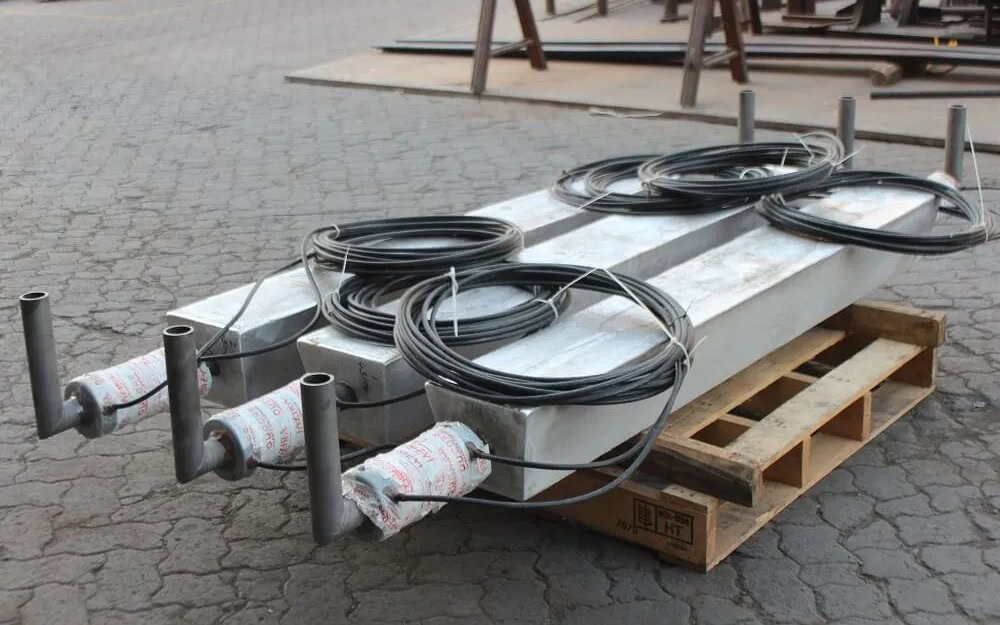
Magnesium-aluminum-zinc anode
Mg balance, Al 5.5%~6.5%, Zn 2.0%~3.0%, Mn ≥ 0.15%. Impurities Fe ≤ 0.02%, Cu ≤ 0.004%. Zinc enhances anode activity, and aluminum strengthens mechanical properties. It is suitable for medium to high resistivity soils (500~1000 Ω·m) and freshwater (1000~3000 Ω·m). Current efficiency ≥ 55%. Tensile strength ≥ 115 MPa, Brinell hardness 36~40 HB, elongation ≥ 2.5%. Cast, density ≥ 98%.
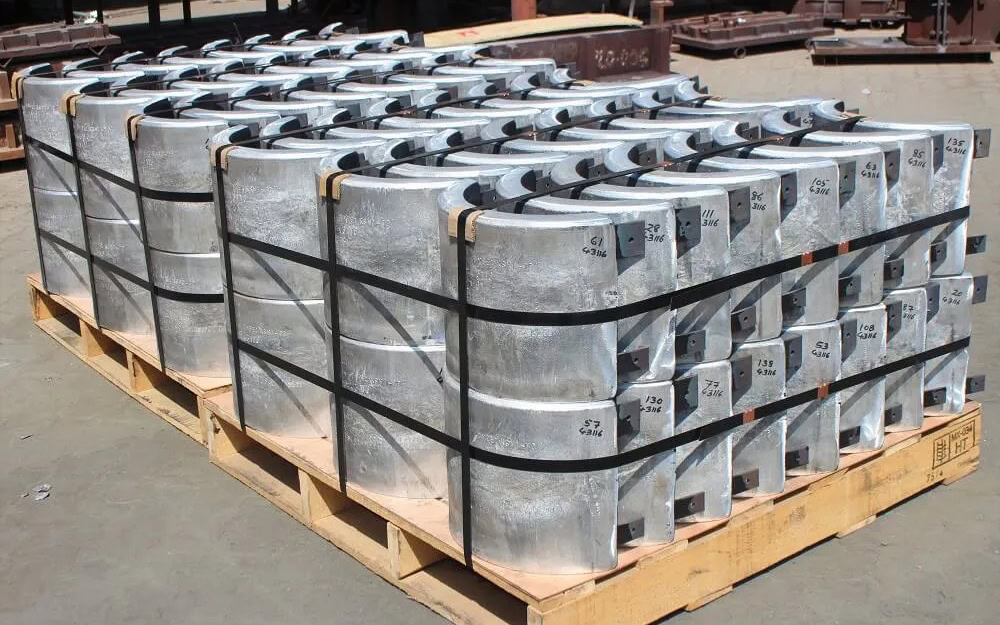
Rare earth magnesium anode
Mg balance, Al 5.3%~6.7%, Zn 2.5%~3.5%, Mn ≥ 0.15%, Ce/La rare earth 0.1%~0.5%. Impurities Fe ≤ 0.02%, Cu ≤ 0.004%. Rare earth elements improve activation and current efficiency. Brinell hardness 38~42 HB, tensile strength ≥ 120 MPa, elongation ≥ 3.5%. Suitable for high-resistivity concrete reinforcement and buried pipelines in extreme environments. 30%~40% higher cost.
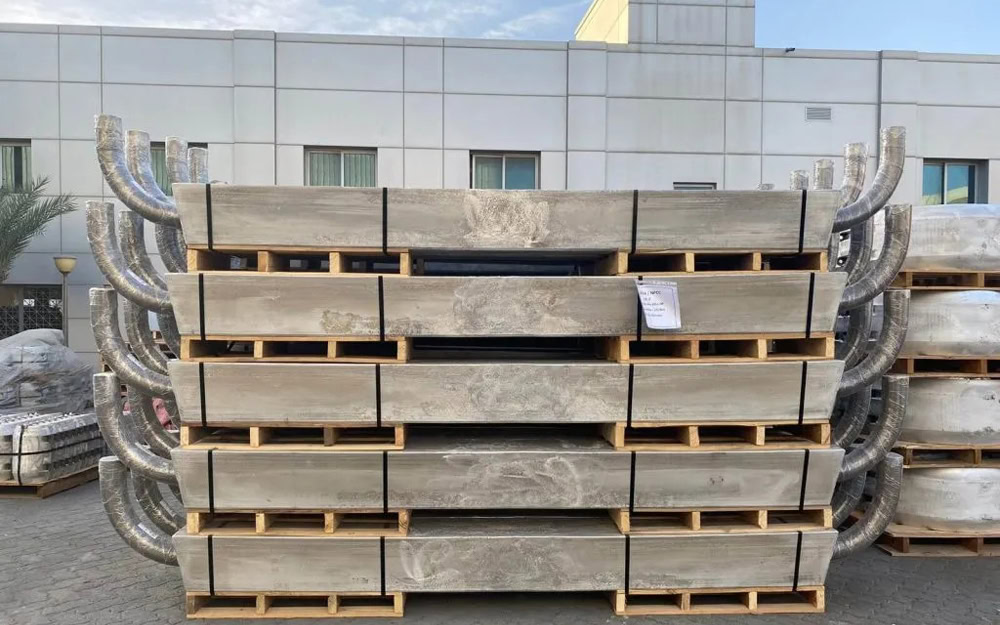
Marine sacrificial anode
Aluminum and zinc (magnesium prohibited), covering all marine scenarios. The steel core is stainless steel or hot-dip galvanized steel. Aluminum open circuit potential -1.05V~-1.12V (vs CSE), current efficiency ≥85%, capacity ≥2600Ah/kg; zinc -1.05V~-1.10V (vs CSE), efficiency ≥95%, capacity ≥780Ah/kg. Suitable for offshore platforms, subsea pipelines, dock steel piles, and ships. Welded/bolted fixing.
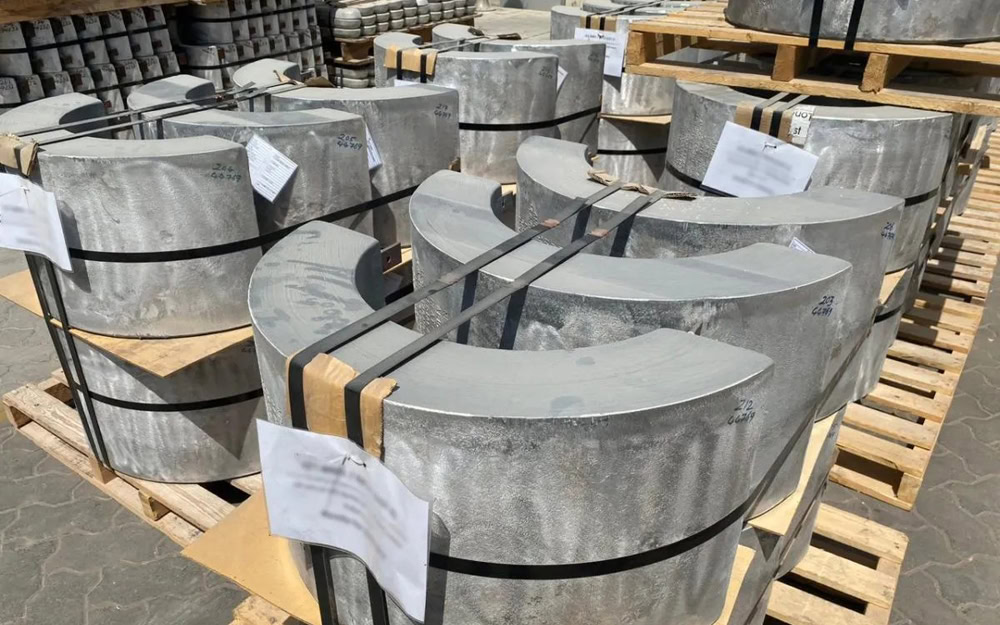
Pipeline sacrificial anode
For low-resistivity soil (≤500Ω・m), zinc anodes are selected; for medium-resistivity soil (500~1000Ω・m), aluminum anodes are selected; for high-resistivity soil (≥1000Ω・m), magnesium anodes are selected, mainly in bracelet and ribbon forms. Zinc anode current efficiency ≥65%, capacity ≥530Ah/kg; aluminum anode ≥80%, ≥2500Ah/kg; magnesium anode ≥50%, ≥1100Ah/kg.
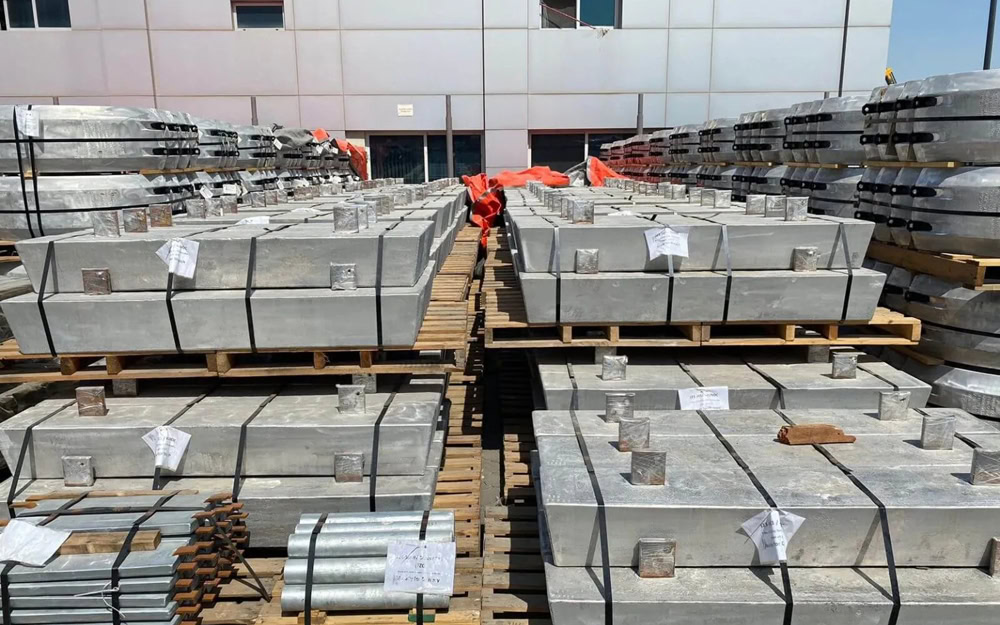
Ship hull sacrificial anode
Customized according to hull area (block type 5~50kg, strip type 1500×500×500mm), with hot-dip galvanized steel core. Welding/bolting installation. Contact resistance ≤0.001Ω. Magnesium anodes are prohibited for marine vessels (due to excessive consumption + hydrogen embrittlement), while magnesium anodes for inland freshwater vessels require density control.
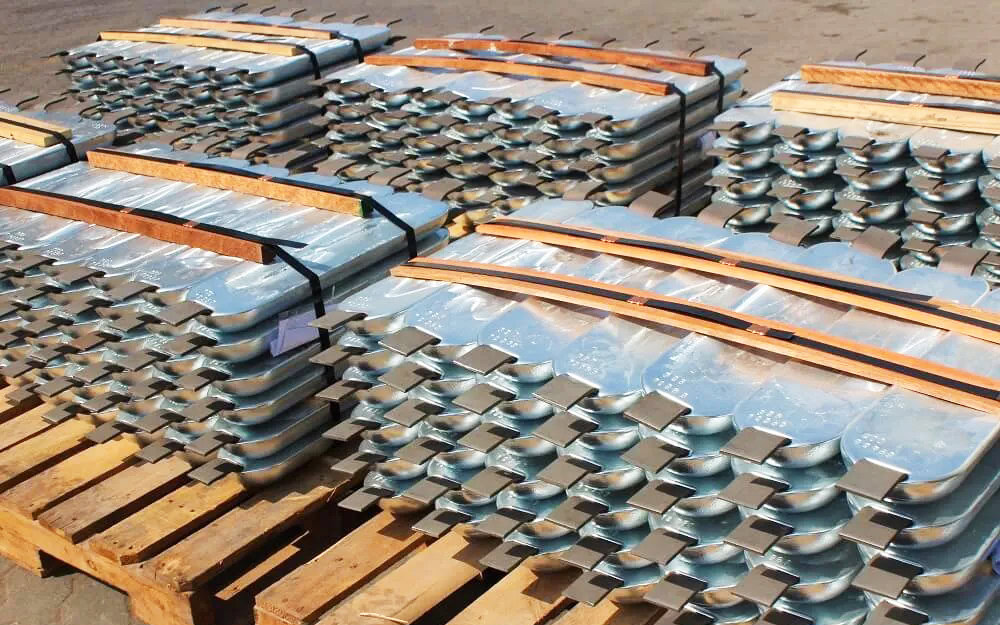
Seawater sacrificial anode
Magnesium anodes are prohibited in seawater. Aluminum (Al-Zn-In) open-circuit potential: -1.05V to -1.12V (vs CSE), current efficiency ≥85%, capacity ≥2600Ah/kg; Zinc (Zn-Al-Cd alloy): -1.05V to -1.15V (vs CSE), efficiency ≥95%, capacity ≥780Ah/kg. Available in block, bracelet, and disc shapes. The steel core is hot-dip galvanized steel. Welding or bolted fixing.
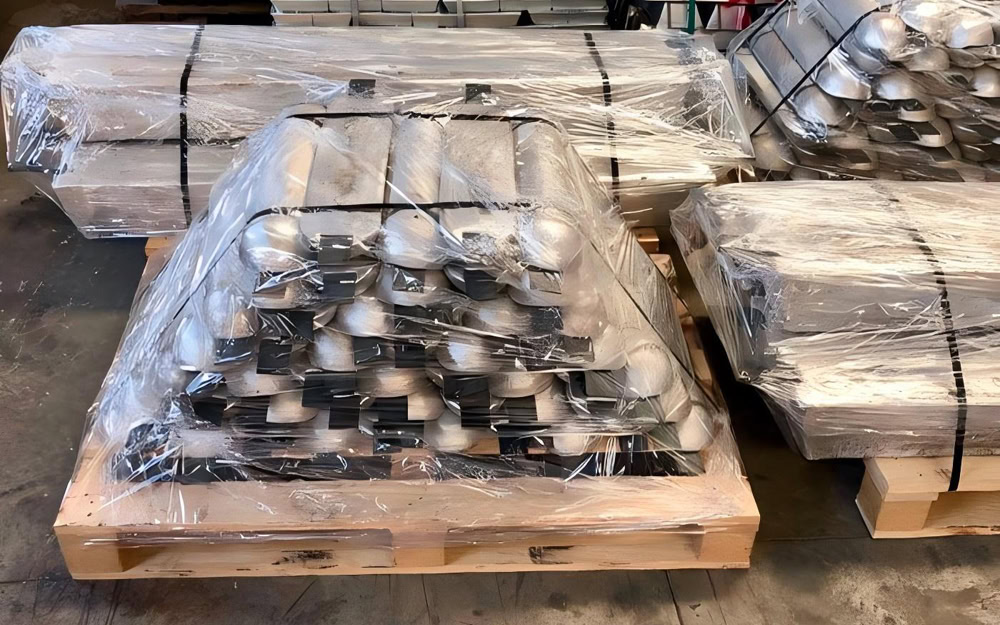
Freshwater sacrificial anode
Magnesium anodes are suitable for ultra-high resistance freshwater (resistivity 1000~5000Ω·m, pH 6.5~8.5). Aluminum and zinc anodes are the preferred environmentally friendly options. No heavy metal additives, compliant with RoHS. Installation by bolted fixing or plug-in embedding, contact resistance ≤0.002Ω, temperature ≤60℃.
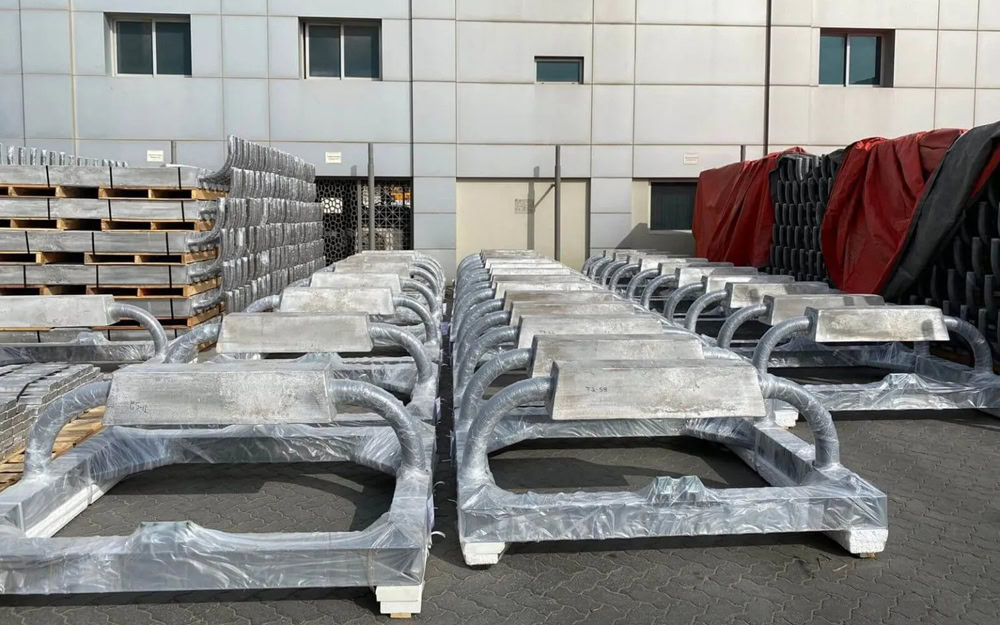
Soil sacrificial anode
Soil resistivity selection: ≤500Ω·m choose zinc-based, ≤1000Ω·m choose aluminum-based, ≥1000Ω·m choose magnesium-based. Contact resistance ≤0.001Ω. Burial depth exceeds the permafrost layer by more than 0.5m, and the distance from the pipeline is 1~3m. Environmentally friendly option: cadmium-free anodes.
Wstitanium's Anode Manufacturing Capabilities
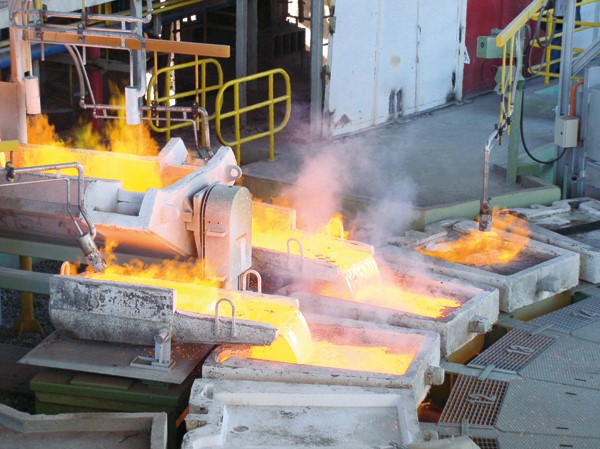
WSTitanium’s investment in its casting/extrusion plant covers an area of 4600 square meters, with an annual production capacity of 10,000 tons (total for aluminum, zinc, and magnesium sacrificial anodes).
WSTitanium has developed over 180 sets of molds of different specifications (weights ranging from 0.2kg to 150kg). Four large centrifugal casting machines can produce large anode castings with a diameter of up to 1700mm and a weight of up to 3000kg, suitable for the corrosion protection needs of heavy equipment such as offshore platforms and large storage tanks. Equipped with four medium-frequency vacuum induction melting furnaces (with capacities of 600kg and 1200kg respectively), precise control of melting temperature (±5℃) and alloy composition is achieved. Melting efficiency is increased by 50%, and energy consumption is reduced by 30%. The combination of lost-wax casting and sand casting techniques meets the manufacturing needs of both standard and irregularly shaped parts (such as bracelet-type, bracket-type, and tubular anodes). The dimensional tolerance of the sacrificial anodes is controlled within ±0.5mm, and the surface roughness Ra≤6.3μm, ensuring good contact and electrical connection between the anode and the protected structure.
Quality Inspection
WSTitanium has established a comprehensive quality control system, including ISO9001:2015, ISO14001:2015, and ISO45001:2018. The company has invested in advanced internal testing equipment, including direct-reading spectrometers, electrochemical workstations, potentiostats, and salt spray testing chambers. They are capable of performing comprehensive testing on key indicators such as alloy elements, open-circuit potential, current efficiency, consumption rate, and sealing performance. The quality inspection process is fully traceable.
Basic Information Verification
- Anode surface markings are complete (model, weight, standard number, production date)
- Steel core material meets standards (Q235 or equivalent carbon steel, compliant with EN 10025-2).
- Exposed length of the steel core is ≥50mm, free from rust and deformation, and the welding bevel is intact.
Chemical Composition Testing
- Al content: 0.3~0.6% (according to EN 12496) / 0.1~0.5% (according to ASTM B418)
- Cd content: 0.02~0.07% (according to EN 12496) / 0.025~0.07% (according to ASTM B418)
- Fe content ≤0.005%, testing method complies with EN ISO 15607 (direct reading spectrometry)
- Cu content ≤0.005%, testing method complies with EN ISO 15609-1 (chemical arbitration)
- Pb content ≤0.006%, no exceedance
- Total impurities ≤0.1% (EN standard) / ≤0.3% (ASTM standard)
Electrochemical Performance Testing
- Open Circuit Potential: -1.05~-1.10V (Ag/AgCl, seawater, ≤30℃), fluctuation ≤±0.02V
- Closed Circuit Potential: Seawater - 1.03V / Salt Mud - 0.98V (Ag/AgCl), 28-day fluctuation ≤±0.03V
- Seawater Capacity ≥780 Ah/kg, test method complies with EN 12473 (constant current discharge for 28 days)
- Seawater Current Efficiency ≥90%, no instances of efficiency below standard
- Dissolution Uniformity: Surface corrosion products are loose and easily detached, without pitting, crevice corrosion, or spongy corrosion.
Physical and Appearance Quality Inspection
- Density: No significant shrinkage cavities resulting in substandard density
- Surface Quality: No cracks, pores, inclusions, or burrs; surface roughness Ra ≤ 6.3μm
- Steel Core Bonding Strength: No gap between the steel core and zinc alloy; tensile strength ≥ 30MPa
- Dimensional Tolerances (according to the corresponding anode type)
- Trapezoidal Anode: Length ±3%/±25mm (whichever is stricter), width ±5%, straightness ≤ 2% of length
- Plate Anode: Length and width ±2%, thickness ±1mm, flatness ≤ 2mm/m
- Bracelet-type Anode: Inner diameter tolerance matches pipe diameter (≤300mm +4mm; 300-610mm +6mm), thickness ±3mm
- Rod Anode: Diameter ±2%, length ±3%, straightness ≤ 1% of length
Mechanical Properties Testing
- Tensile strength ≥120MPa (military grade ≥130MPa), compliant with EN ISO 6892-1
- Elongation ≥2% (military grade ≥2.5%), no brittle fracture
- Bending 45° without cracks; military grade additionally meets torsion ≥12000psi
- Steel core welding: no incomplete or missing welds, no defects detected by magnetic particle testing (MT)
Packaging Verification
- Meets target export standards (EN/ASTM/MIL)
- RoHS compliant: Cd content ≤0.01%
- REACH SVHC declaration: Cd and Pb included in the supply chain list
- Report: Moisture-proof packaging, with a copy of the test report for each batch
- Certificate of Conformity: Each item includes a certificate of conformity signed by the quality inspector
Shipping
Wstitanium collaborates with several highly professional freight forwarders to provide a variety of shipping options, ensuring the careful transportation of our sacrificial anode products. We ship dozens of containers to over 100 countries worldwide every month. We are always committed to providing you with top-quality products and growing together with your business.
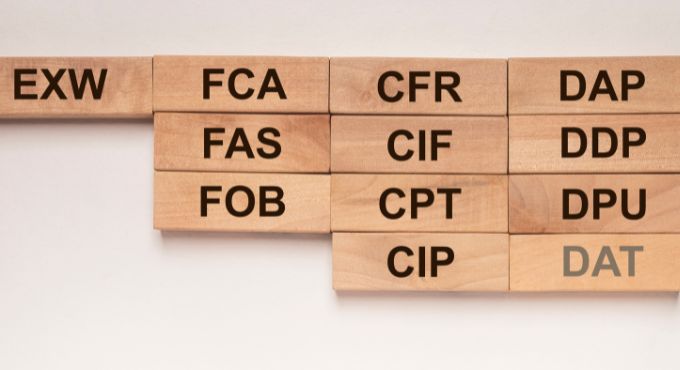
Typically, we quote using FOB Incoterms. If you prefer other shipping terms, such as EXW, C&F, CIF, etc., please let us know in advance. We can also provide DDP (Delivered Duty Paid) services for your orders.
- Air Freight
- Sea Freight
- Railway Freight
- Truck Shipping
- DHL
- Fedex
- UPS
- Your Freight Forwarder
WSTitanium offers advantages in cost control and customized services, with prices 20%-50% lower than international brands such as MATCOR and KATRADIS, while maintaining comparable performance. It also boasts the ability to quickly respond to customer customization needs (with production cycles 30% shorter than international brands). WSTitanium will continue to focus on innovation in sacrificial anode materials and cathodic protection technology, providing higher-quality products and solutions for the global industrial corrosion protection field.
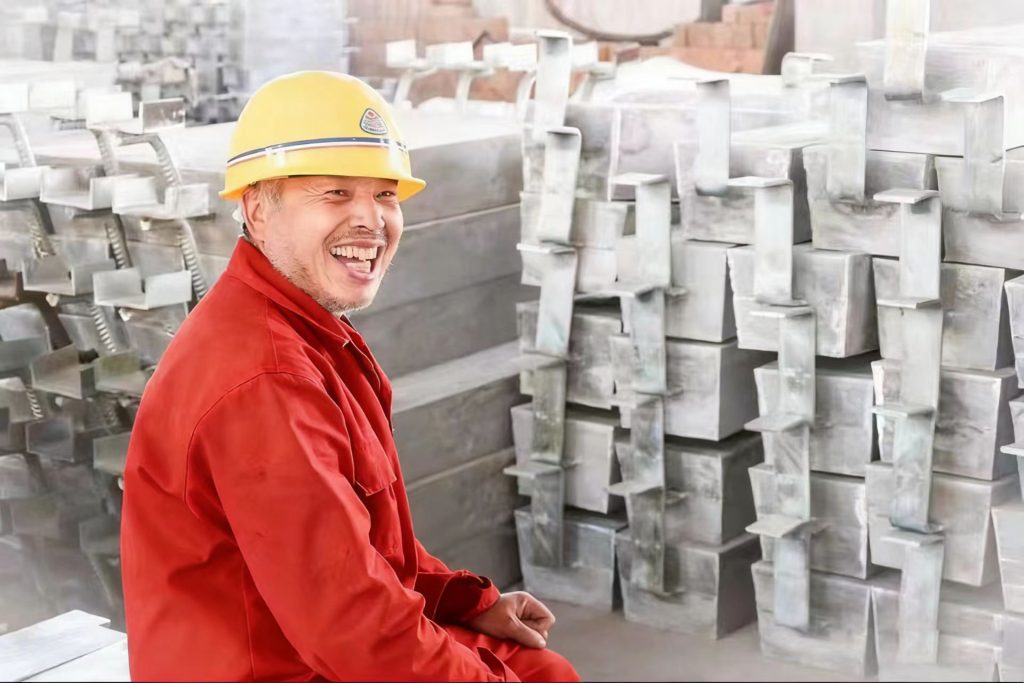
Respect to Our Workers
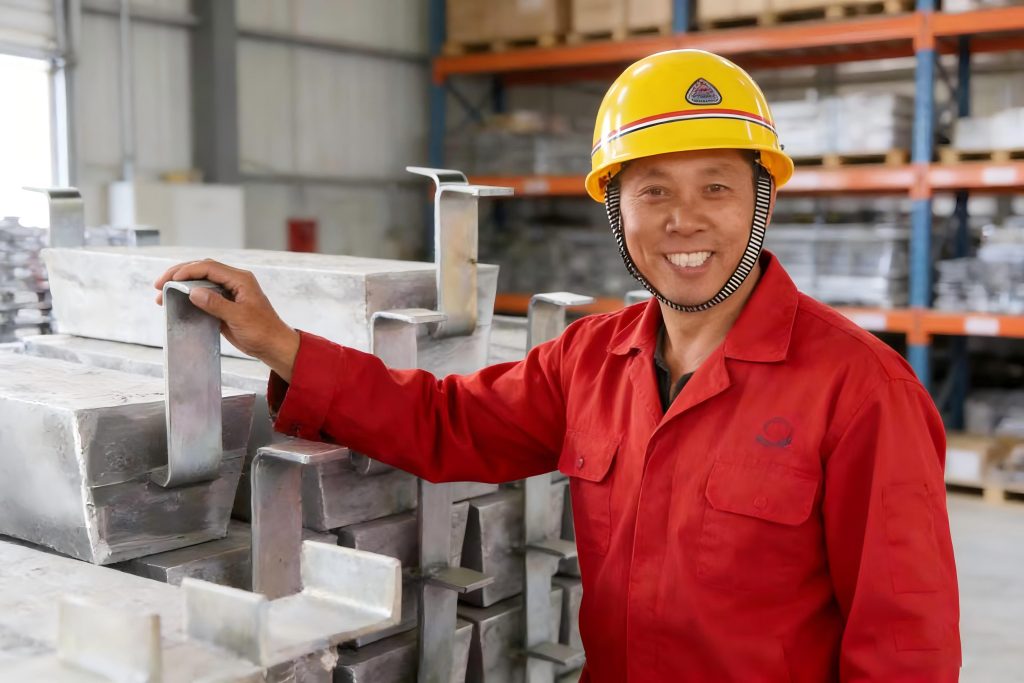
Chief Engineer: JingGuo.Wang
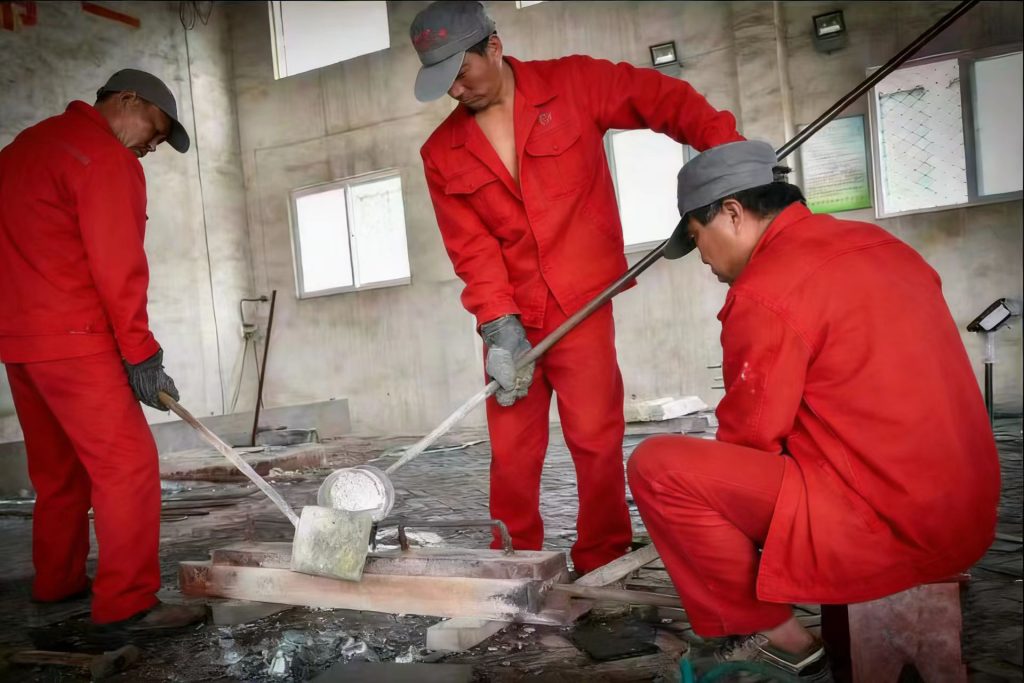
Casting Team
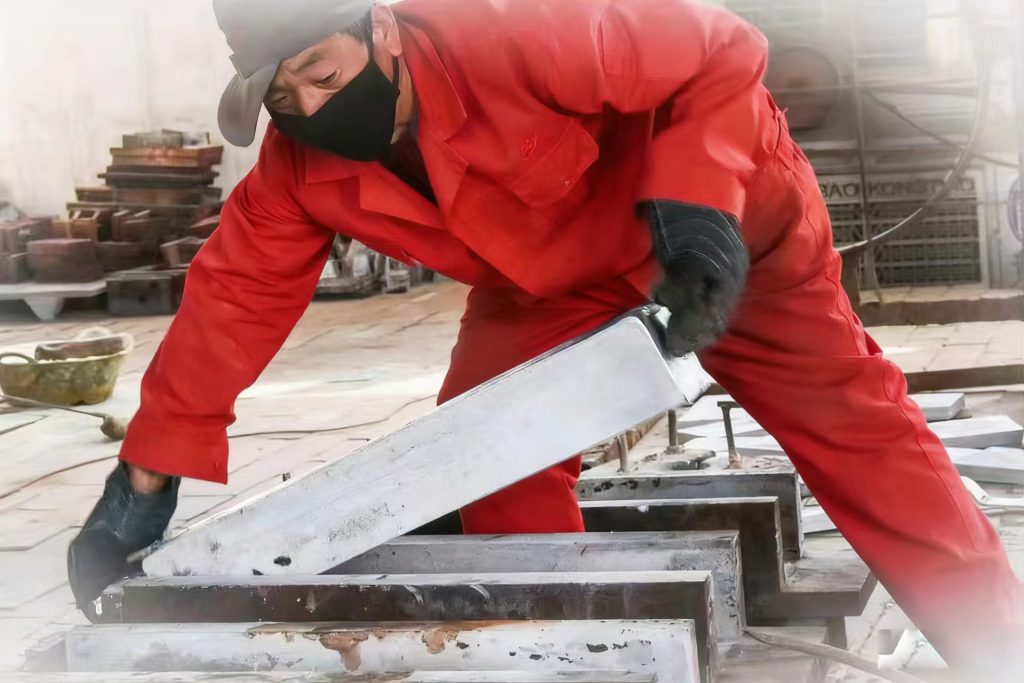
Finishing: QiuDa. Li
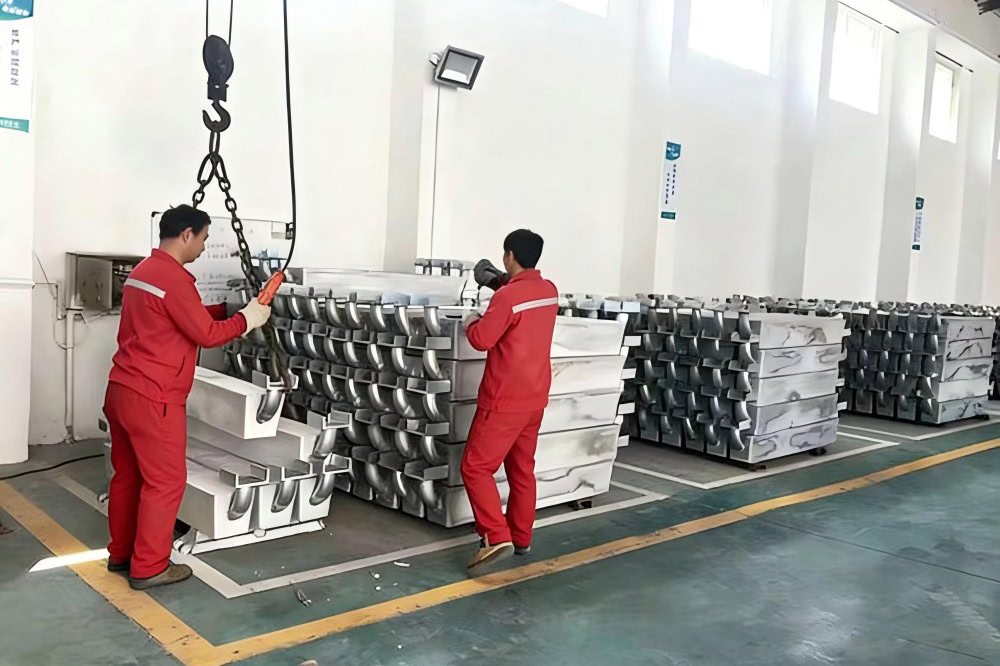
Warehouse Team
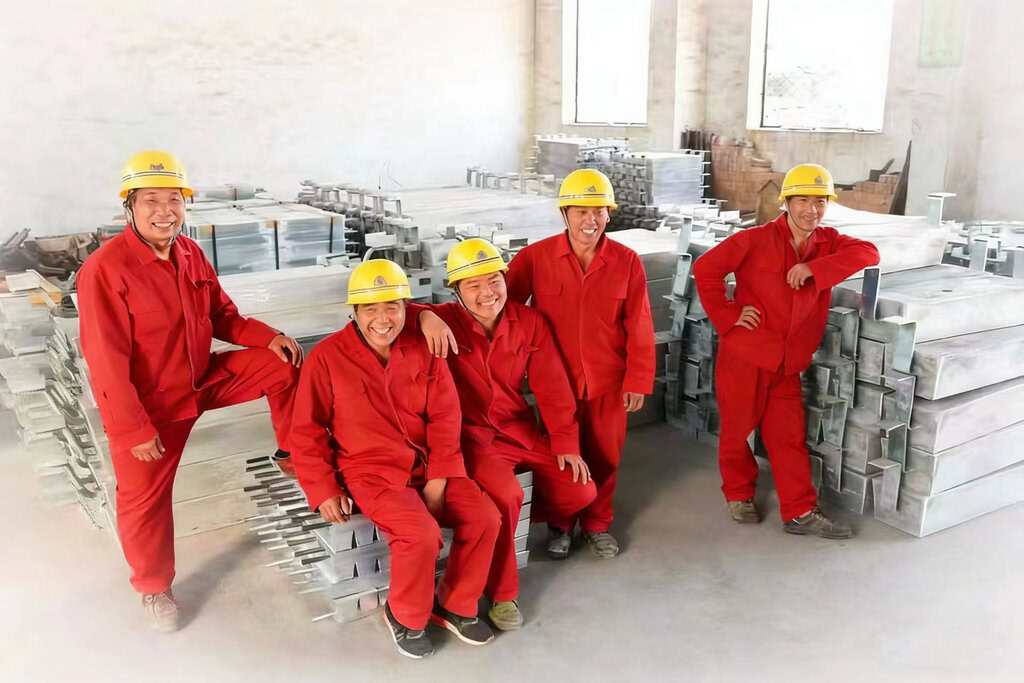
Casting Master Team