
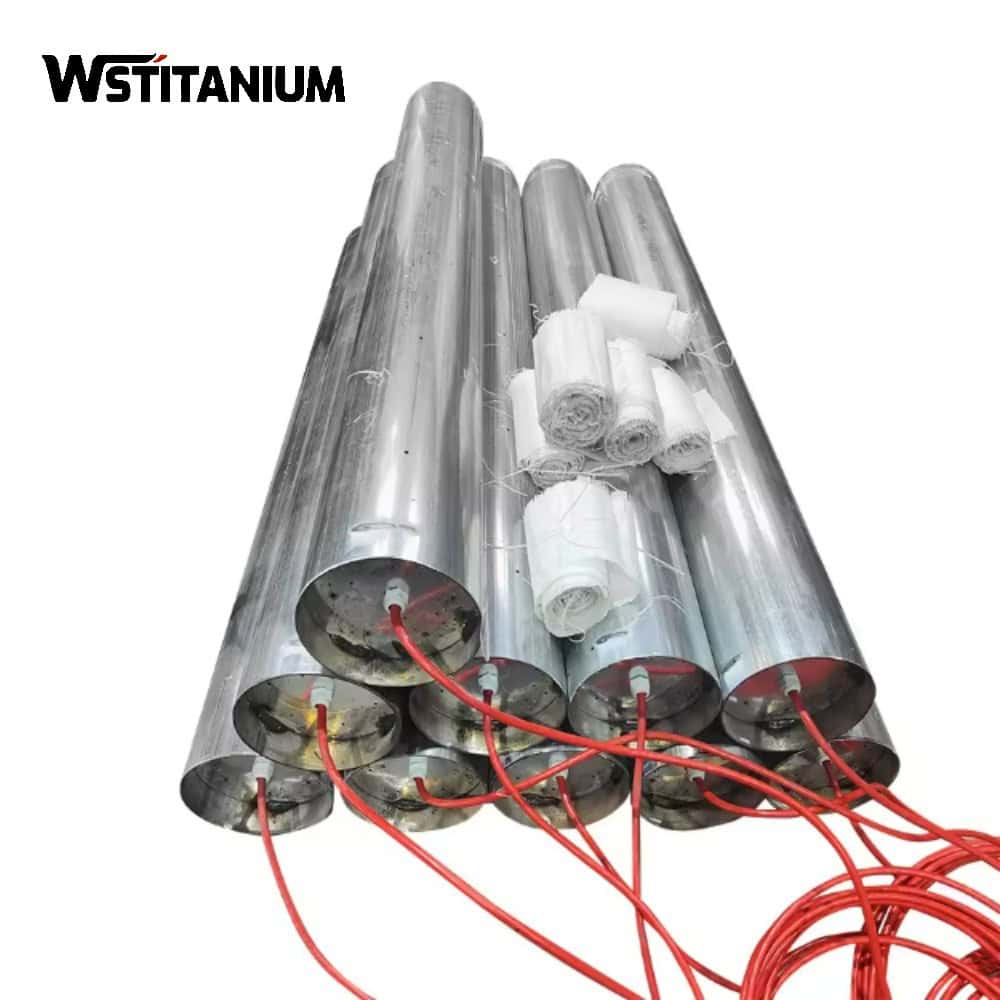
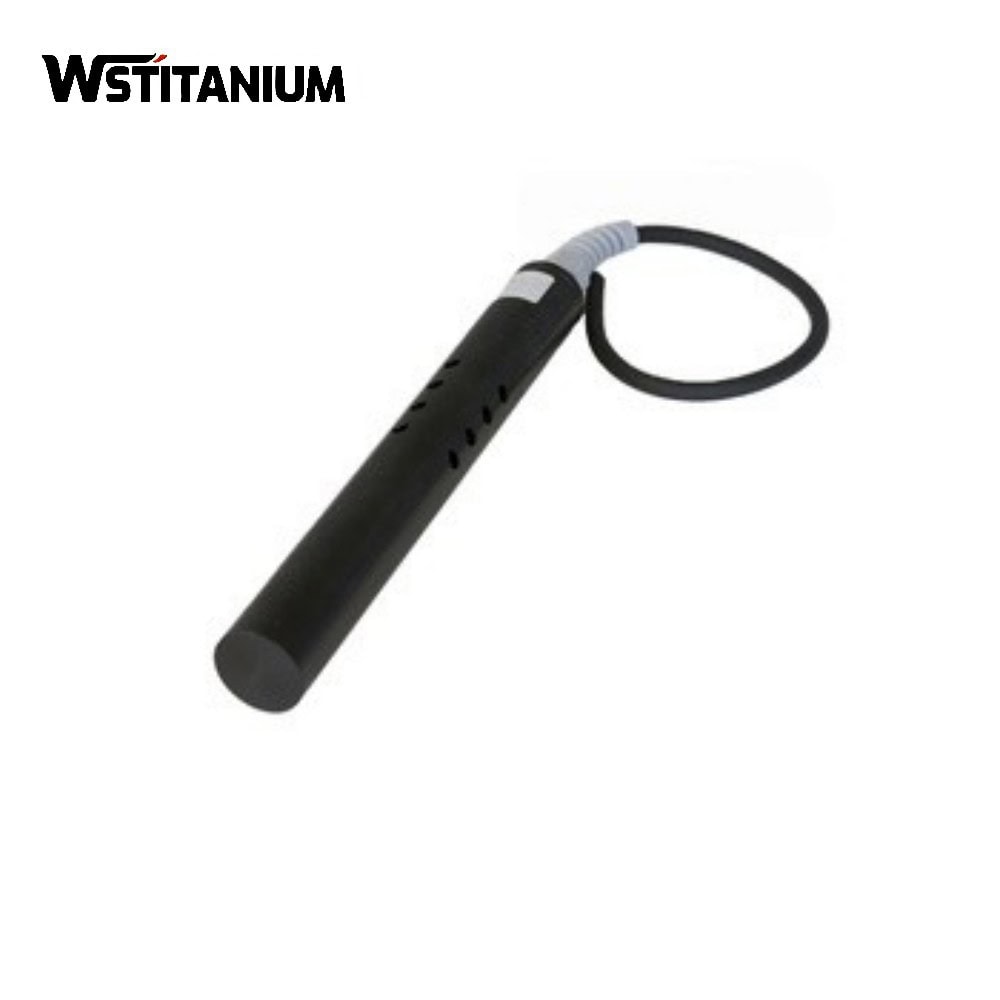
ICCP Cathodic Protection Deep Well
Certified: CE & SGS & ROHS
Shape: Requested
Diameter: Customized
Drawings: STEP, IGS , X_T, PDF
Shipping: DHL, Fedex, or UPS & Ocean Freight

20+ YEARS EXPERIENCE SENIOR BUSINESS MANAGER
Ask Michin For What You Want?
Impressed current cathodic protection (ICCP) deep well anodes utilize the stable environment of deep soil or rock formations to achieve uniform current output and long-distance transmission, making them particularly suitable for scenarios with high soil resistivity, limited surface space, and the need for large-scale protection. Deep well ICCP anodes are increasingly widely used in oil and gas pipelines, urban pipe networks, nuclear power facilities, and port terminals.
| Category | Parameter | High Silicon Cast Iron Anode | MMO Titanium Anode | Graphite Anode |
| Electrochemical Parameters | Open Circuit Potential (SCE) | -0.85V | -0.2~0.0V | -0.7~-0.8V |
| Current Density | 10~20A/m² | 100~200A/m² | 15~30A/m² | |
| Consumption Rate | 0.2~0.5kg/A·a | 0.001~0.005kg/A·a | 0.8~1.2kg/A·a | |
| Service Life | 15~25 years | 30~50 years | 8~15 years | |
| Structural Design | Length | 2~6m (Single); 8~30m (Combined) | 2~6m (Single); 8~30m (Combined) | 2~6m (Single); 8~20m (Combined) |
| Diameter | 50~100mm | 50~100mm | 50~120mm | |
| Operating Current | 5~20A (Single); 20~80A (Combined) | 5~30A (Single); 20~100A (Combined) | 5~15A (Single); 15~50A (Combined) | |
| Adapted Environment | Soil Resistivity | 100~1000Ω·m | >1000Ω·m (Compatible with Low Resistivity) | <100Ω·m |
| Soil pH Value | 6~10 | 1~14 (Full Range) | 5~9 | |
| Tolerable Medium | Soil, Fresh Water | Soil, Seawater, Strong Acids/Bases, High-salt Environments | Soil, Fresh Water, Low-corrosion Medium | |
| Backfill | Backfill Type | Coke Powder | Graphite Powder | Graphite Powder / Coke Powder |
| Backfill Resistance | 8~20Ω·m | 3~10Ω·m | 5~15Ω·m | |
| Application | Core Advantages | High Mechanical Strength, Low Cost | High Current Efficiency, Long Life, Strong Corrosion Resistance | Good Conductivity, Low Cost |
| Disadvantages | Insufficient Activity in High-resistivity Environments | High Cost | Brittle, Fast Consumption Rate | |
| Applications | Long-distance Pipeline Branches, Urban Pipe Networks, Tank Foundations | Nuclear Facilities, Cross-sea Bridges, High-resistivity Soil Environments | Small Pipelines, Temporary Structures, Low-resistivity Soil | |
| System Operation | Output Voltage | 10~25V | 15~30V | 8~20V |
| Protection Potential (SCE) | -0.85~-1.20V | -0.85~-1.20V | -0.85~-1.20V |
Types of ICCP Deep Well Anodes
The classification of ICCP deep well anodes needs to consider core dimensions such as material properties, structural design, and installation. Different types of anodes differ significantly in electrochemical performance, applicable environment, and service life. The choice of anode material directly determines the electrochemical efficiency, consumption rate, and applicable scenarios of the deep well anode. Mainstream materials include high-silicon cast iron anodes, mixed metal oxide titanium anodes, and graphite anodes.
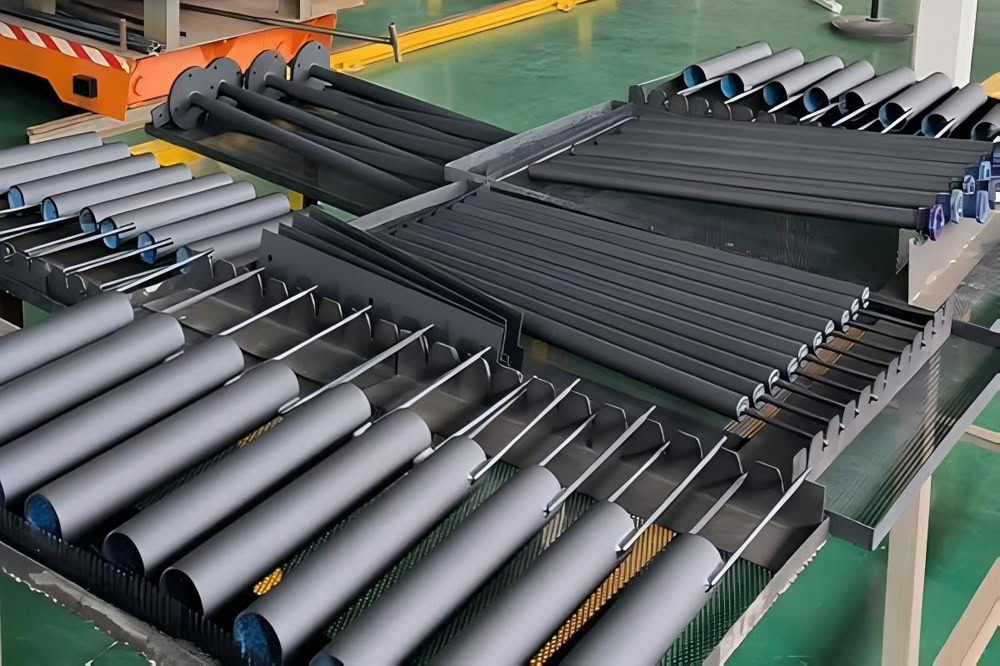
1. High-Silicon Cast Iron Anodes
High-silicon cast iron anodes are one of the oldest deep well anode materials. Their main components are iron and silicon (content 14%~18%). Some models add chromium, molybdenum, etc., to optimize performance. The core advantages of this type of anode are high mechanical strength, wear resistance, low price, and good stability in various media such as soil, fresh water, and seawater.
The electrochemical characteristics of high-silicon cast iron anodes are as follows: open-circuit potential of approximately -0.85V (relative to saturated calomel electrode SCE), operating current density typically 10~20A/m², low consumption rate (approximately 0.2~0.5kg/A・a), and a service life of 15~25 years. Its disadvantages include relatively poor conductivity, requiring increased anode surface area or optimized electrode structure to improve current output; furthermore, in high-resistivity soils, its activation performance is slightly inferior to titanium-based anodes, necessitating the use of suitable backfill material.
This type of anode is suitable for applications with moderate soil resistivity (100~1000Ω・m) and high protection current requirements, such as long-distance oil and gas pipelines, large industrial tank foundations, and urban integrated utility tunnels.
2. Mixed Metal Oxide Titanium Anode (MMO Anode)
Mixed metal oxide titanium anodes use titanium as the substrate, coated with noble metal oxides such as iridium, ruthenium, and platinum. Due to its excellent electrochemical performance, this type of anode has become the preferred anode material for high-end ICCP systems. Its core advantages include: ① High electrochemical activity, with an open-circuit potential of approximately -0.2~0.0V (SCE) and a working current density of 100~200A/m², far exceeding that of high-silicon cast iron anodes; ② Extremely low consumption rate (approximately 0.001~0.005kg/A・a) and a service life of 30~50 years; ③ Extremely strong corrosion resistance, operating stably in harsh media such as strong acids, strong alkalis, and high salinity; ④ Uniform current distribution, achieving wide-area uniform protection.
The disadvantage of titanium-based MMO anodes is their higher cost, approximately 3~5 times that of high-silicon cast iron anodes. This type of anode is suitable for scenarios with high soil resistivity (>1000Ω・m), long protection cycles, and high protection precision requirements, such as nuclear power facilities, cross-sea bridge foundations, deep-sea pipeline terminals, and metal substrates of valuable equipment.
3. Graphite Anode
Graphite anodes are made from natural or synthetic graphite and are characterized by good conductivity and low cost. Their open-circuit potential is approximately -0.7 to -0.8V (SCE), operating current density is approximately 15 to 30 A/m², consumption rate is approximately 0.8 to 1.2 kg/A・a, and service life is approximately 8 to 15 years.
The advantage of graphite anodes is their stable current output, making them suitable for low to medium current requirements. However, they also have significant disadvantages: low strength, brittleness, and susceptibility to damage under soil pressure or during installation. Furthermore, graphite anodes produce gases such as CO₂ and CO₂ during operation, which may increase the porosity of the surrounding soil, affecting current conduction stability. In addition, graphite anodes are consumed relatively quickly, requiring periodic replacement over long-term use, resulting in high maintenance costs.
This type of anode is suitable for applications with low soil resistivity (<100 Ω・m), short protection cycles, and limited budgets, such as small chemical pipelines, urban gas branch lines, and temporary structures.
ICCP Deep Well Anode Backfill Material
Backfill material is an important component of ICCP deep well anode systems. Its function is to reduce the contact resistance between the anode and the soil, uniformly distribute current, reduce anode consumption, and prevent anode surface passivation.
1. Graphite Backfill Material
Graphite backfill material, with high-purity graphite powder as its main component, features good conductivity and strong chemical stability. It has good compatibility with graphite anodes or high-silicon cast iron anodes, effectively reducing contact resistance (typically to 5~15 Ω·m) and promoting uniform current diffusion. However, the disadvantages of graphite powder backfill material are its poor water absorption, which can lead to decreased conductivity in arid regions due to insufficient moisture, and its relatively high cost, making it suitable for medium to high resistivity soils.
2. Coke Powder Backfill Material
Coke powder backfill material, with industrial coke powder as its main component, has uniform particle size (typically 0.5~2mm) and advantages such as low cost, strong water absorption, and good air permeability. It exhibits excellent compatibility with various anode materials, forming a stable conductive layer around the anode, with contact resistance reduced to 8~20 Ω·m. It is currently the most widely used type of backfill material.
3. Hybrid Conductive Backfill Material
Hybrid conductive backfill material is composed of graphite powder, coke powder, bentonite, and conductive salts (such as sodium chloride and potassium chloride) mixed in specific proportions. It possesses multiple advantages, including conductivity, water absorption, and stability. Its contact resistance can be reduced to 3~10 Ω·m, making it suitable for complex soil environments such as aridity, high salinity, and strong corrosion. It performs best when used in conjunction with titanium-based MMO anodes.
Applications of ICCP Deep Well Anodes
ICCP deep well anodes are widely used in various fields and infrastructure construction. Different application scenarios have different soil environments, protected objects, and protection requirements, necessitating the selection of anode types and optimization of system design.
(I) Oil and Gas Pipelines
Oil and gas pipelines are one of the most important application scenarios for ICCP deep well anodes, especially long-distance oil and gas pipelines (typically exceeding 100km in length). These pipelines traverse complex terrains such as deserts, Gobi, and mountains, where soil resistivity varies greatly, and surface space is limited, making it difficult for shallow-buried anodes to achieve uniform protection.
Protection Targets: Corrosion protection for the outer walls of pipelines, including main pipelines, branch pipelines, pipeline crossings (rivers, railways, highways), and inlet/outlet pipelines of storage tanks;
Environmental Conditions: Soil resistivity is typically 100~5000 Ω·m, reaching over 10000 Ω·m in some desert areas; humidity is low, and temperature varies greatly;
Design Requirements: Protection radius must reach 50~200m/unit; single anode operating current must meet 10~50A; service life must match the pipeline’s design life (typically 20~30 years).
Anode Type: Titanium-based MMO combined deep-well anodes (total length 10-20m) are preferred, paired with mixed conductive backfill. For branch pipelines with low soil resistivity (<500Ω・m) and limited budget, high-silicon cast iron monolithic deep-well anodes can be used.
Special Solutions: When pipelines cross rivers, swamps, or other low-resistivity areas, the anode spacing should be reduced to avoid current concentration leading to over-protection. When crossing deserts or other high-resistivity areas, the anode length should be increased or multiple anodes should be connected in parallel to improve current output capacity.
(II) Foundation Protection for Large Storage Tanks
The foundations of large storage tanks (such as crude oil tanks, chemical raw material tanks, and LNG tanks) are typically constructed of reinforced concrete. Their bottoms are in direct contact with the soil, making them susceptible to soil corrosion and groundwater erosion, leading to steel reinforcement corrosion and subsequent foundation cracking, tank leaks, and other safety hazards. Protection Targets: Reinforcing steel bars of the tank foundation, metal anti-corrosion coating repair on the outer side of the tank bottom plate, auxiliary pipelines, etc.
Environmental Conditions: The soil in the tank area is typically compacted, with a resistivity of 50~500 Ω·m. The groundwater level is high, and there is a risk of chemical media leakage in some areas.
Design: The protection range must cover the entire tank foundation (typically with a diameter of 20~60m), ensuring uniform current distribution and avoiding localized under- or over-protection. The service life must be 25~40 years.
Anodes: Titanium-based MMO casing-type deep well anodes or combined deep well anodes are selected. The length of a single anode group is 8-15m, and the installation depth is 15-30m, paired with coke powder backfill (cost controllable and conductivity stable);
Arrangement: Anodes are arranged around the perimeter of the tank foundation. The number of anodes is determined according to the tank diameter (usually 4-8), with a spacing of 15-30m, forming a ring-shaped protective circle to ensure uniform potential of the foundation reinforcement;
(III) Bridges
Bridge foundations (such as pile foundations, caisson foundations, and diaphragm walls) are located in underground or underwater environments for extended periods, subject to soil corrosion, groundwater erosion, and seawater tides, resulting in extremely high corrosion risks. Especially for the foundations of cross-sea bridges and cross-river bridges, which are in high-salinity and high-humidity environments, the corrosion rate is much higher than that of land structures.
Protected Objects: Bridge pile foundation reinforcement, steel pile foundation, diaphragm wall reinforcement, etc.
Environment: Soil resistivity for land bridge foundations is 100~1000 Ω·m; sea-crossing bridge foundations are in a marine environment (resistivity < 50 Ω·m), with high salinity, high humidity, and active corrosive media.
Design: The protection area must cover all foundation components. Current must be able to penetrate the concrete cover (typically 10~30 cm thick) to reach the reinforcement surface. The service life must be consistent with the bridge’s design life (typically 50~100 years).
Anodes: For land bridge foundations, titanium-based MMO composite deep-well anodes are used, paired with mixed conductive backfill; for sea-crossing bridge foundations, titanium-based MMO tubular anodes (resistant to seawater corrosion) are used, with an installation depth of 20-50m.
Layout: Anodes are symmetrically arranged along both sides of the bridge foundation axis, with a spacing of 30-80m. For large caisson foundations, multiple sets of anodes can be arranged around the caisson to ensure uniform current coverage.
Special Treatment: Considering the high resistivity of concrete, the anode output voltage needs to be increased (usually 15-30V) to ensure that the current can penetrate the concrete protective layer. In seawater environments, the anode surface area needs to be increased to reduce the current density and avoid damage to the anode coating.

Related products
-
 Impressed Current Cathodic Protection
Impressed Current Cathodic Protection System
-
 Impressed Current Cathodic Protection
ICCP Cathodic Protection For Ships
-
 Impressed Current Cathodic Protection
ICCP Ruthenium-Iridium MMO Anode
-
 Marine Growth Prevention Systems
Copper Marine Growth Prevention Systems
-
 Impressed Current Cathodic Protection
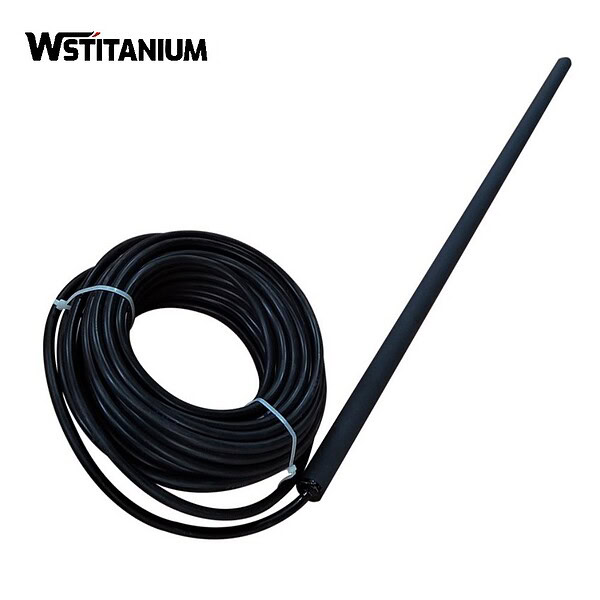
ICCP MMO Tubular Anode
-
 Marine Growth Prevention Systems
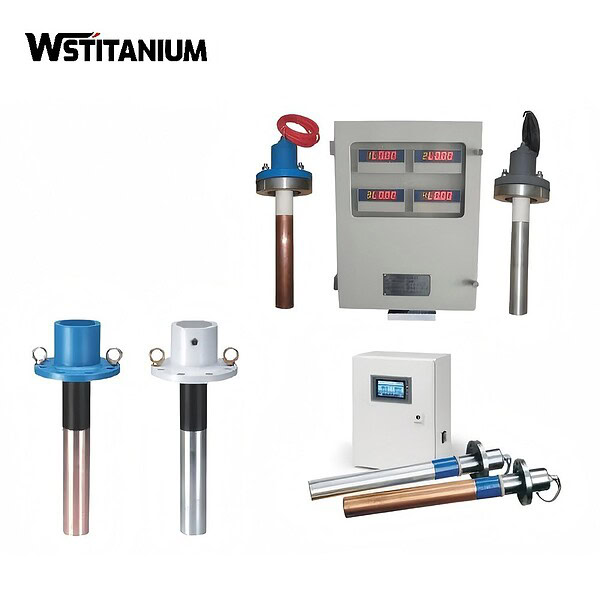
Marine Growth Prevention Systems Anode
-
 Marine Growth Prevention Systems
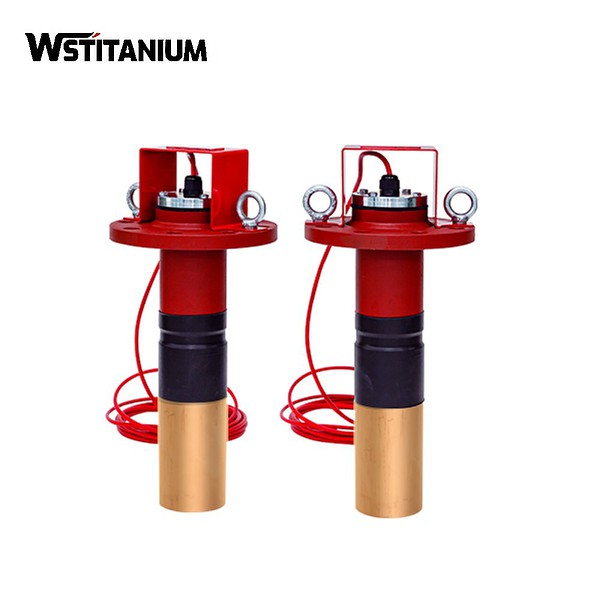
MGPS Anode for Merchant Ships
-
 Marine Growth Prevention Systems
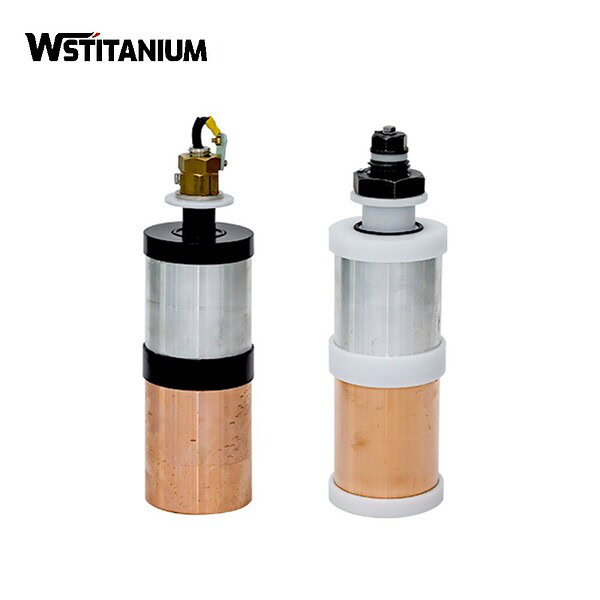
MGPS Anode for Yachts