
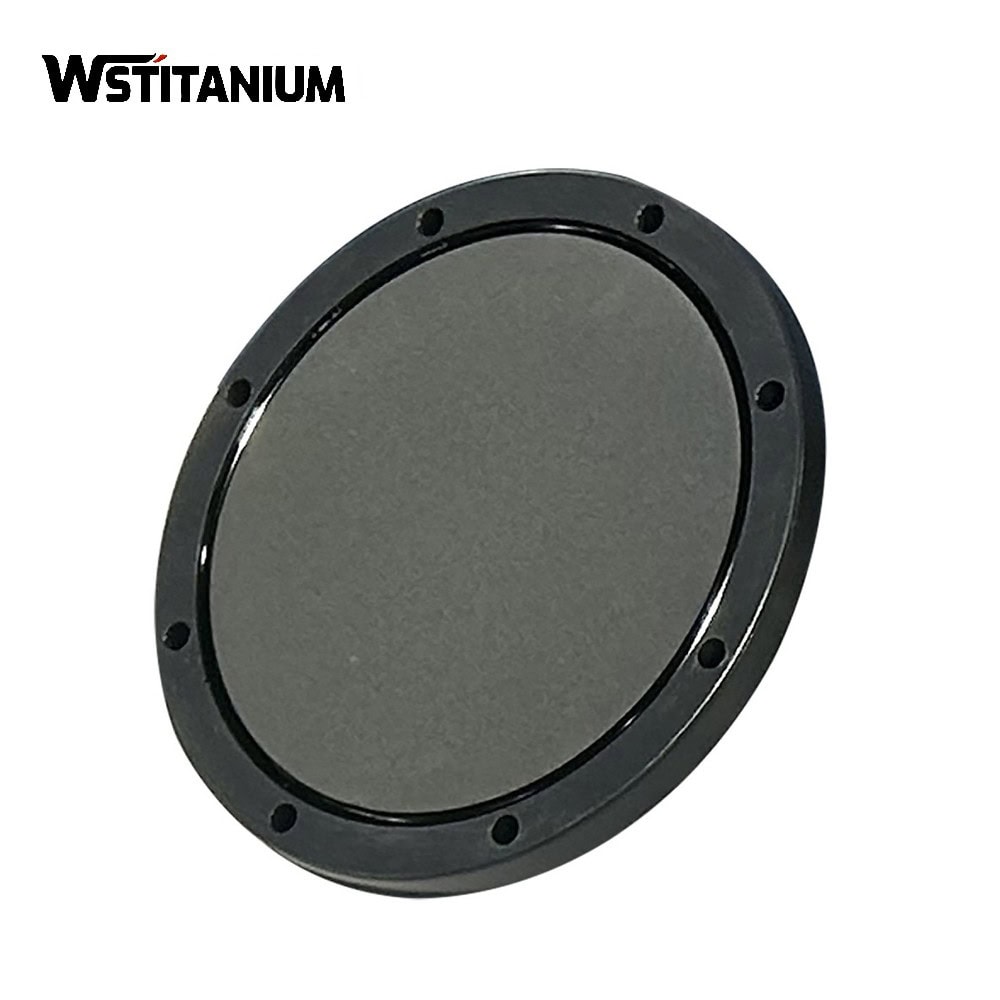
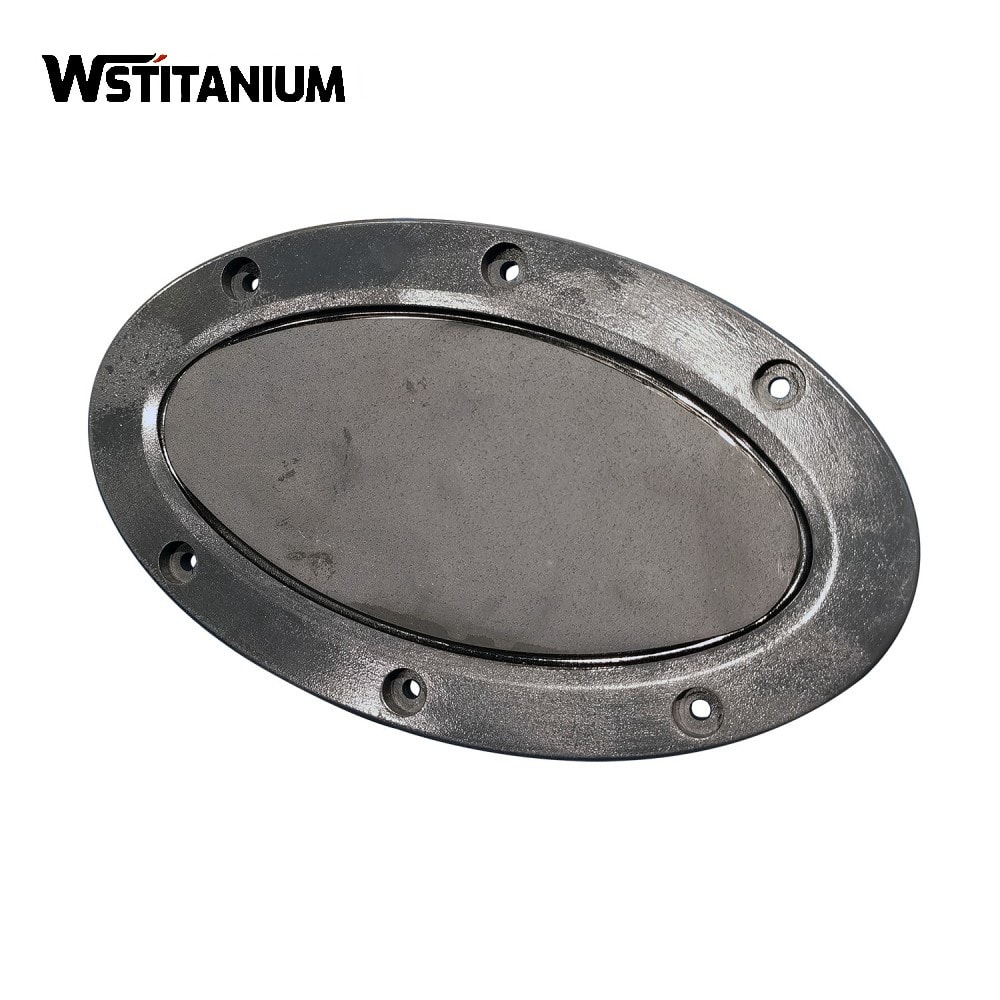
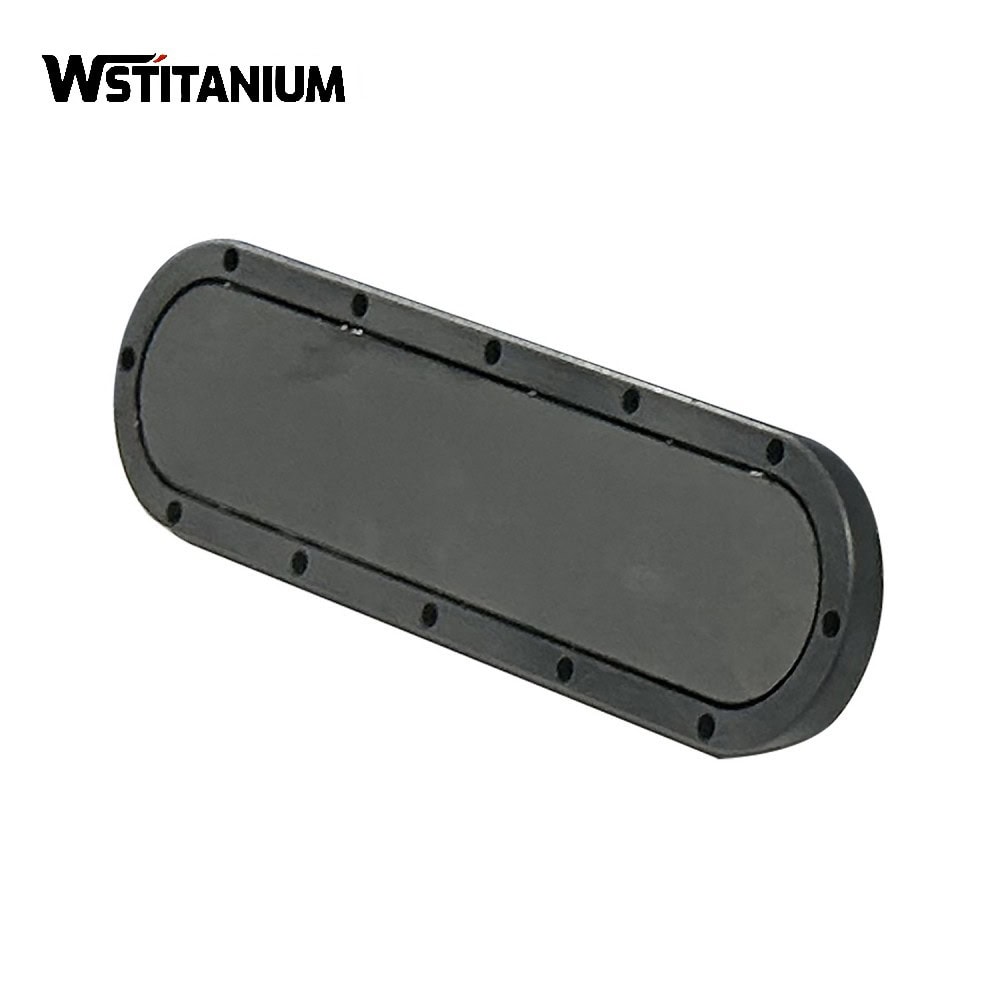
ICCP MMO Disk Anode
Certified: CE & SGS & ROHS
Shape: Requested
Diameter: Customized
Drawings: STEP, IGS , X_T, PDF
Shipping: DHL, Fedex, or UPS & Ocean Freight

20+ YEARS EXPERIENCE SENIOR BUSINESS MANAGER
Ask Michin For What You Want?
As a core carrier connecting global trade and shipping, ships face severe corrosion threats to their hull structure, propellers, rudders, and other metal components. Impressed Current Cathodic Protection (ICCP) technology is one of the most mature and effective corrosion prevention technologies in the marine industry.
In an ICCP system, the anode, as the core component for current output, directly determines the protection effect, system stability, and service life. MMO (Mixed Metal Oxide) disc anodes, with their excellent electrochemical performance, corrosion resistance, stability, and long lifespan, have become the preferred anode type for marine ICCP systems.
| Core Category | Specific Key Information |
| Definition | A core component of the ship ICCP (Impressed Current Cathodic Protection) system. It is a disc-shaped anode with a titanium/niobium/tantalum base, coated with RuO₂-based/IrO₂-based/composite MMO coatings. It is used to inhibit marine corrosion of ship metal components. |
| Classification | 1. Base materials: Titanium-based (mainstream, Gr1/Gr2), niobium-based (special environments), tantalum-based (high-end special); 2. Coating formulations: RuO₂-based (medium-low current density), IrO₂-based (high current density), RuO₂-IrO₂ composite (best overall performance); |
| Working Principle | 1. ICCP system: An external potentiostat applies direct current to make the hull a cathode and inhibit corrosion; 2. Anode function: The MMO coating catalyzes the oxidation of Cl⁻ in seawater to Cl₂ and the oxidation of H₂O to O₂, and delivers electrons to the hull through the external circuit; 3. Core mechanism: Cathodic polarization maintains the hull potential at -0.85V~-1.10V (SCE), forming an alkaline protective film. |
| Advantages | 1. Electrochemical performance: Current efficiency ≥90%, operating current density 100-200A/m², stable potential output; 2. Service life: 15-25 years (some up to 30+ years), 2-4 times that of lead alloy/graphite anodes; 3. Installation: High-strength, lightweight, supports bolt/welding/adhesive installation, low water flow resistance; 4. Environmental protection: No pollutant release, compliant with IMO standards; 5. Adaptability: Suitable for various ships and environments such as shallow/deep/polluted sea areas. |
| Applications | 1. Application locations: Hull exterior (array installation), ballast tanks (small anodes), propellers/rudders (high current density protection), cargo oil tanks (tankers, double protection), seawater cooling systems; 2. Applicable ships: Cargo ships (bulk carriers/tankers/LNG carriers), warships, yachts, official vessels. |
| Installation | 1. Position: Keep away from propellers, distance from welds ≥50mm, avoid protection blind spots; 2. Surface pretreatment: Sa2.5 grade derusting + anti-corrosion paint; 3. Fixing methods: Bolts (25-35N·m torque), welding (≤800°C), adhesion (curing for 24h+); 4. Electrical: Fluoroplastic cables (2.5-10mm²), sealed joints, distance between anodes ≥300mm; 5. Insulation: Insulation gaskets added to mounting seats. |
| Maintenance | 1. Potential: Monitor every 3-6 months, maintain at -0.85V~-1.10V (SCE); 2. Anode: Inspect coatings annually (replace if damage exceeds 5%); 3. Equipment maintenance: Calibrate the potentiostat every 1-2 years, regularly inspect cables/joints; 4. Environment: Optimize current output based on seawater resistivity and temperature. |
| Faults and Solutions | 1. Abnormal potential: Calibrate the instrument, replace worn anodes, tighten cables, adjust current; 2. Coating peeling: Replace the anode, control welding temperature/optimize surface pretreatment; 3. Unstable current: Repair the instrument, restore cables, remove biological attachments; 4. Local corrosion: Adjust anode layout/increase quantity, repair hull coatings. |
Types of MMO Disc Anodes
MMO disc anodes are classified primarily based on differences in substrate material, oxide coating formulation, structural design, and application scenarios. The following are commonly used MMO disc anode types in the marine industry.
(I) Classification by Substrate Material
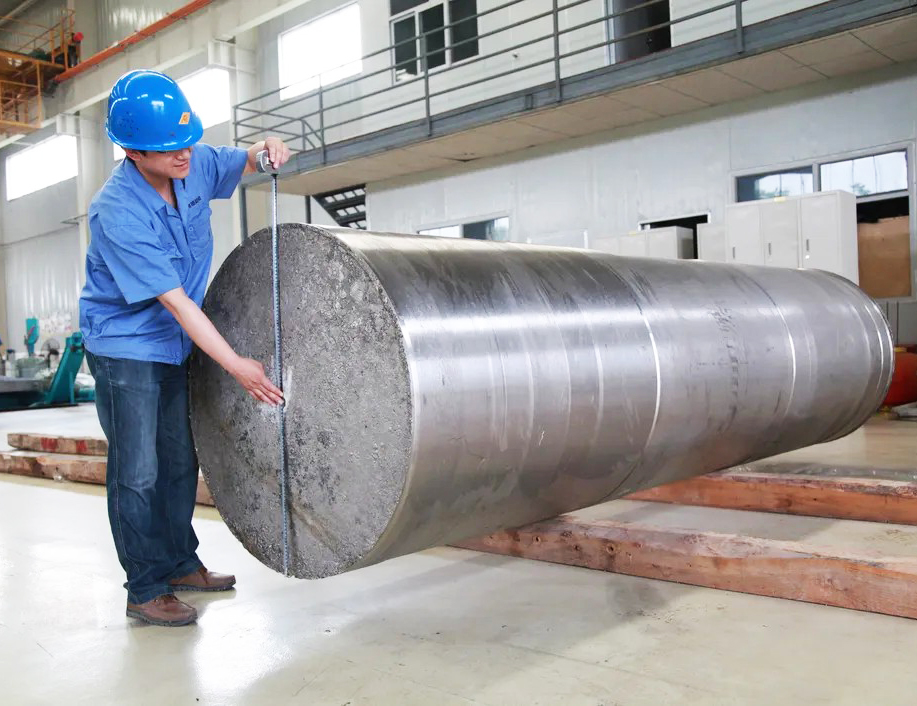
Titanium-based MMO Disc Anodes: This is currently the most widely used type in marine ICCP systems. The substrate is industrially pure titanium (Gr1, Gr2). Titanium possesses excellent corrosion resistance, mechanical strength, and electrical conductivity, and exhibits good adhesion to the MMO coating. The coating of titanium-based MMO anodes bonds tightly to the substrate, is not easily detached, and can operate stably in marine environments for extended periods, with a service life of 15-25 years. It is suitable for protecting critical components such as hull outer shells, ballast tanks, and propellers.
Niobium-based MMO Disc Anodes: The substrate of niobium-based anodes is niobium metal. Niobium has superior corrosion resistance compared to titanium, especially in high-temperature, high-chlorine concentration, or strongly oxidizing environments. However, its cost is high and its machinability is relatively poor, therefore it is mainly used in special vessels (such as nuclear-powered vessels and vessels operating at high temperatures).
Tantalum-based MMO disc anodes: Tantalum-based anodes have extremely high corrosion resistance and chemical stability, and can withstand the erosion of extreme marine environments. The scarcity of tantalum leads to its extremely high cost, and it is used only in a very small number of high-end special-purpose or experimental vessels.
(II) Classification by Coating Formulation
RuO₂-based MMO disc anodes: These use ruthenium oxide (RuO₂) as the main active ingredient, combined with auxiliary ingredients such as titanium oxide (TiO₂) and iridium oxide (IrO₂). This type of anode has excellent conductivity and catalytic activity, low polarization, and stable current output, making it suitable for low to medium current density ship corrosion protection scenarios, such as large-area protection of the hull. It is currently the most widely used coating type on commercial ships.
IrO₂-based MMO disk anodes: These use iridium oxide (IrO₂) as the core active ingredient, supplemented with tantalum oxide (Ta₂O₅), tin oxide (SnO₂), etc. They exhibit outstanding oxidation resistance and high current density tolerance, allowing operation under higher current loads. They are suitable for components with high localized current requirements, such as propellers and rudder blades, or for corrosion protection of ships in harsh marine environments (such as highly polluted, high-salinity waters).
RuO₂-IrO₂ composite MMO disk anodes: These combine the high conductivity of RuO₂ with the high stability of IrO₂. Through optimized composite coating formulations, they balance low polarizability and high corrosion resistance, offering a wide range of applications. They can meet the corrosion protection needs of various ship components and marine environments, making them one of the coating types with the best overall performance currently available.
(III) Classification by Structural Design
**Standard MMO Disc Anode:** Employs a single disc structure with a uniform coating covering the titanium substrate surface. The thickness is typically 50-100 μm, and the diameter ranges from 50-200 mm. Suitable for large-area corrosion protection on conventional ships. Flexible installation methods allow for bolting or welding to the hull structure.
Porous MMO Disc Anode: Designed with multiple vent holes or flow guide holes on the disc substrate. This reduces water flow resistance and lowers energy consumption during ship navigation. It also facilitates seawater circulation, preventing increased polarization on the anode surface due to localized oxygen deficiency. Suitable for high-speed underwater flow areas of ships (such as the bow and near the propeller).
Composite MMO Disc Anode: Combines the MMO disc anode with a sacrificial anode (such as a zinc or aluminum block) to form a composite protection structure of “impressed current + sacrificial anode”. During normal operation, the ICCP system is the primary protection mechanism, with the sacrificial anode serving as an auxiliary protection. It can temporarily provide corrosion protection in the event of a power outage or failure, making it suitable for ships with extremely high requirements for corrosion resistance reliability (such as oil tankers and LNG carriers).
MMO Disc Anode Applications
MMO disc anodes are a core component of marine ICCP impressed current cathodic protection systems. With their superior electrochemical performance, ultra-long service life, environmental friendliness, and ease of installation and maintenance, MMO disc anodes have become the preferred solution for modern marine corrosion protection, widely used in critical areas such as the hull, ballast tanks, propellers, and cargo oil tanks of various vessels including merchant ships, warships, and yachts.
Hydraulic Hull
The hull is the largest surface area of a ship exposed to seawater and one of the most severely corroded areas. MMO disc anodes are typically installed in an array on the underwater portion of the hull, evenly distributed along the ship’s length, ensuring uniform current coverage across the hull surface. For large vessels (such as container ships and oil tankers of 100,000 tons or more), dozens to hundreds of MMO disc anodes are usually installed to form a comprehensive protective network, preventing hull thinning and leakage due to corrosion.
Ballast Tanks
Ballast tanks are critical components for regulating a ship’s draft and stability. Their interiors are constantly exposed to seawater immersion and alternating wet and dry environments, resulting in extremely high corrosion risks. MMO disc anodes can be installed on the inner walls, bilge, and roof of the ballast tanks, working in conjunction with an ICCP system to provide cathodic protection for the hull steel, preventing corrosion perforation and ensuring the ship’s structural safety. Due to the limited space in ballast tanks, miniaturized and lightweight MMO disc anodes are typically chosen for ease of installation and maintenance.
Propellers and Rudders
Propellers and rudders are core power and control components of a ship, subjected to high water velocity, high stress, and seawater erosion over extended periods, making them prone to localized corrosion (such as pitting and cavitation). MMO disc anodes are typically installed on the propeller hub, rudder shaft sleeve, or rudder blade surface, providing targeted protection to these critical components through high current density output, preventing corrosion-induced component failure and ensuring the ship’s navigation performance.
Cargo Oil Tanks (Tankers)
Cargo oil tankers’ tanks continuously hold corrosive media such as crude oil and refined oil products, and are also subjected to the influence of seawater ballast, creating an extremely harsh corrosive environment. MMO disc anodes can be installed on the inner walls and bottom of the cargo oil tanks, forming a dual protection system of “coating + cathodic protection” in conjunction with anti-corrosion coatings. This prevents corrosion and leakage from the cargo oil tanks, avoiding marine pollution and economic losses.
Seawater Cooling Systems
The seawater cooling systems of ships (including cooling pipes, heat exchangers, condensers, etc.) are in direct contact with seawater, making them prone to scaling and corrosion. MMO disc anodes can be installed on the inner walls of the cooling system pipes or equipment shells, inhibiting corrosion of pipes and equipment through cathodic protection, extending their service life, and ensuring the normal operation of the cooling system.
Application Ship Types
Commercial Cargo Ships: Including bulk carriers, container ships, tankers, LNG carriers, chemical carriers, etc. These ships have long voyages and long service lives, requiring extremely high corrosion resistance reliability and service life. MMO disc anodes, with their long lifespan and low maintenance costs, have become the preferred anode type for ICCP systems on commercial vessels.
Warships
Warships operate in complex environments, requiring extremely high strength and stealth in their hull structures, while maintaining long-term combat readiness and minimizing maintenance frequency. The low flow resistance, long lifespan, and high stability of MMO disc anodes meet the specific needs of warships, effectively protecting critical components such as the hull, propellers, and sonar equipment. Their environmentally friendly and pollution-free characteristics comply with military environmental requirements, leading to their widespread application in various warships, including destroyers, frigates, and submarines.
Yachts and Government Vessels
Yachts and government vessels (such as patrol boats and law enforcement vessels) typically have high requirements for appearance and navigation performance, and operate in diverse environments (such as coastal waters, lakes, and rivers). The lightweight, miniaturized design and flexible installation methods of MMO disc anodes adapt to the structural characteristics of yachts and government vessels. Furthermore, their low polarization and stable protective effect effectively prevent hull corrosion, maintaining the vessel’s appearance and navigation performance.


Related products
-
 Impressed Current Cathodic Protection
ICCP Cathodic Protection For Ships
-
 Impressed Current Cathodic Protection
Impressed Current Cathodic Protection For Mechanical
-
 Impressed Current Cathodic Protection
ICCP Iridium-Tantalum MMO Anode
-
 Impressed Current Cathodic Protection
ICCP Cathodic Protection For Marine
-
 Impressed Current Cathodic Protection
Impressed Current Cathodic Protection System
-
 Impressed Current Cathodic Protection
ICCP MMO Strip Anode
-
 Marine Growth Prevention Systems
Marine Growth Prevention Systems Anode
-
 Impressed Current Cathodic Protection
ICCP Cathodic Protection Deep Well