Facilities involved in crude oil extraction, refining, storage, and transportation, such as underground pipelines, tank bottoms, offshore platform steel structures, and chemical reactors, are frequently exposed to corrosive substances like soil, groundwater, crude oil, acidic and alkaline media, and salt spray, making them highly susceptible to electrochemical corrosion.
Catholic protection, as a core method of metal corrosion protection, is mainly divided into sacrificial anode cathodic protection (SACP) and impressed current cathodic protection (ICCP). Compared to sacrificial anode protection, impressed current cathodic protection offers significant advantages, including suitability for high resistivity environments and a longer lifespan. ICCP is particularly suitable for corrosion protection of critical facilities in the petrochemical industry, such as large storage tanks, long-distance pipelines, and complex steel structures.
| Category |
Key Information |
Description |
| Type |
Inert Anode |
– Titanium-based MMO Anode |
| ▶ Main type (plate/mesh/ribbon/tubular) |
| ▶ Low consumption rate: < 0.01 kg/A·a |
| ▶ Applicable to multiple environments |
| – Graphite Anode |
| ▶ Low cost, brittle |
| ▶ Suitable for low-resistivity soil; service life: 5–10 years |
| – Platinum Anode |
| ▶ Extremely stable, high cost |
| ▶ Only for extreme corrosion scenarios |
| Active Anode |
– High-silicon Cast Iron Anode |
| ▶ Silicon content: 14%–17% |
| ▶ Consumption rate: 0.2–0.5 kg/A·a; service life: 8–15 years |
| ▶ Suitable for medium-resistivity environments |
| – Lead Alloy Anode |
| ▶ Seawater corrosion-resistant, low cost |
| ▶ Contains heavy metals; service life: 5–10 years |
| Special-structure Anode |
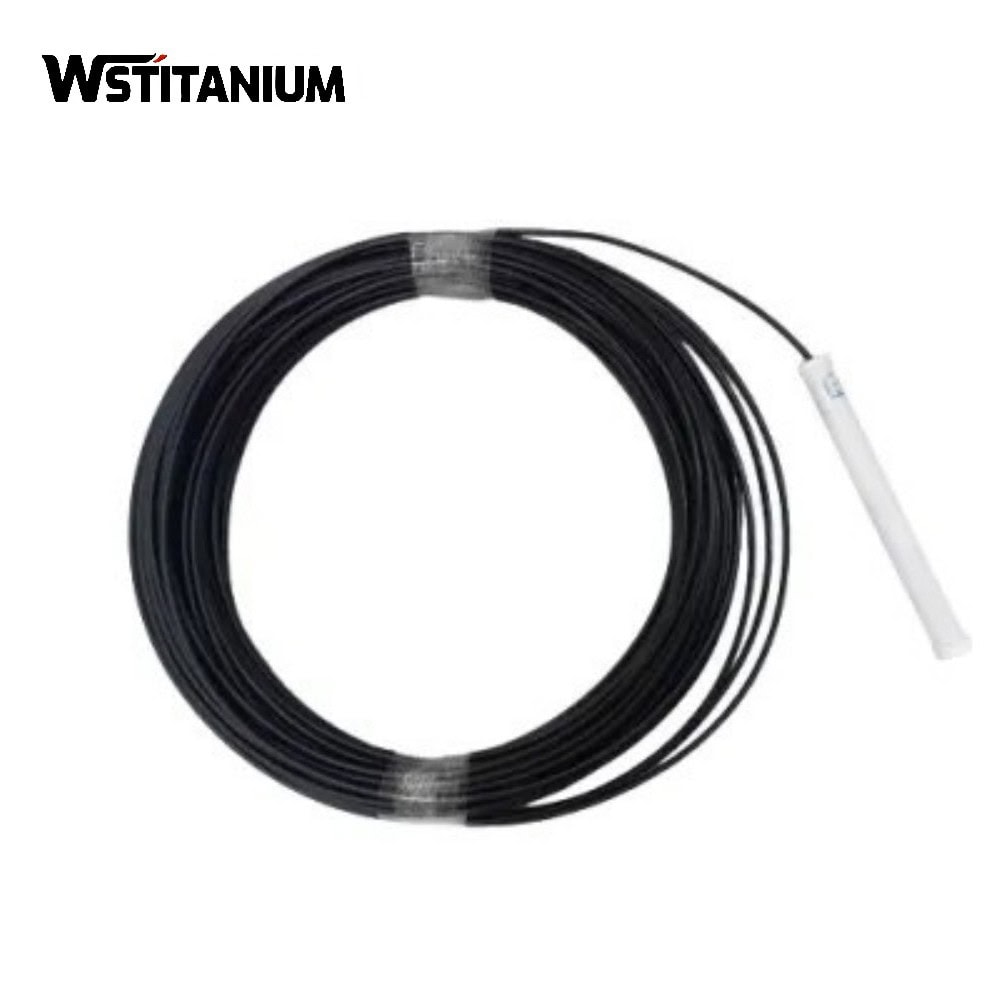
– Flexible Anode |
| ▶ Bendable; suitable for irregular structures |
| ▶ Service life: > 20 years |
| – Deep-well Anode |
| ▶ Burial depth: 20–50 m |
| ▶ Suitable for high-resistivity/space-constrained scenarios |
| – Mesh Anode |
| ▶ Woven from MMO titanium wire |
| ▶ Suitable for tank bottom plates; uniform current distribution |
| Principle |
Electrochemistry |
The external DC power supply polarizes the protected metal as the cathode (suppresses dissolution); the anode undergoes oxidation reactions to provide protective current, forming a complete current circuit. |
| Anode Reaction |
– Inert Anode: Oxygen evolution (neutral/alkaline media) or chlorine evolution (chlorine-containing media); negligible self-consumption |
| – Active Anode: Self-oxidation dissolution (e.g., Fe→Fe²⁺+2e⁻); surface passivation film slows consumption |
| Key Influencing Factors |
Current density, electrolyte environment (resistivity/pH/ion concentration), anode material & structure |
| Application |
Long-distance Oil & Gas Pipelines |
Suitable for soil/complex geology; commonly uses deep-well anodes, high-silicon cast iron anodes, MMO tubular anodes |
| ▶ Single-well protection range: 5–10 km |
| Large Tank Bottom Plates |
Mainly uses mesh anodes (combined with coke filler) |
| ▶ Protection area: 1000–5000 m²/group |
| ▶ Corrosion rate: < 0.005 mm/a |
| Offshore Petrochemical Facilities |
Commonly uses MMO tubular anodes, lead alloy anodes |
| ▶ Suitable for seawater/salt-spray environments; biofouling-resistant |
| Chemical Equipment & Devices |
Commonly uses MMO anodes, platinum anodes |
| ▶ Suitable for high-temperature/high-pressure/acid-base media; no contamination to reaction media |
| Special Scenarios |
– LNG tanks: Flexible MMO anodes (low-temperature resistant) |
| – Stray current areas: Deep-well + distributed MMO anode combinations |
| Selection |
Core Criteria |
1. Adapt to the corrosion environment (resistivity/pH/temperature, etc.) |
| 2. Meet the design service life (inert anodes for long service life) |
| 3. Ensure uniform current distribution (flexible/mesh anodes for irregular structures) |
| 4. Balance economy & safety (avoid toxic materials) |
| 5. Match overall system performance (compatible with power supply/reference electrode) |
Applications The corrosive environment in the petrochemical industry is complex and diverse. Different equipment (pipelines, storage tanks, steel structures, reactors, etc.) have varying operating conditions, structural characteristics, and corrosion risks. Therefore, the application of ICCP anodes requires targeted selection and design based on specific scenarios.
(I) Long-Distance Pipelines.
Long-distance oil and gas pipelines are the “lifeline” of the petrochemical industry, typically buried underground. They face risks such as soil corrosion and stray current corrosion. Pipeline corrosion is particularly prominent when traversing complex geological environments such as deserts, saline-alkali lands, and swamps.
Common anode types: Primarily deep-well anodes, high-silicon cast iron anodes, and MMO tubular anodes. Deep-well anodes are suitable for areas with high soil resistivity (>100Ω·m). Buried at depths of 20-50m, and with coke packing to reduce contact resistance, a single well can protect 5-10km. High-silicon cast iron anodes are moderately priced and suitable for areas with moderate soil resistivity (50-100Ω·m). MMO tubular anodes have low consumption rates and long service lives, making them suitable for pipelines with low soil resistivity (<50Ω・m) or high protection life requirements (>20 years).
(II) Large Storage Tank Bottom Plates.
Large crude oil and refined oil storage tanks are key storage facilities in the petrochemical industry. The tank bottom plates are constantly exposed to a humid, oxygen-deficient environment, making them prone to pitting and ulcer corrosion. ICCP systems are the preferred solution for corrosion protection of tank bottom plates.
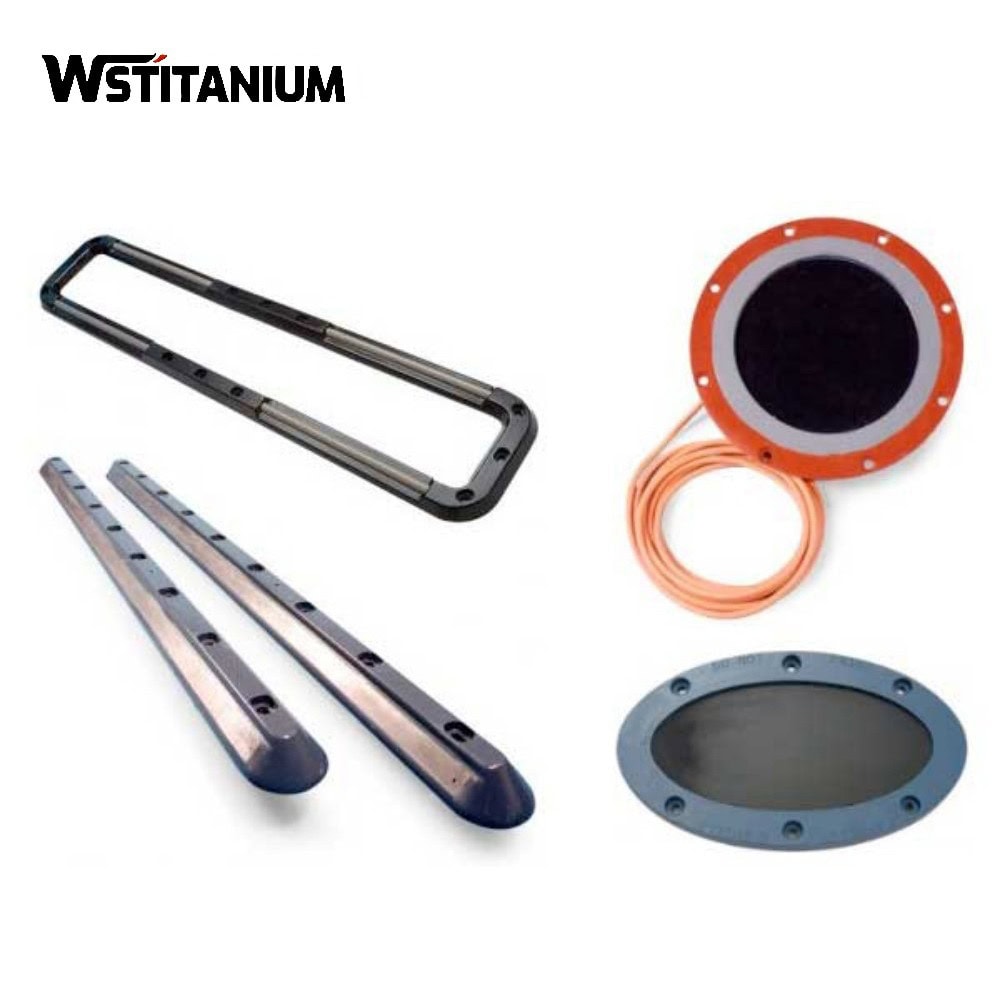
Common anode types: primarily mesh anodes, flexible anodes, and MMO plate anodes. Mesh anodes are currently the mainstream choice for tank bottom plate protection. MMO-coated titanium wires are woven into a mesh and laid flat in the sand pad layer below the tank bottom plate, combined with coke powder filler to form a uniform current distribution field, suitable for large tanks with a capacity of 100,000 m³ or more; flexible anodes are highly flexible and can be arranged along tank edge plates, pipes, and other irregularly shaped parts; MMO plate anodes are suitable for small tanks or partial tank reinforcement, are easy to install, and have lower costs.
(III) Marine Petrochemical
Marine petrochemical facilities (such as offshore platforms, subsea pipelines, and wharf steel structures) are exposed to highly corrosive environments such as seawater and salt spray. This results in extremely high corrosion rates for the equipment.
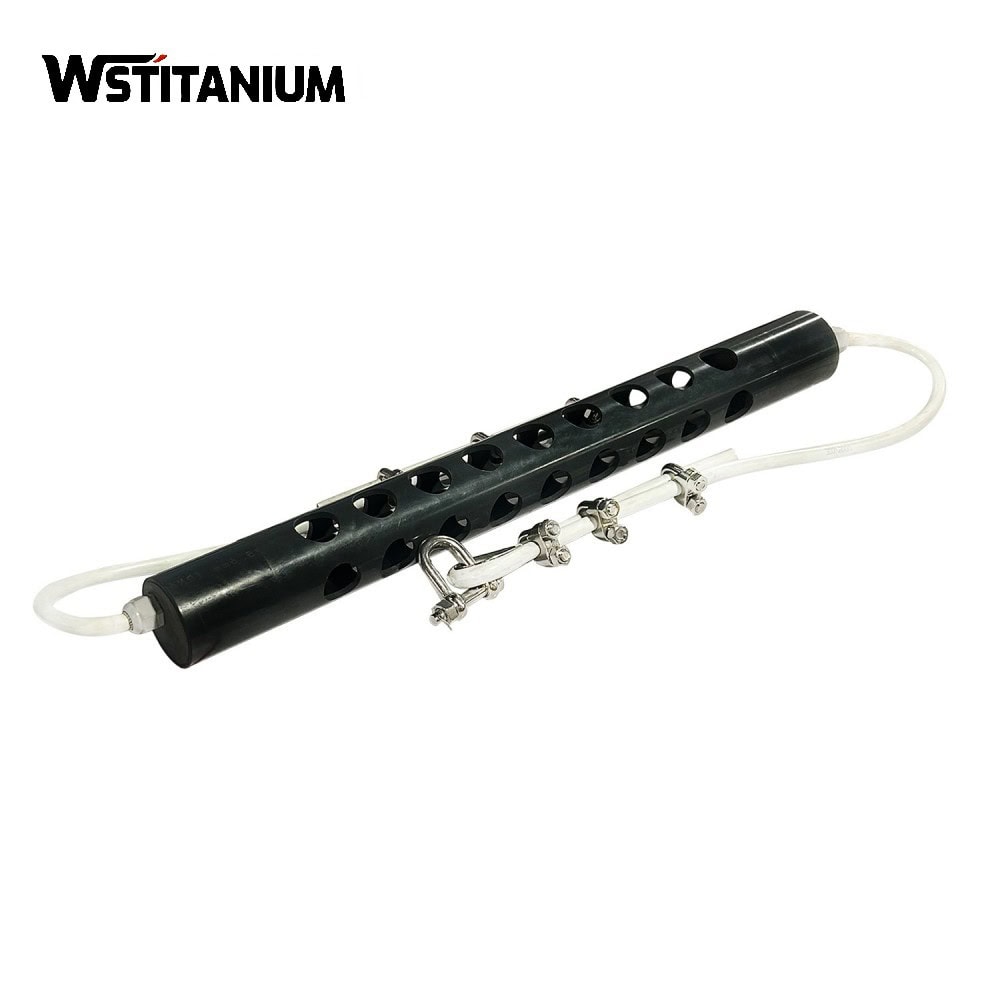
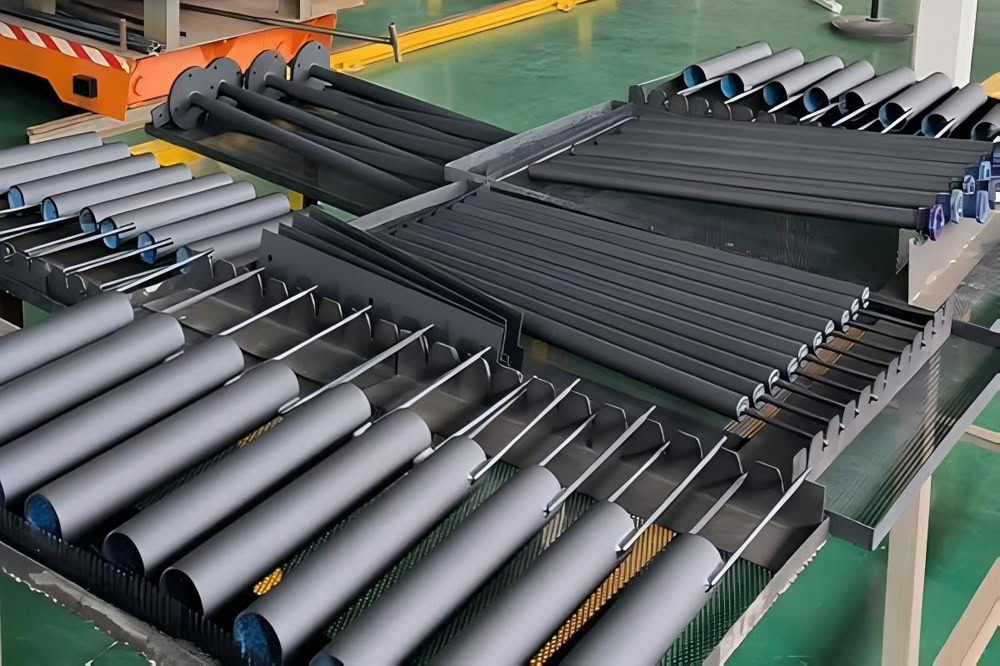
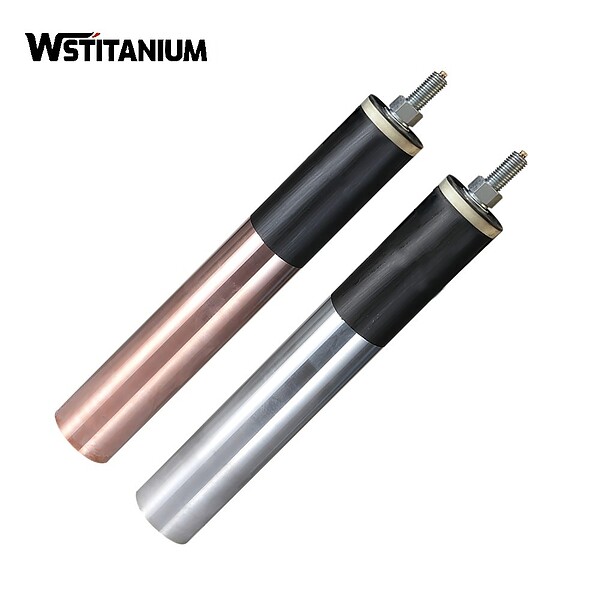
Common anode types: Primarily MMO tubular anodes, lead alloy anodes, and deep-well anodes. MMO tubular anodes offer excellent resistance to seawater corrosion and have a low consumption rate, making them suitable for protecting offshore platform jackets and subsea pipelines. Lead alloy anodes are less expensive and suitable for temporary protection or auxiliary facilities in seawater environments. Deep-well anodes are suitable for near-shore wharf steel structures; the anodes are buried in the soil beneath the seabed through drilling, avoiding the effects of strong seawater corrosion and biofouling.
(IV) Protection of Chemical Equipment and Installations
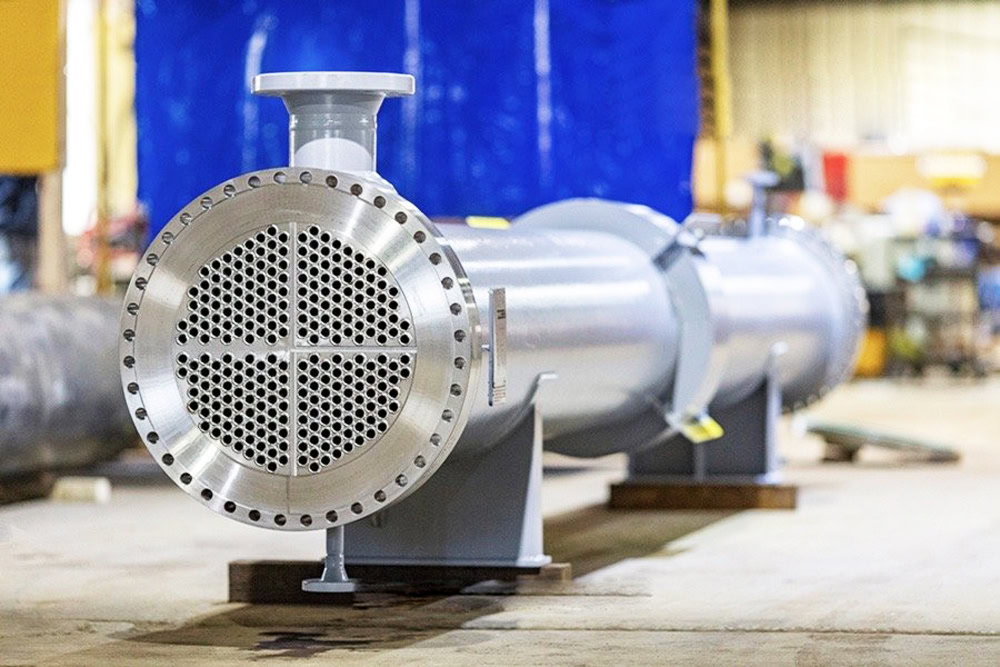
Equipment in petrochemical production, such as reactors, heat exchangers, towers, and pipelines, are exposed to extreme corrosive media (such as sulfuric acid, hydrochloric acid, sodium hydroxide solution, and crude oil cracking products) for extended periods, making them highly susceptible to corrosion. The application of ICCP anodes must meet requirements such as resistance to extreme media corrosion, high temperature and pressure, and non-contamination of the media.
Common anode types: MMO anodes and platinum anodes. MMO anodes (such as iridium-tantalum coated titanium anodes) have strong resistance to acid and alkali corrosion and excellent high-temperature performance (they can serve for a long time in environments below 150℃). They are suitable for the protection of the inner walls of chemical reactors and heat exchanger tube sheets without contaminating the reaction medium. Platinum anodes have extremely high chemical stability and are suitable for strong oxidizing media (such as concentrated nitric acid and chlorine) and high-temperature and high-pressure environments (such as hydrogenation reactors), but they are more expensive.





 Impressed Current Cathodic Protection
 Marine Growth Prevention Systems
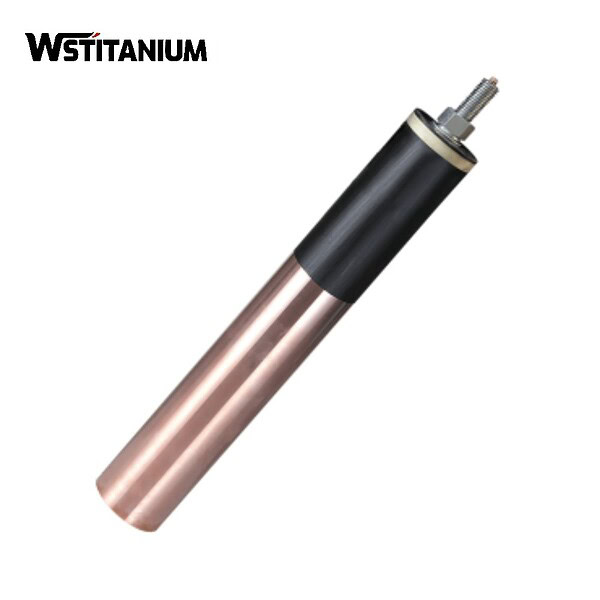 Marine Growth Prevention Systems
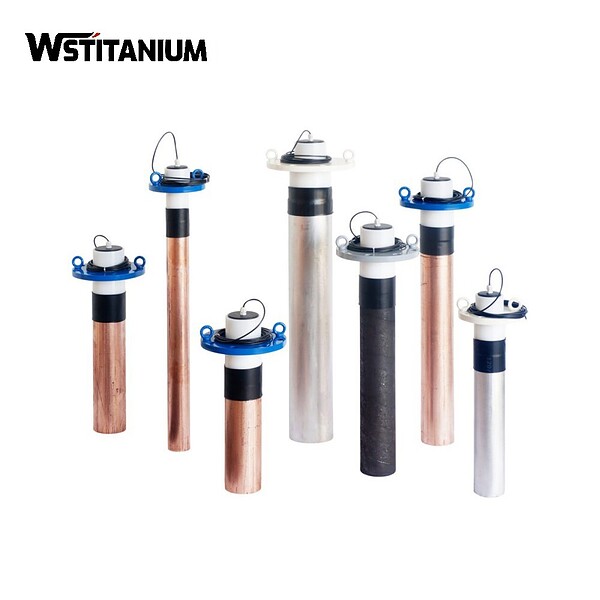 Marine Growth Prevention Systems
 Impressed Current Cathodic Protection
 Impressed Current Cathodic Protection
 Impressed Current Cathodic Protection
 Impressed Current Cathodic Protection