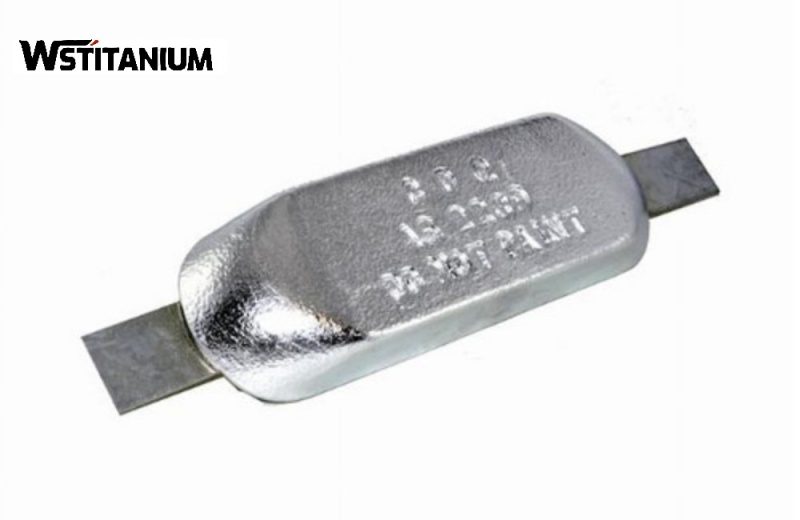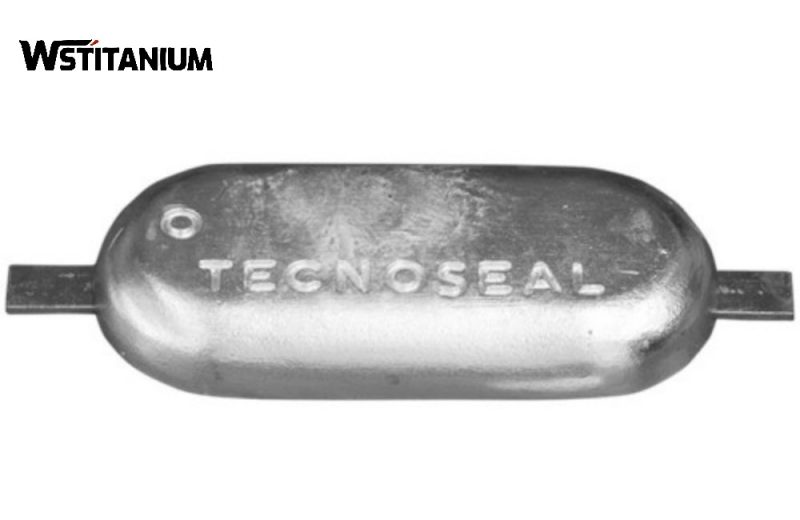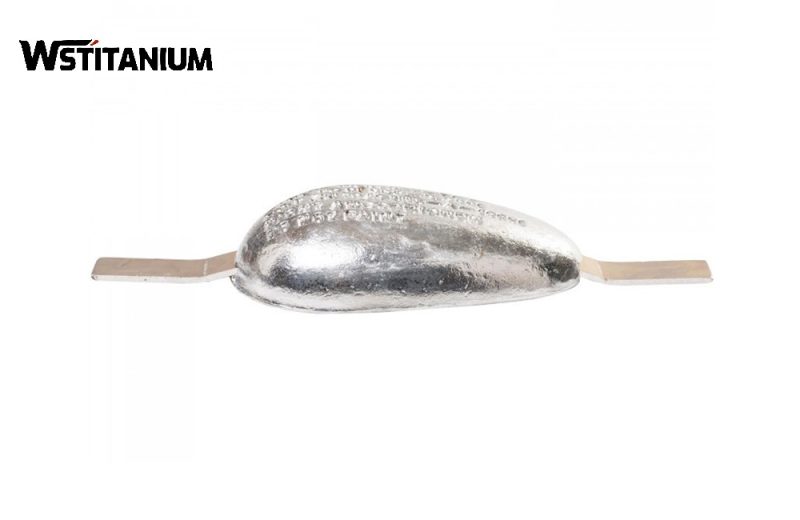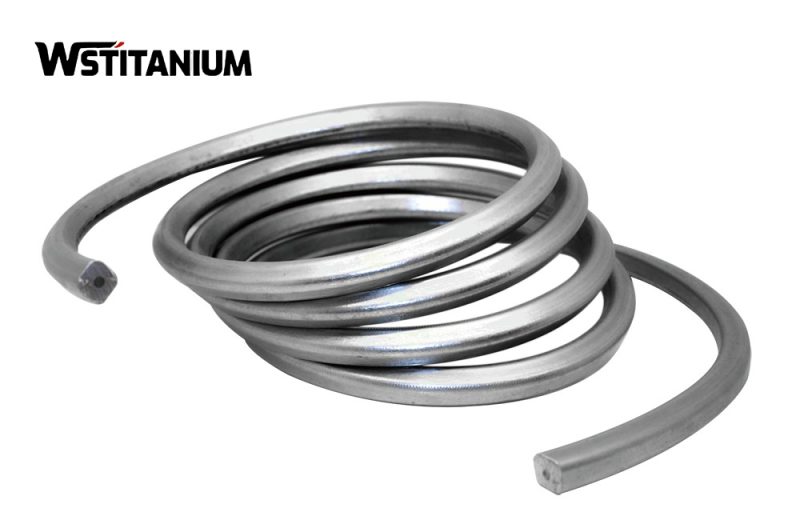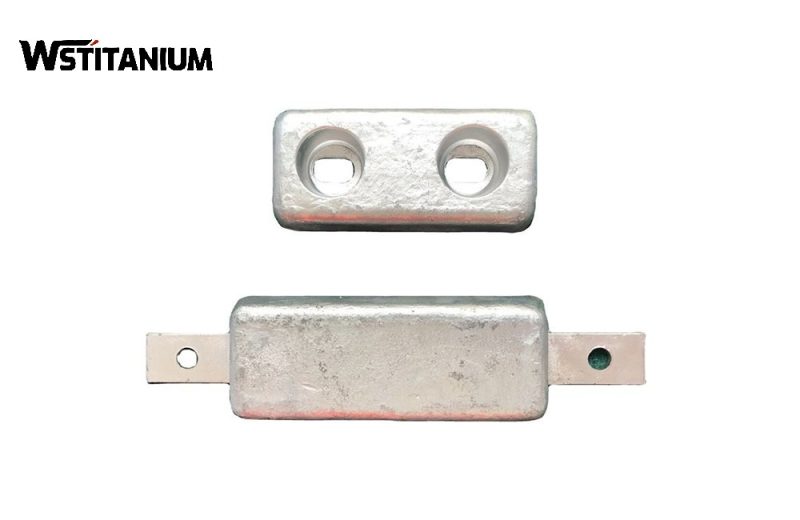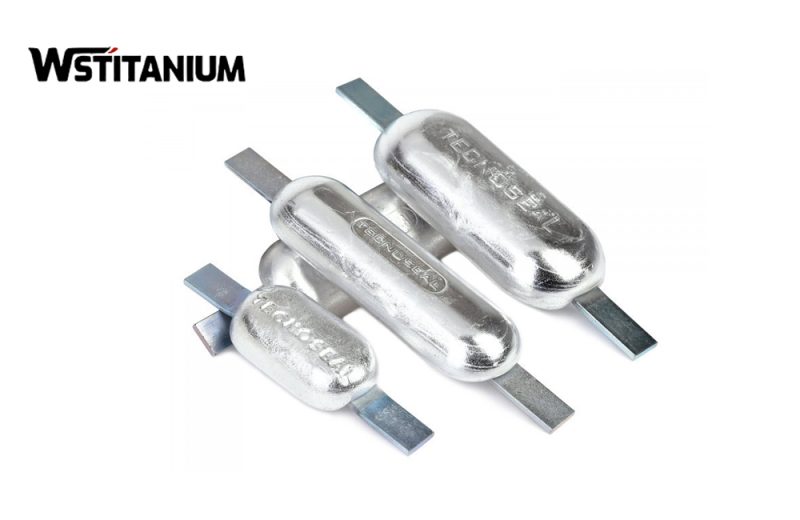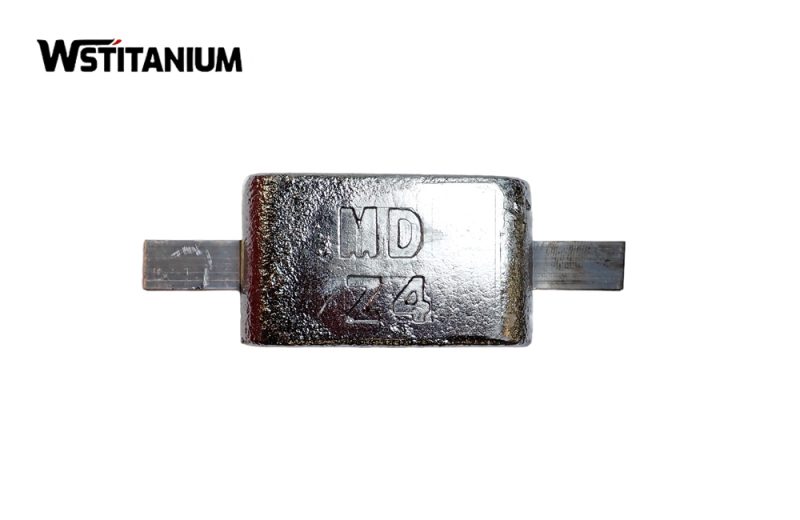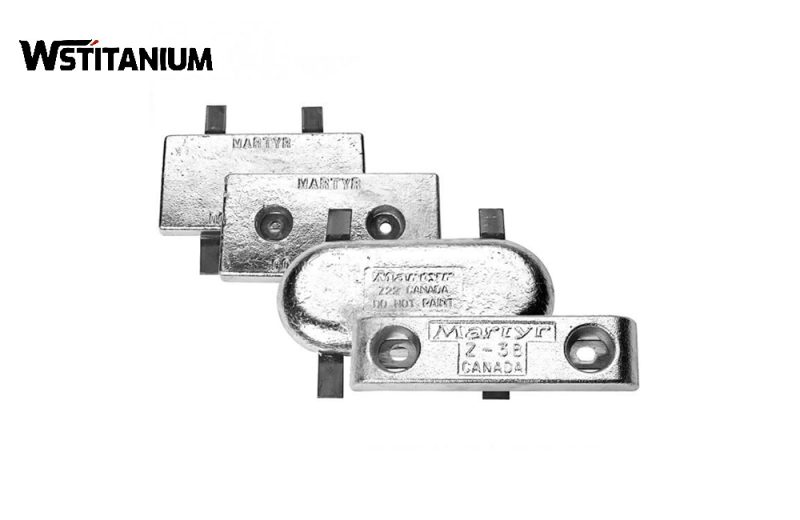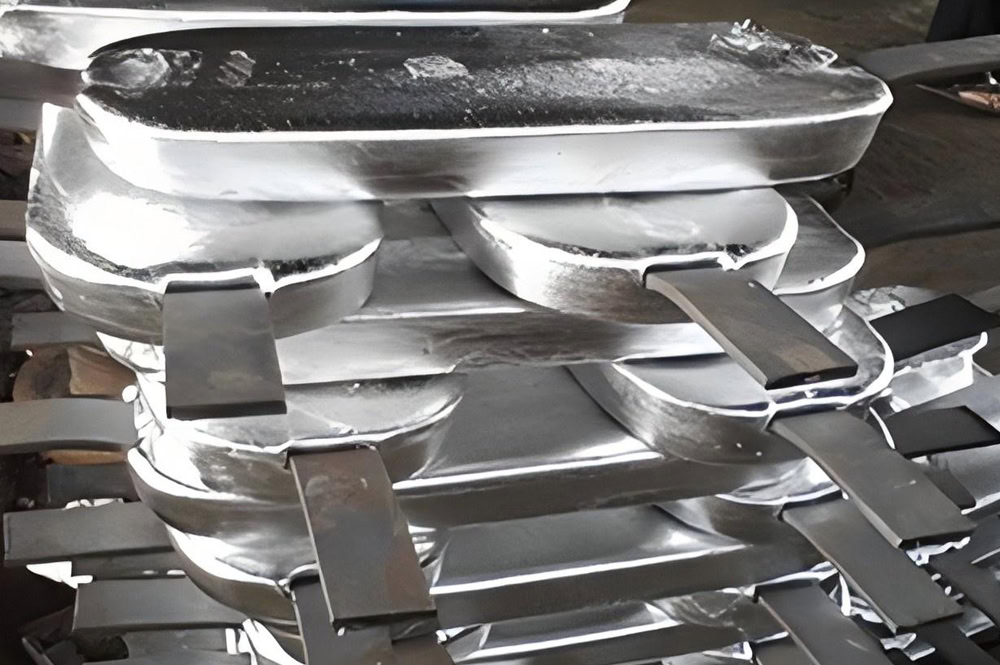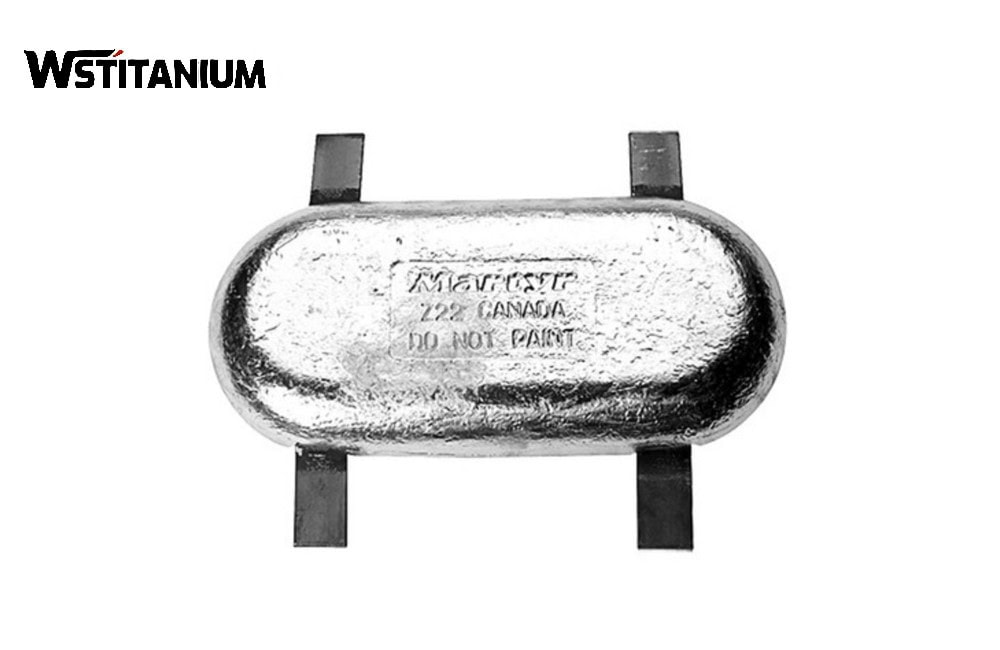

Welding zinc sacrificial anodes, due to their stable potential, high current efficiency, low cost, and strong environmental adaptability, have become the preferred material for corrosion protection of steel structures in seawater, saline mud, soil, and other media. They are widely used in ships, offshore oil platforms, buried pipelines, storage tanks, dock steel piles, and other fields. Welding is the core technology for achieving reliable electrical connection between the sacrificial zinc anode and the protected metal structure.
Types of Welding Zinc Sacrificial Anodes
Welding sacrificial zinc anodes are classified based on their alloy elements and structural form, resulting in significant differences in electrochemical performance and applications.
Pure Zinc Anodes
Zinc content ≥99.95%, with impurity elements such as iron, copper, and lead strictly controlled to very low levels. Open-circuit potential is approximately -1.03V (vs Cu/CuSO₄), and current efficiency is approximately 70%~80%. Suitable for freshwater and mildly corrosive environments with low chloride ion concentrations.
Zinc-Aluminum-Cadmium Anodes
Aluminum content 2.5%~3.5%, cadmium content 0.05%~0.15%, meeting the requirements of ASTM B418-16a Type I standard. Open circuit potential is -1.05~-1.15V (vs Cu/CuSO₄), and current efficiency is ≥90%. It is the mainstream choice for protecting metal structures in seawater and is the most common type of welded zinc anode.
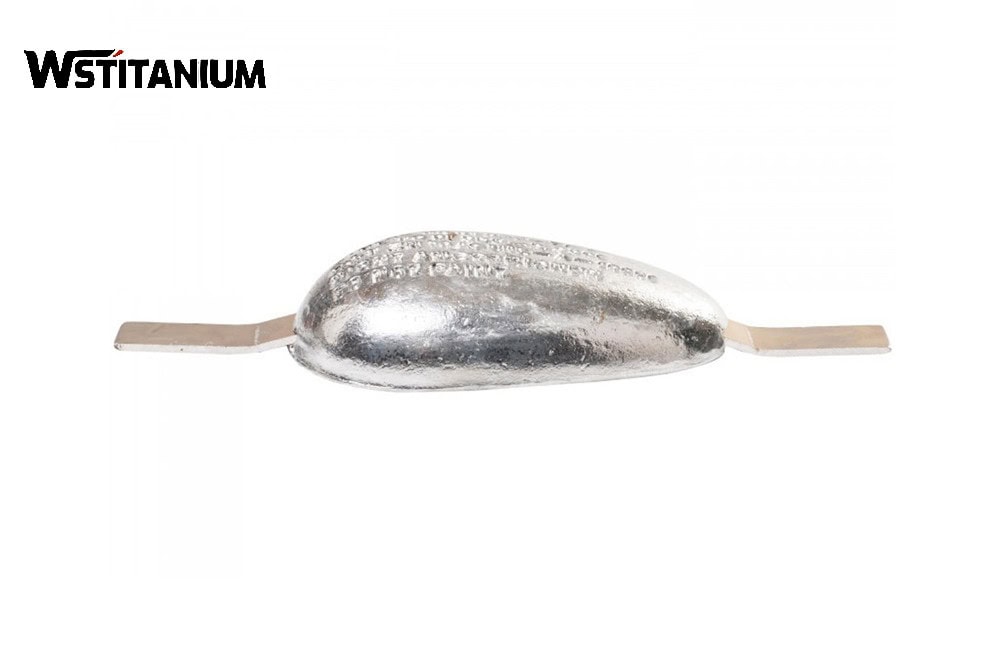
Zinc-Aluminum-Indium Anodes
Environmentally friendly and cadmium-free, with an indium content of 0.02% to 0.05%. Its electrochemical performance is comparable to that of zinc-aluminum-cadmium alloys, with an open-circuit potential of -1.04 to -1.12V (vs Cu/CuSO₄) and a current efficiency of ≥92%. It is suitable for marine engineering and projects near drinking water sources where cadmium emissions are strictly restricted.
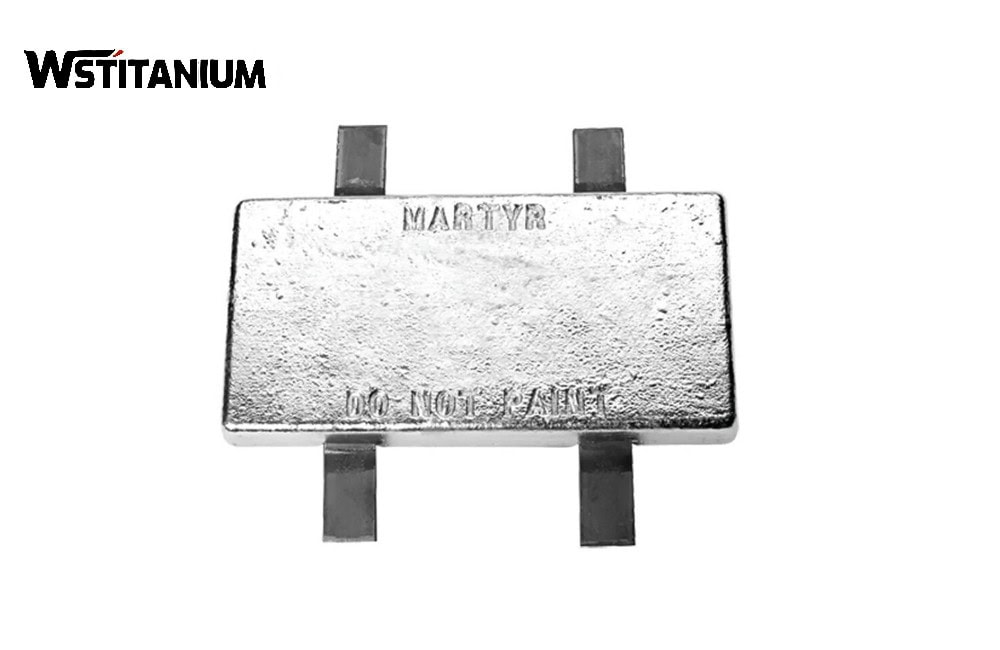
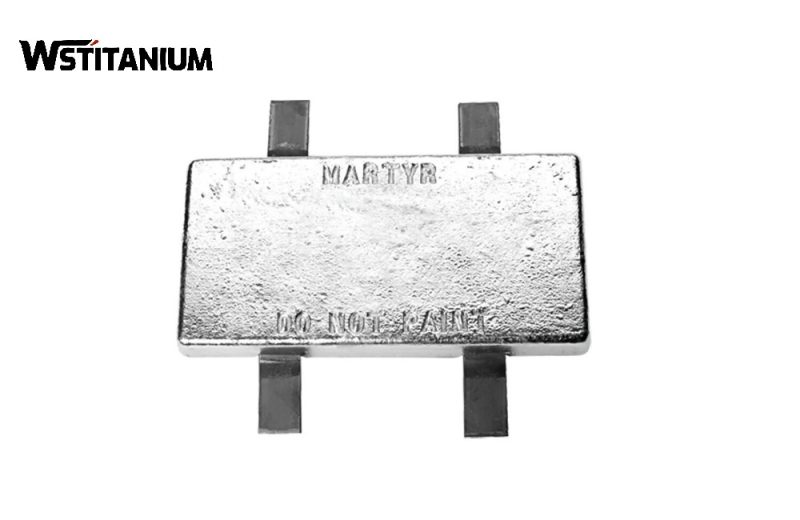
Welded Block Zinc Anodes
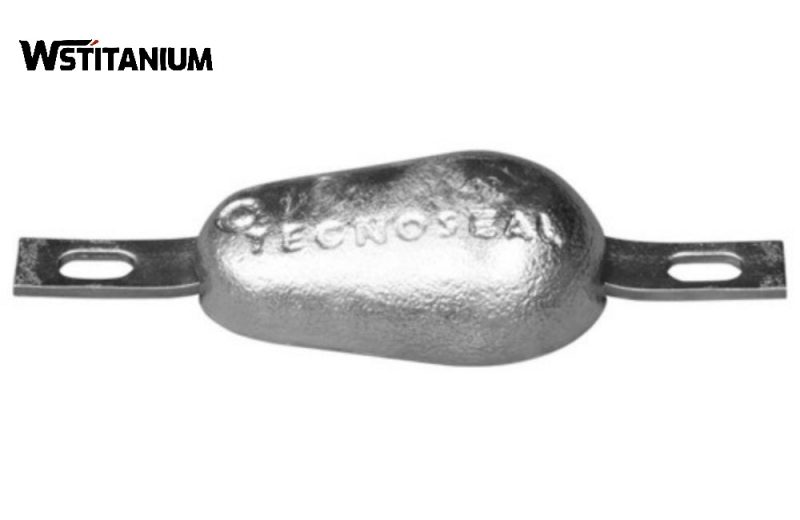
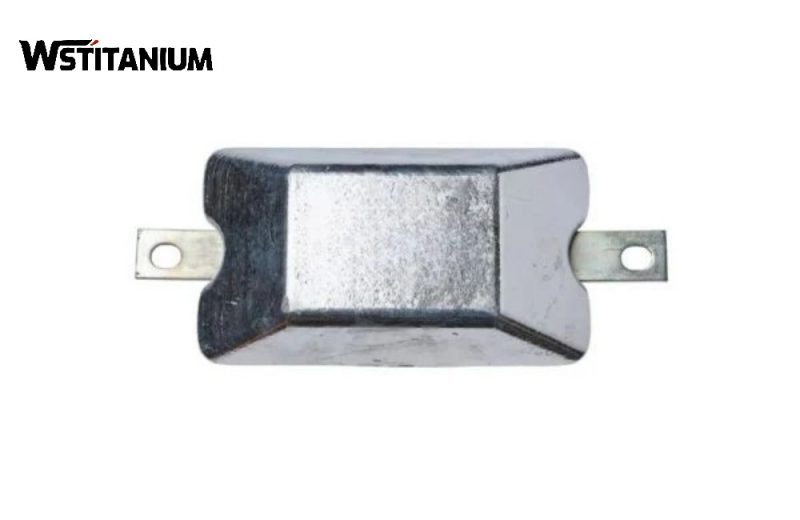
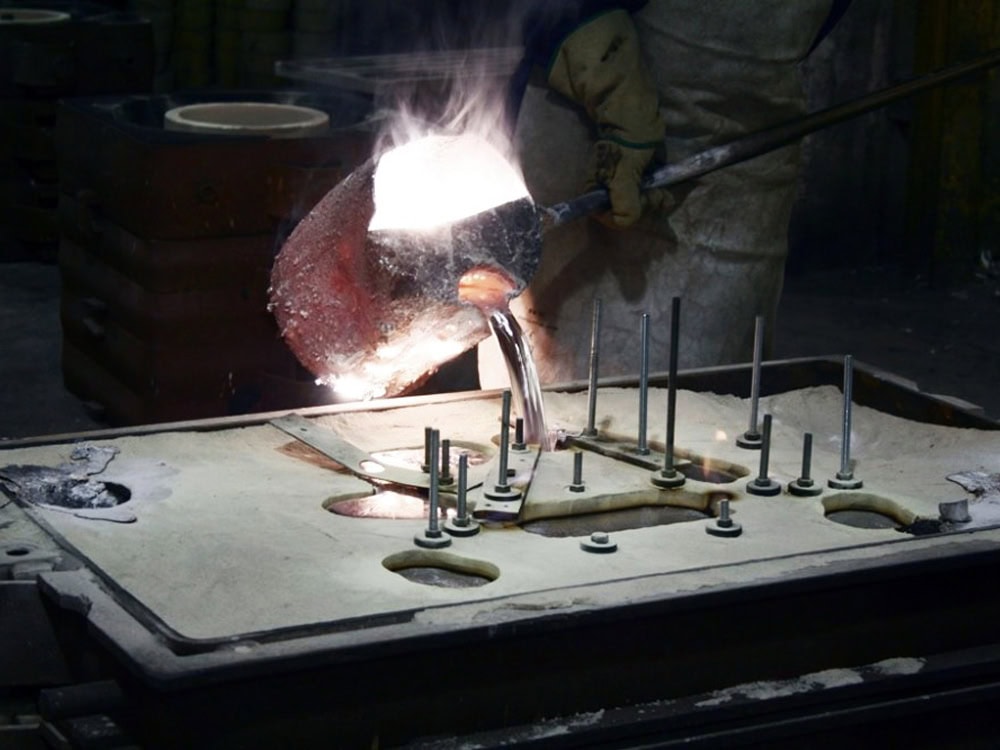
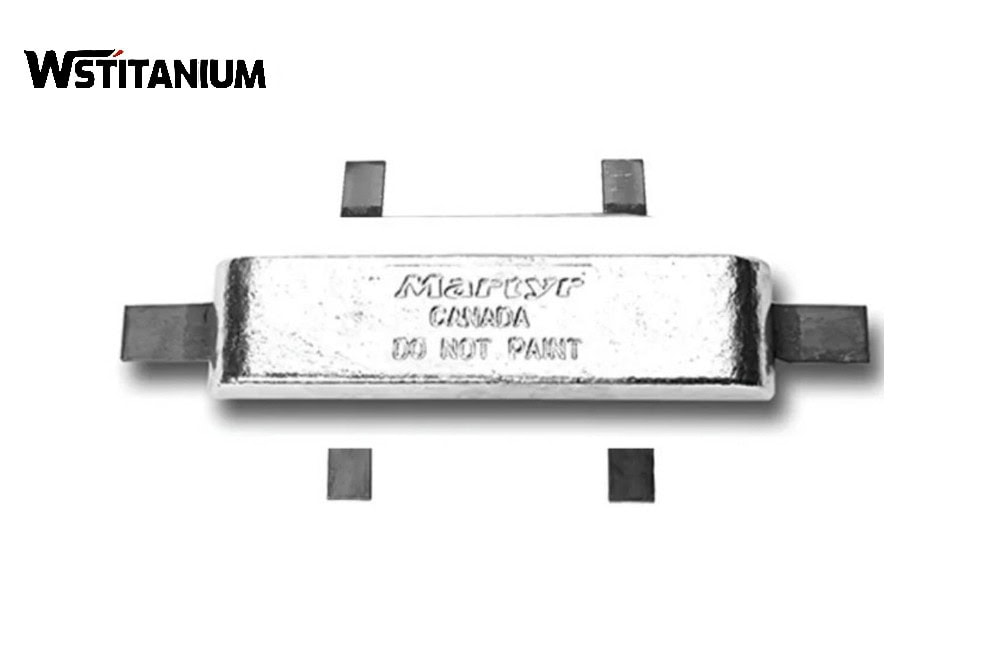
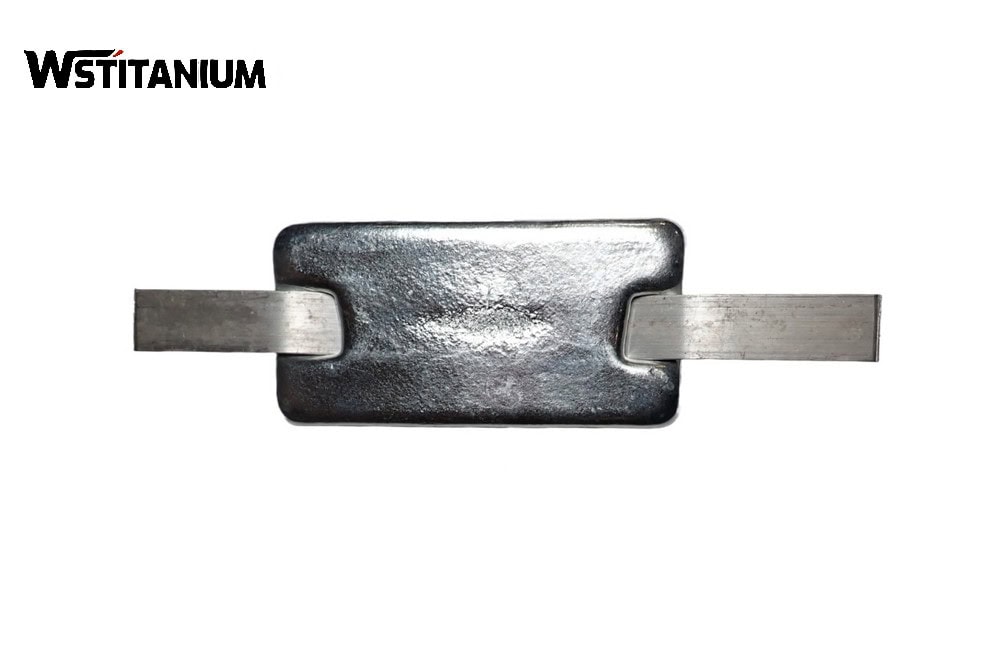
Manufactured by casting, these anodes range in weight from several kilograms to hundreds of kilograms and feature high capacitance per unit weight and stable current output. Block anodes require welding to the protected structure via a steel core or flat iron, and are primarily used for large structures such as ship hulls, offshore platforms, storage tank bottoms, and dock steel piles.
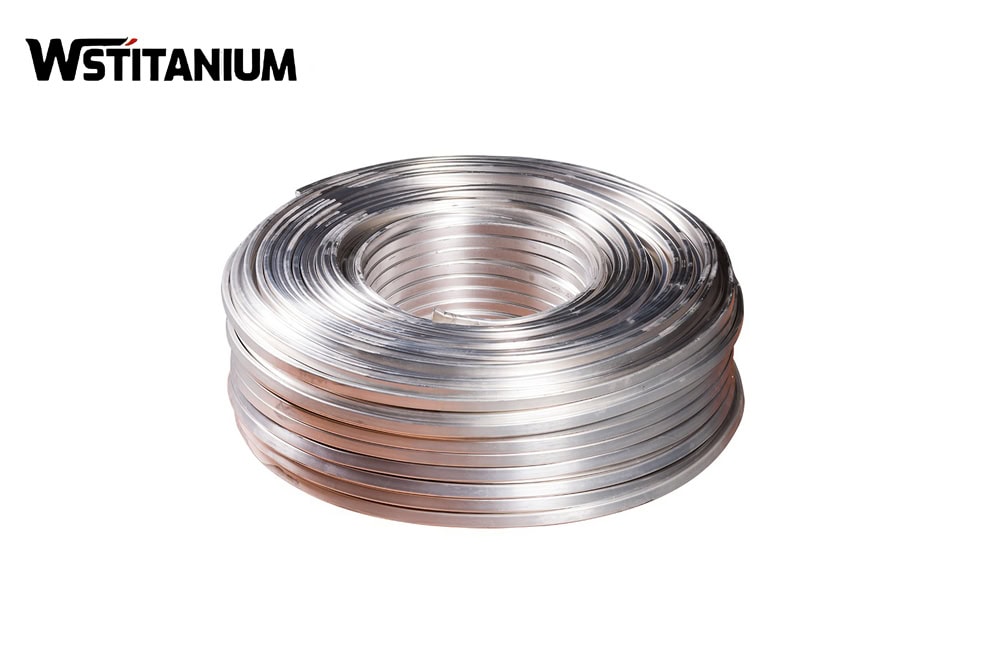
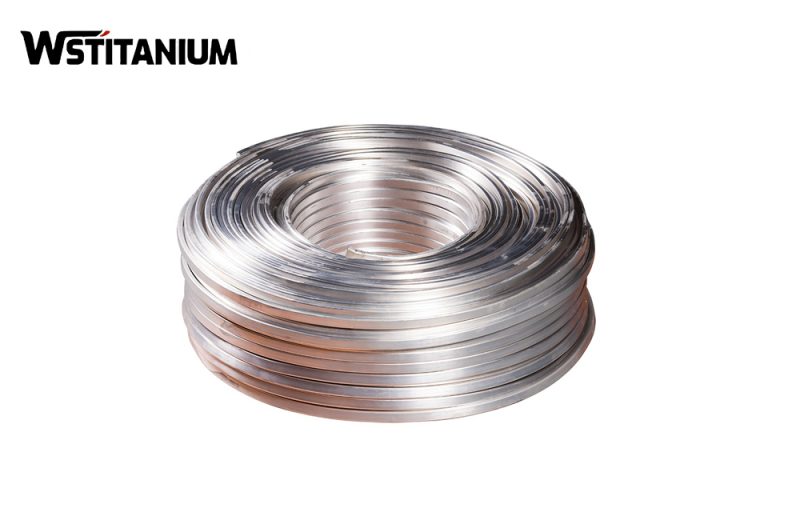
Welded Strip Zinc Anodes
Manufactured by extrusion molding, with a thickness of 1-5mm, a width of 10-50mm, and customizable length. They are flexible and can be bent and wrapped. Strip anodes can be directly welded to the protected structure or connected to pipes via aluminothermic welding. They are suitable for applications requiring continuous laying, such as buried pipelines, tank inner walls, and small ship components.
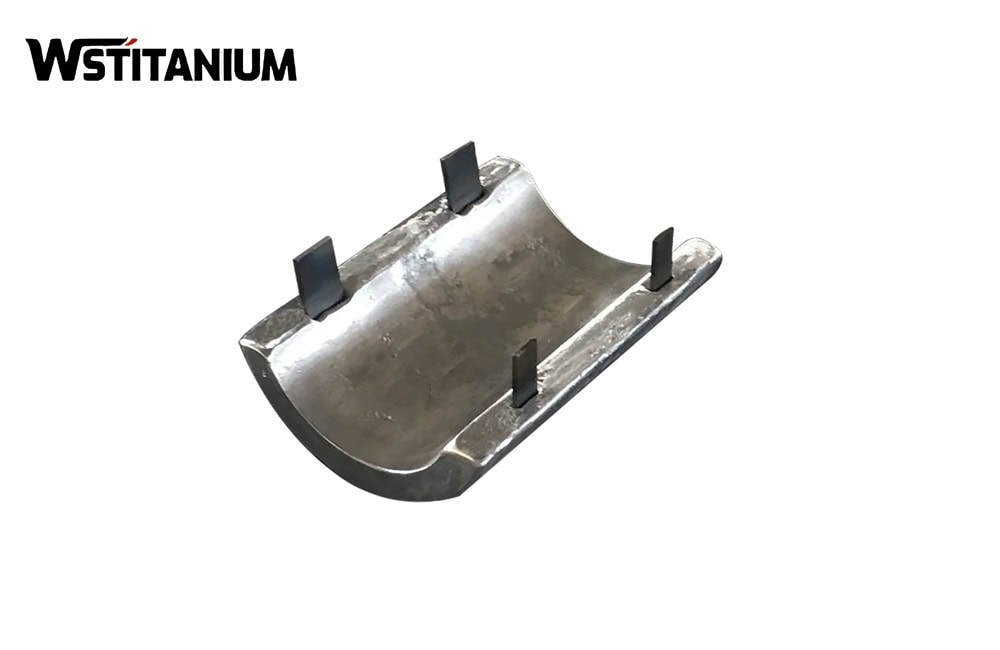
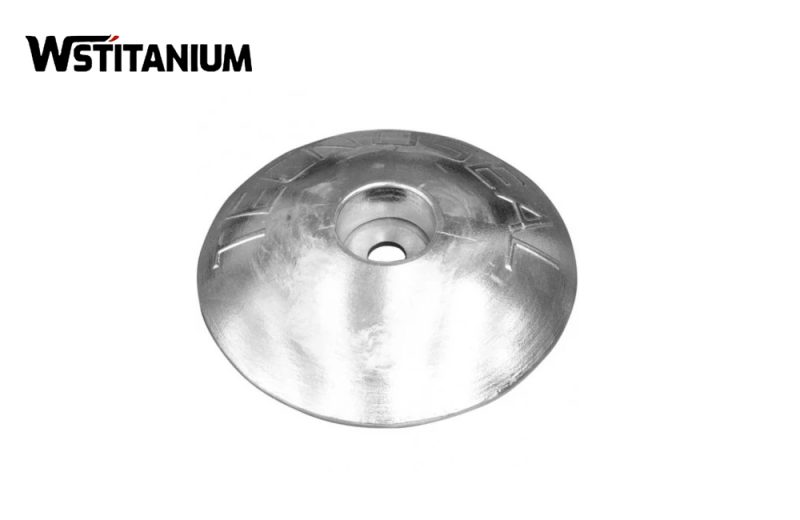
Bracelet Zinc Anodes
Featuring an arc-shaped block structure, designed specifically for pipelines, these anodes can be directly fitted onto the outside of the pipe and welded in place. They provide uniform current distribution and are easy to install, suitable for offshore pipelines, subsea pipelines, and other similar applications.
Specifications for Welded Sacrificial Zinc Anodes
The specifications for welded sacrificial zinc anodes follow three main categories: materials, electrochemical performance parameters, and structural dimensions. These specifications are the core basis for anode selection, welding construction, and quality inspection. All specification parameters must meet current standard requirements.
Physical and Chemical Parameters
The physical and chemical parameters of zinc anodes mainly include chemical composition, density, and hardness. Chemical composition is the key factor determining electrochemical performance. Current standards have strict regulations on the content of zinc and alloy elements, as well as the upper limits of impurity elements, to prevent impurities from causing anode passivation or a decrease in current efficiency. Table 1 shows the chemical composition requirements (mass fraction, %) for zinc-aluminum-cadmium alloy anodes specified by major domestic and international standards:
| Standard | Zinc (Zn) | Aluminum (Al) | Cadmium (Cd) | Iron (Fe) | Copper (Cu) | Lead (Pb) | Silicon (Si) |
|---|---|---|---|---|---|---|---|
| ASTM B418-16a Type I | Remainder | 2.5-3.5 | 0.05-0.15 | ≤0.005 | ≤0.005 | ≤0.006 | ≤0.01 |
| T/CSCP 0001-2024 | Remainder | 2.0-4.0 | 0.05-0.20 | ≤0.008 | ≤0.008 | ≤0.010 | ≤0.02 |
| AS 2239-2003 | Remainder | 2.2-3.8 | 0.04-0.18 | ≤0.007 | ≤0.007 | ≤0.009 | ≤0.015 |
← Swipe left/right to view full table →
The physical properties of the zinc anode are as follows: density approximately 7.14 g/cm³, melting point 419~450℃, Brinell hardness ≥60 HB, tensile strength of cast zinc anodes ≥120 MPa, elongation ≥2%, and tensile strength of extruded strip zinc anodes ≥180 MPa, elongation ≥5%. Its melting point is significantly lower than that of steel components. Temperature must be strictly controlled during welding to prevent excessive melting of the anode, which could lead to loss of components and degradation of performance.
Electrochemical Performance
Electrochemical performance is a core technical indicator for sacrificial zinc anodes. It directly determines the effectiveness of cathodic protection. According to the requirements of T/CSCP 0001-2024 and AS 2239-2003 standards, the electrochemical performance of zinc anodes in seawater and saline sediment environments must meet the requirements shown in Table 2:
| Performance Indicator | Seawater Environment | Testing |
|---|---|---|
| Open Circuit Potential (vs Cu/CuSO₄) | -1.05 ~ -1.15 V | Measured after 24 h of standing. |
| Operating Potential (vs Cu/CuSO₄) | -1.00 ~ -1.10 V | Measured after applying rated current. |
| Current Efficiency | ≥ 90% | Accelerated corrosion test ≥ 1000 h. |
| Actual Capacity | ≥ 750 Ah/kg | Continuous discharge in seawater. |
| Consumption Rate | ≤ 12 kg/(A·year) | Continuous test under rated current. |
← Swipe left/right to view full table →
Note: The current efficiency of the zinc anode in the soil environment is required to be ≥85%, and the actual capacity is required to be ≥700 Ah/kg.
Structural Dimensions
There are no uniform fixed dimensions for welded sacrificial zinc anodes. Wstitanium customizes them according to your needs. Current standards only specify dimensional tolerance requirements (EN 12496-2013): for anodes weighing >50kg, the tolerance is ±3%; for anodes weighing <50kg, the tolerance is ±5%; the total mass of cast anodes shall not be less than the nominal value.
- Block Zinc Anodes
ZC-1 type: 300×150×60mm, weight approximately 19.2kg, suitable for small vessels and tank accessories;
ZC-2 type: 500×(115+135)×130mm, weight approximately 56kg, suitable for tank bottom plates and dock steel piles;
ZH-1 type: 800×140×60mm, weight approximately 47kg, suitable for ship hulls and offshore platforms;
ZP-2 type: 1000×(65+75)×65mm, weight approximately 33kg, suitable for buried pipelines and deep well anode beds.
- Strip Zinc Anodes
ZR-1 Type: 25.4 × 31.75 mm, weight approximately 5.7 kg per meter, suitable for high-resistivity soil environments;
ZR-2 Type: 15.88 × 22.23 mm, weight approximately 2.5 kg per meter, suitable for seawater and humid soil environments;
ZR-3 Type: 12.7 × 14.28 mm, weight approximately 1.2 kg per meter, suitable for tank inner walls and pipelines;
ZR-4 Type: 6.35 × 10 mm, weight approximately 0.45 kg per meter, suitable for the repair of old structures.
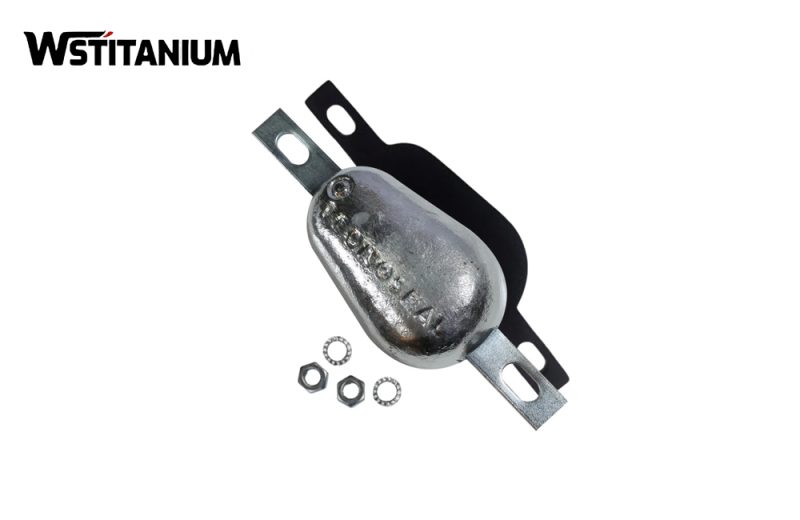
All zinc anodes require a steel core (carbon steel or stainless steel). The interface between the steel core and the zinc alloy must be gap-free and without separation. The exposed part of the steel core must be treated with anti-corrosion coating. Welding should only be performed on the steel core, avoiding direct welding of the zinc alloy body.
Technical Standards
The manufacturing, quality inspection, and welding installation of sacrificial zinc anodes must comply with current standard requirements. International standards are primarily based on ASTM (USA), AS (Australia), and EN (Europe). The core scope of application and key requirements of various standards are as follows:
《Standard Specification for Cast and Wrought Galvanic Zinc Anodes》. This is an internationally recognized standard for zinc anodes published by the American Society for Testing and Materials. It is the most widely used zinc anode standard globally. It specifies the chemical composition, analytical methods, quality control, manufacturing requirements, and packaging markings of cast and forged zinc anodes. The standard classifies zinc anodes into Type I and Type II. Type I is a zinc-aluminum-cadmium alloy, suitable for seawater and saline media; Type II is a pure zinc anode, suitable for freshwater and soil media.
《Galvanic (Sacrificial) Anodes for Cathodic Protection》. This is an Australian standard. It is comprehensive, covering three types of sacrificial anodes: zinc-based, aluminum-based, and magnesium-based. It specifies the requirements for the anode core material, mechanical properties, electrochemical characteristics, backfill material requirements, and pre-filled anode requirements. The standard clearly defines the consumption rate and open-circuit potential requirements of zinc anodes in different media (seawater, soil, drinking water), making it an important basis for selecting zinc anodes in multi-media environments.
《Cathodic protection – Sacrificial anodes for cathodic protection》. This European standard specifies the general requirements, dimensional tolerances, test methods, marking, and packaging of sacrificial anodes. It focuses on detailed specifications for the dimensional deviations of anodes, such as a length tolerance of ±3% or ±25mm for bar-shaped anodes, and inner diameter tolerances for bracelet-type anodes based on pipe diameter classifications. Welding construction must adhere to the dimensional requirements of this standard to ensure proper contact between the anode and the protected structure.
《Control of External Corrosion on Underground or Submerged Metallic Piping Systems》.This American Association of Corrosion Engineers standard specifies the requirements for external corrosion control of underground and underwater metal pipelines. It clearly defines the welding connections, contact resistance, and potential testing of sacrificial zinc anodes, serving as a core basis for zinc anode construction in international oil and gas pipeline engineering.
The welding of sacrificial zinc anodes must comply with the relevant international standards based on the project’s location (e.g., ASTM B418-16a and NACE SP0169-2013 for European and American projects, and AS 2239-2003 for Australian projects). When a project has specific technical requirements, these special provisions outlined in the project’s technical specifications must be followed in addition to meeting the current standards.
Welding
Welding and installation are the core steps in the construction of a sacrificial zinc anode cathodic protection system. The key requirement is to achieve a reliable electrical connection between the anode and the protected structure (contact resistance ≤ 0.01Ω). The main welding methods for zinc anodes are thermite welding (exothermic welding) and arc welding.
Thermite Welding (Exothermic Welding)
Thermite welding is a welding method that uses the heat of a chemical reaction of a thermite mixture to melt the metal and form a weld. It is suitable for connecting strip-shaped zinc anodes to pipes/storage tanks and connecting the steel core of block anodes to large steel components, and is the preferred method for welding sacrificial zinc anodes.
Arc Welding
Arc welding is only suitable for welding the steel core of block zinc anodes to steel components. Direct welding of the zinc alloy body is strictly prohibited to avoid overheating and melting of the zinc alloy, leading to loss of components and degradation of the anode’s electrochemical performance.
Welding Quality
Welding quality is crucial for determining the effectiveness of cathodic protection. After welding, the weld points must be allowed to cool naturally; forced cooling is prohibited. The weld seam must be full, continuous, free of cracks, pores, slag inclusions, and lack of fusion. The weld height should be no less than 1/2 of the steel core diameter, and the width should be no less than 1.5 times the steel core diameter. The contact resistance of all weld points must be ≤ 0.01Ω.
Sacrificial Zinc Anode Applications
Sacrificial zinc anodes are widely used in marine, oil and gas, municipal, shipbuilding, and water conservancy fields. The corrosion environment, characteristics of the protected structures, anode selection, and welding and installation requirements vary across these different fields.
The marine environment is the most extensive application area for sacrificial zinc anodes, including offshore oil platforms, subsea pipelines, dock steel piles, breakwaters, and bridge foundations. The corrosive environment is seawater (fully submerged zone, tidal zone, splash zone), characterized by high chloride ion concentration, high flow velocity, and severe marine fouling, resulting in a high corrosion rate. Zinc-aluminum-cadmium alloy anodes (ASTM B418-16a Type I/T/CSCP 0001-2024) are preferred. Block and bracelet-shaped anodes are used in the fully submerged zone. Block anodes are used in the tidal zone with increased installation density. Due to the harsh corrosive environment in the splash zone, anticorrosive coatings are also required.
Oil and Gas
Sacrificial zinc anode applications in oil and gas engineering mainly include buried oil/gas pipelines, oil and gas storage tanks, and injection well tubing. The corrosive environment is primarily soil and oilfield water (high salinity, high chloride ions, containing CO₂/H₂S). The main corrosion types are localized pitting and crevice corrosion. Strip zinc anodes (ZR-1 type/ZR-2 type) are used for buried pipelines, in conjunction with conductive fillers; block zinc anodes (ZC-2 type) are used for oil and gas storage tanks; and due to the higher temperature (≤54℃), zinc-aluminum-indium environmentally friendly anodes are used for injection well tubing.
Shipbuilding Industry
The application of sacrificial zinc anodes in the shipbuilding industry mainly includes ship hulls, ballast tanks, propellers, rudders, and seawater cooling systems. The corrosive environment is seawater, which is significantly affected by ship speed, ocean currents, and marine organism fouling. High-risk corrosion areas are the waterline and the area near the propeller. Marine-specific zinc anodes should be selected. Block-type zinc anodes (ZH-1 type) are used for the hull, and strip-type zinc anodes (ZR-3 type) are used for ballast tanks.
Municipal Engineering
The application of sacrificial zinc anodes in municipal engineering mainly includes buried urban water supply and drainage pipelines, gas pipelines, sewage treatment plant structures, and urban bridge foundations. The corrosive environment is mainly soil and sewage (containing various corrosive ions). Soil resistivity varies considerably. Strip-type zinc anodes (ZR-2 type / ZR-3 type) are used in low-resistivity soil (≤2000Ω・cm). High-resistivity soil requires the use of conductive fillers. Zinc-aluminum-cadmium alloy anodes are used for sewage treatment plant structures to prevent anode passivation caused by impurities in the sewage.
Water Conservancy Engineering
The application of sacrificial zinc anodes in water conservancy engineering mainly includes reservoir gates, water pipelines, aqueducts, and steel structures of hydropower stations. The corrosive environment is mainly fresh water and muddy water, with low chloride ion concentration and relatively slow corrosion rate. Pure zinc anodes or low-alloy zinc anodes are preferred.
Selection Principles
The selection of sacrificial zinc anodes should follow the principles of environmental suitability, performance matching, and economic rationality. Zinc-aluminum-cadmium/zinc-aluminum-indium alloy anodes are used in seawater/high chloride ion environments. Pure zinc anodes or low-alloy zinc anodes are used in freshwater/soil environments. Zinc anodes are used in environments with resistivity ≤2000Ω・cm. Soil environments with resistivity >2000Ω・cm require the use of conductive fillers. For environments with resistivity >5000Ω・cm, magnesium anodes are recommended. The applicable temperature for zinc anodes is ≤54℃. If the ambient temperature is >54℃, aluminum alloy anodes should be used.
Conclusion
Sacrificial zinc anodes, as the core material of cathodic protection technology, have become the preferred solution for corrosion protection of steel structures in seawater, soil, freshwater, and other media. Sacrificial zinc anodes are classified by alloy composition into pure zinc anodes, zinc-aluminum-cadmium alloy anodes, and zinc-aluminum-indium alloy anodes. They are also classified by structural form into block, strip, rod, and bracelet shapes. Among these, zinc-aluminum-cadmium alloy anodes are the most commonly used type in engineering due to their excellent electrochemical performance. Sacrificial zinc anodes are widely used in marine engineering, oil and gas engineering, shipbuilding, municipal engineering, water conservancy projects, and other fields. Selection should be determined based on factors such as media type, resistivity, temperature, and structural form. The applicable temperature is ≤54℃, and the resistivity is ≤2000Ω·cm.