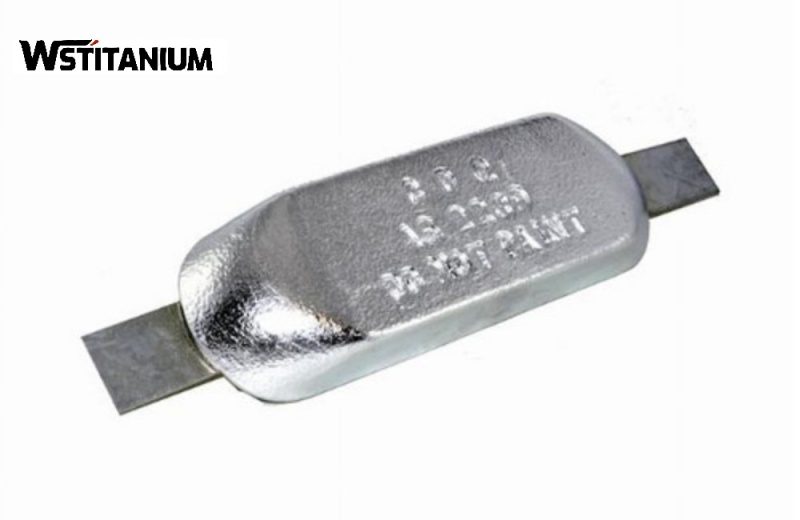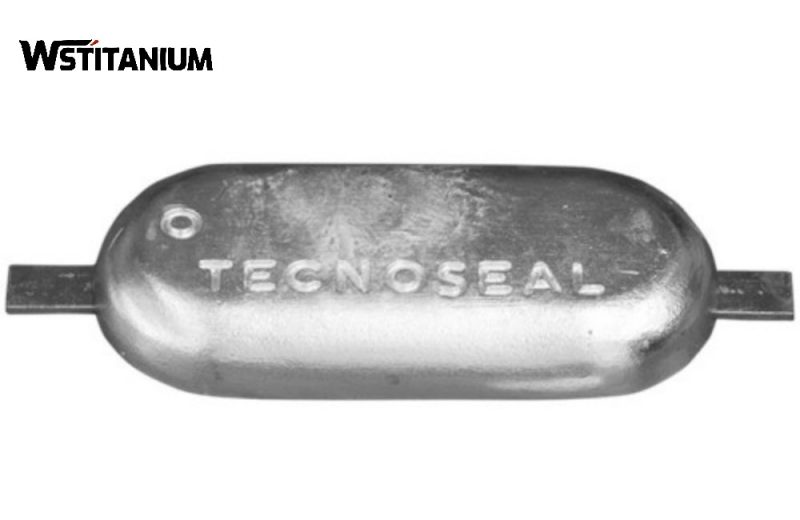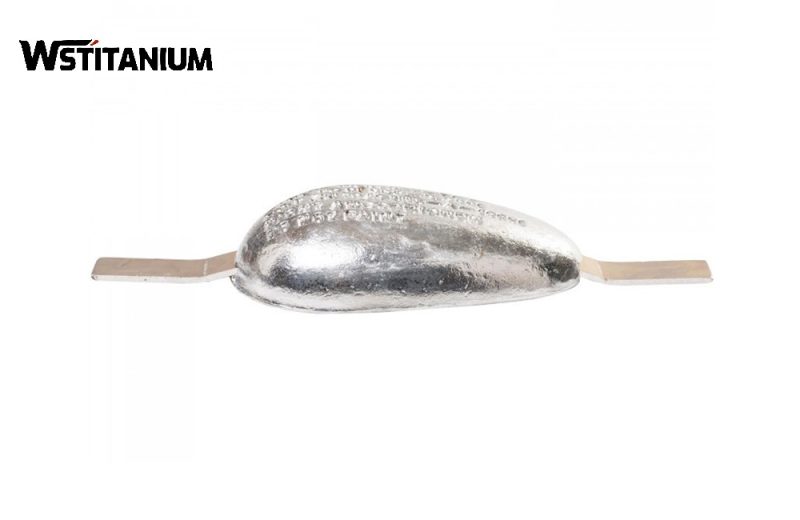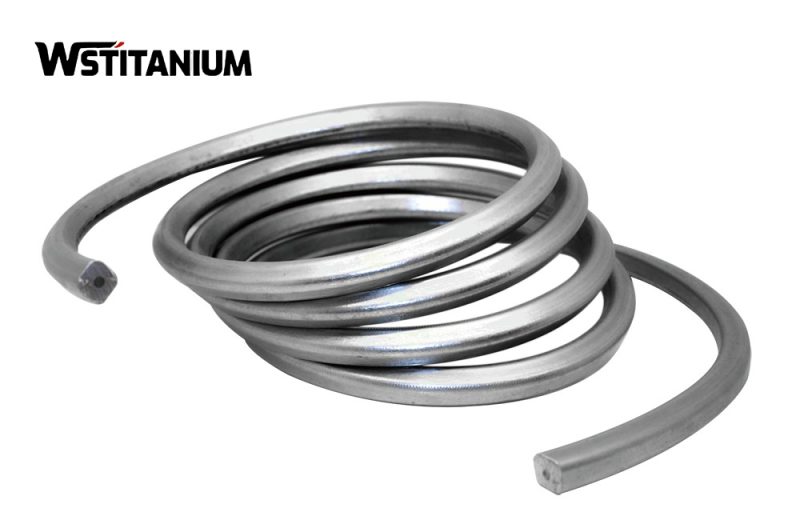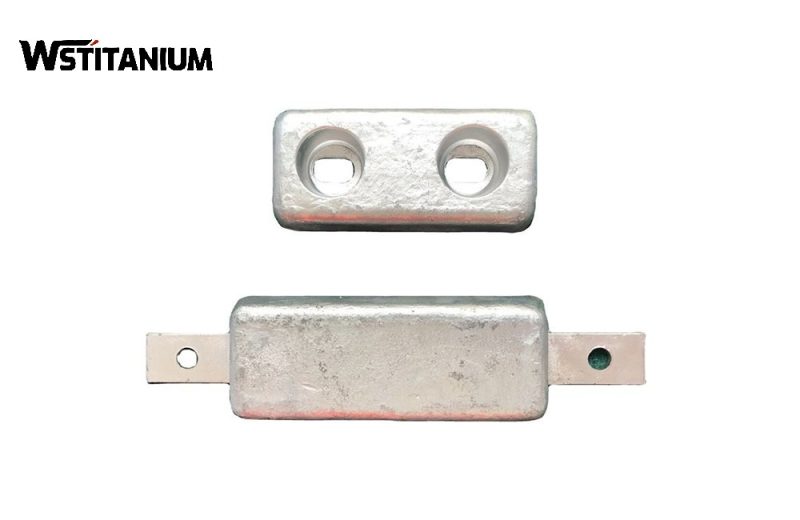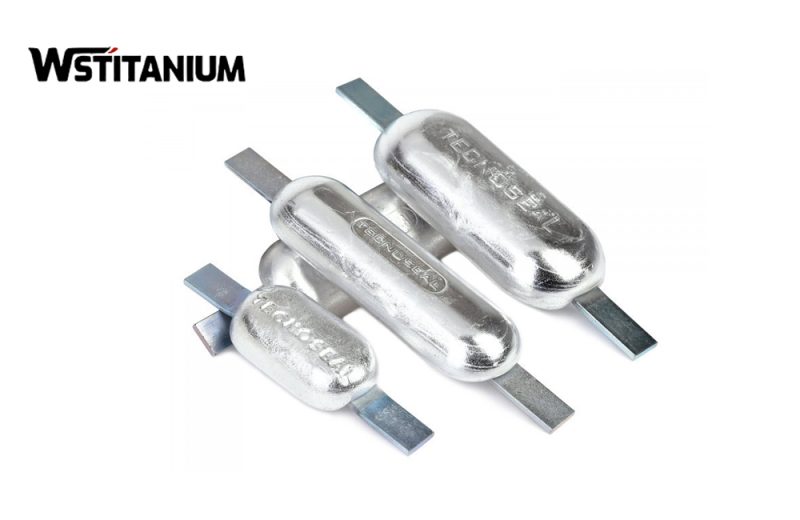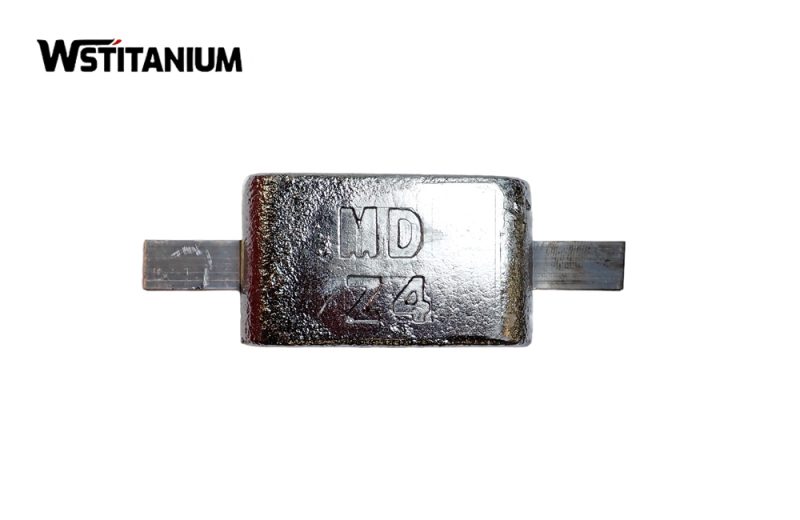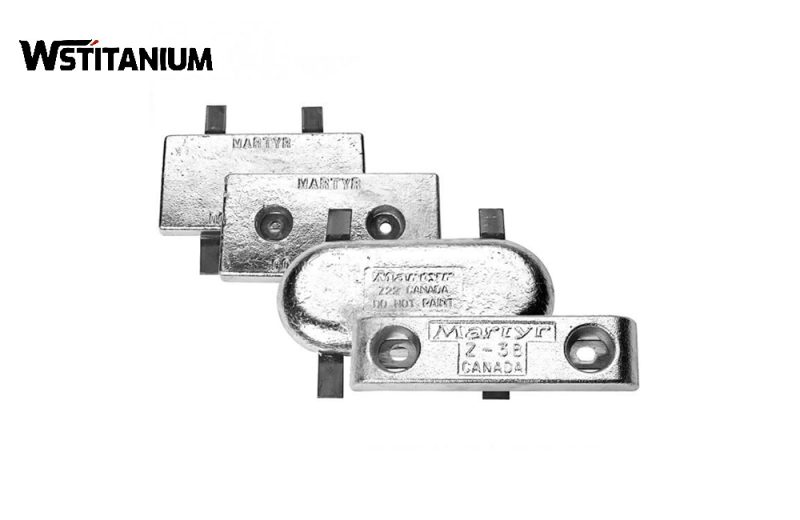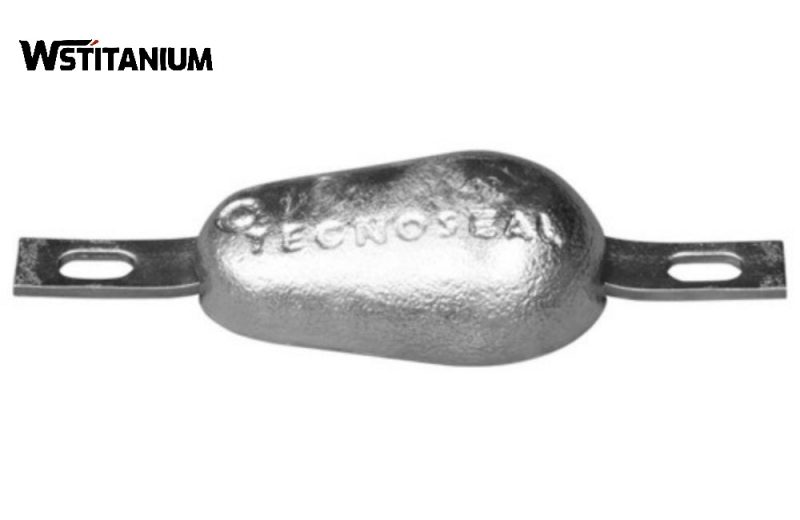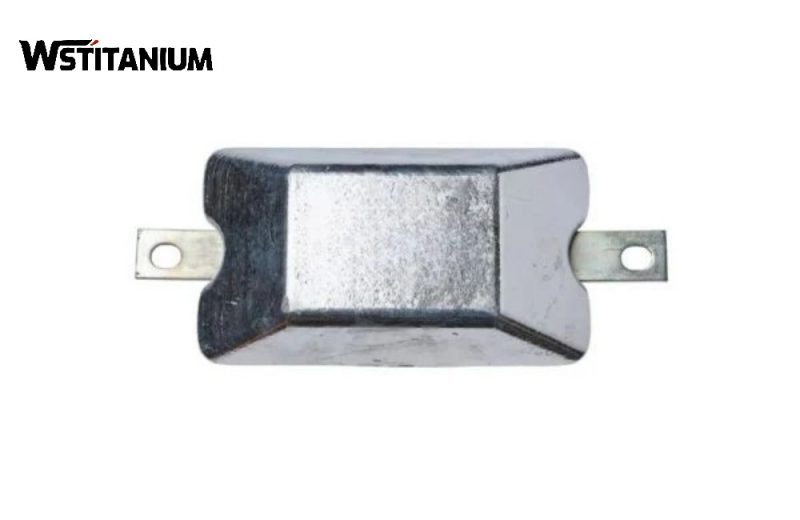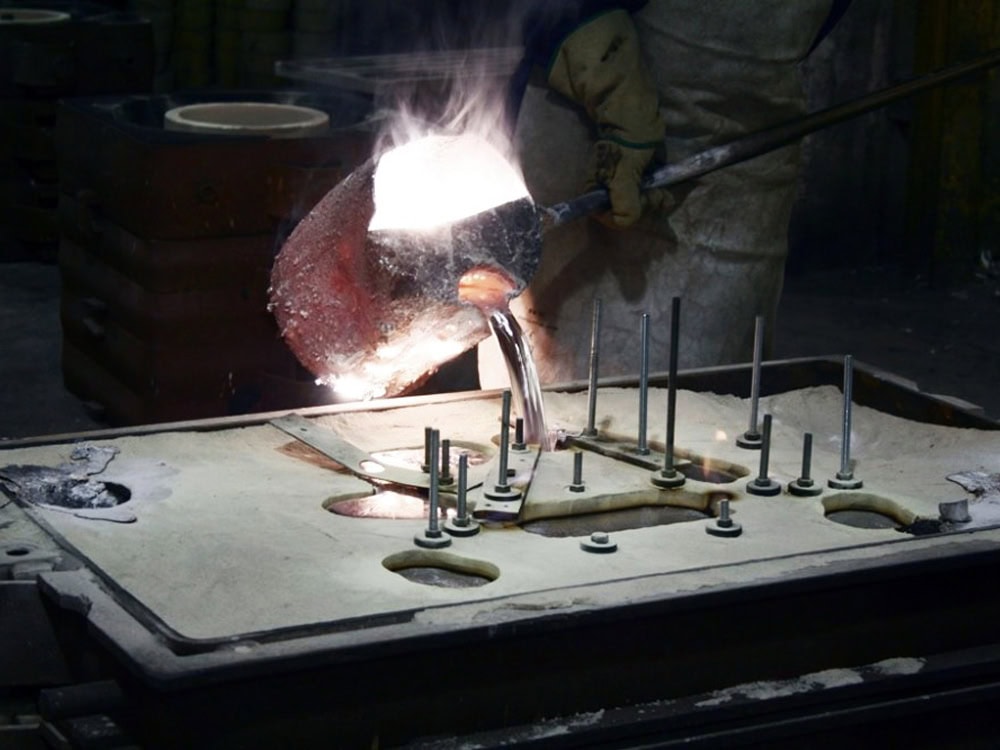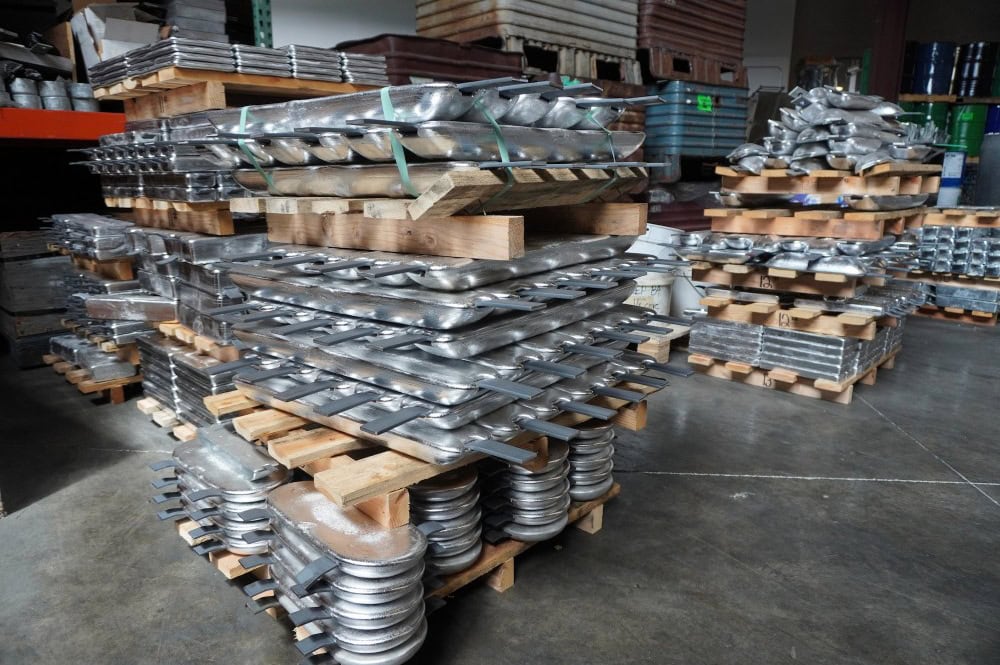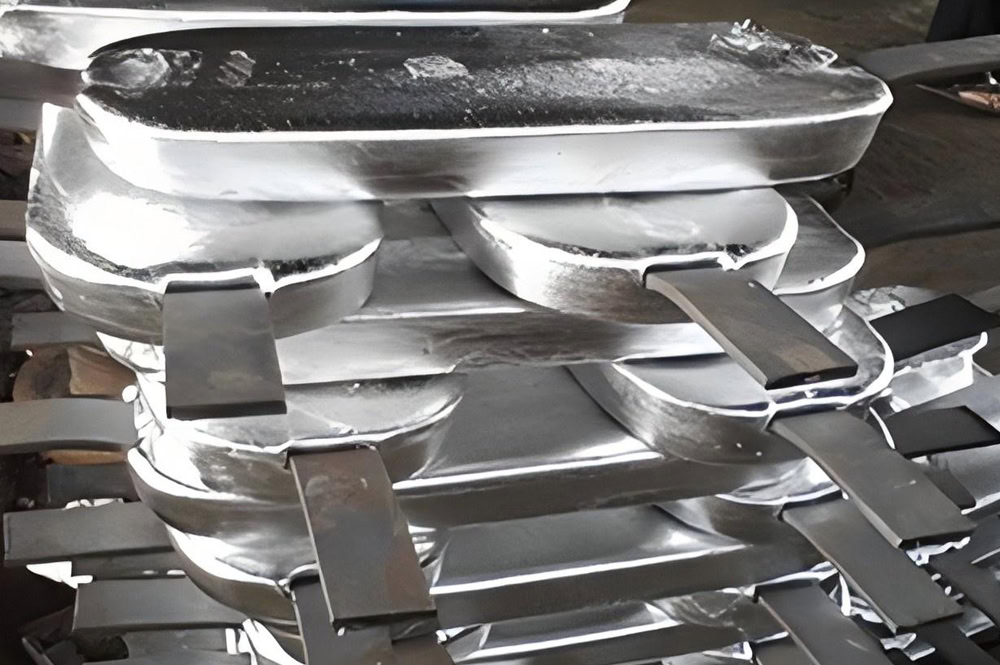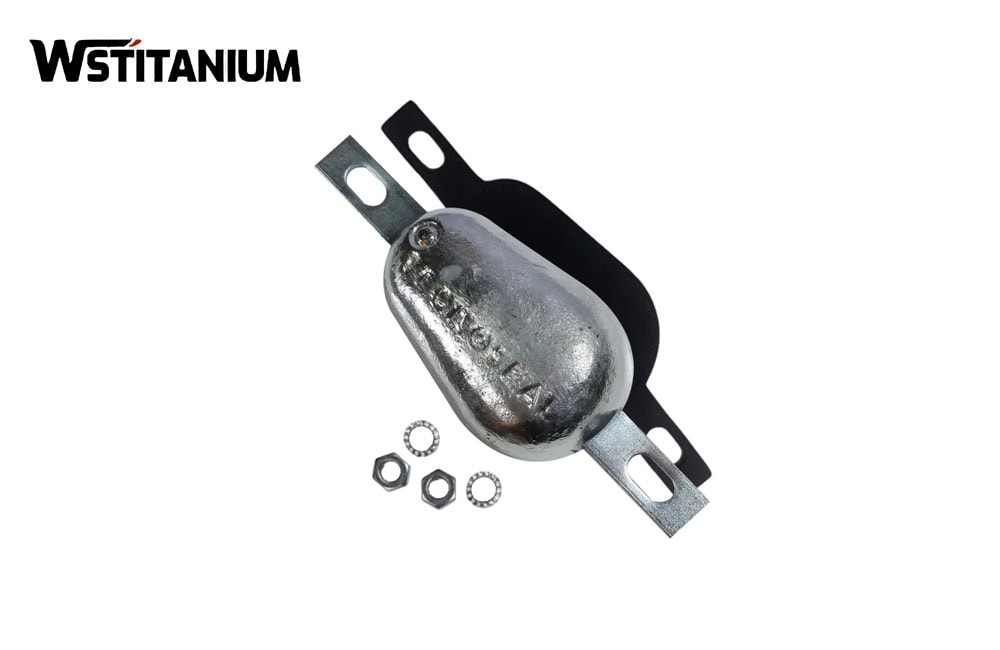

Bolt-on zinc sacrificial anodes are an important category of zinc sacrificial anodes. Unlike welded or bracelet-type anodes, they achieve electrical connection to the protected metal via bolts. In an electrolyte environment, the zinc sacrificial anode preferentially oxidizes and dissolves, providing a continuous cathodic protection current to steel and other structures, thereby inhibiting galvanic corrosion. They are widely used in buried pipelines, ship ballast tanks, offshore platforms, nuclear power plant cooling systems, and military vessels. Wstitanium is a leading manufacturer and factory of bolt-on zinc sacrificial anodes in China.
Bolt-on Zinc Sacrificial Anodes Categories
The categories of bolt-on zinc sacrificial anodes are primarily based on alloy composition, structural shape, and application environment. Different types of anodes exhibit significant differences in electrochemical performance, mechanical properties, and suitability for various applications. Bolt-on zinc sacrificial anodes are based on pure zinc, with the addition of elements such as aluminum (Al) and cadmium (Cd) to optimize electrochemical performance and suppress the harmful effects of impurity elements. Currently, the mainstream type is the Zn-Al-Cd anode, which is also the core category explicitly defined in international standards.
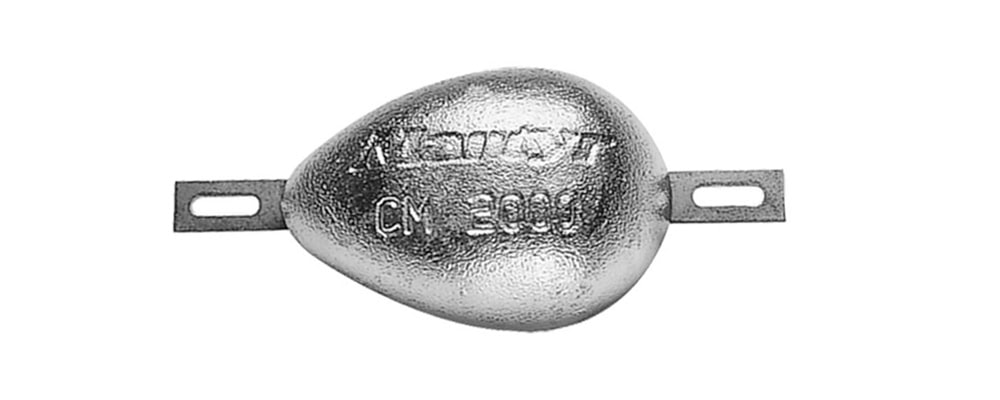
Bolt-on Pure Zinc Anode
Zinc content ≥99.99%, containing only trace amounts of impurities such as iron, lead, and cadmium (each impurity ≤0.005%, total impurities ≤0.01%). It has a relatively negative electrochemical potential, provides a gentle current output, and dissolves uniformly. The corrosion product is loose zinc oxide, but the current efficiency is relatively low (approximately 60%~70%). It is mainly suitable for weak corrosive environments such as freshwater and low-salinity brackish water, and is often used for the protection of inland waterway vessels and freshwater pipelines.
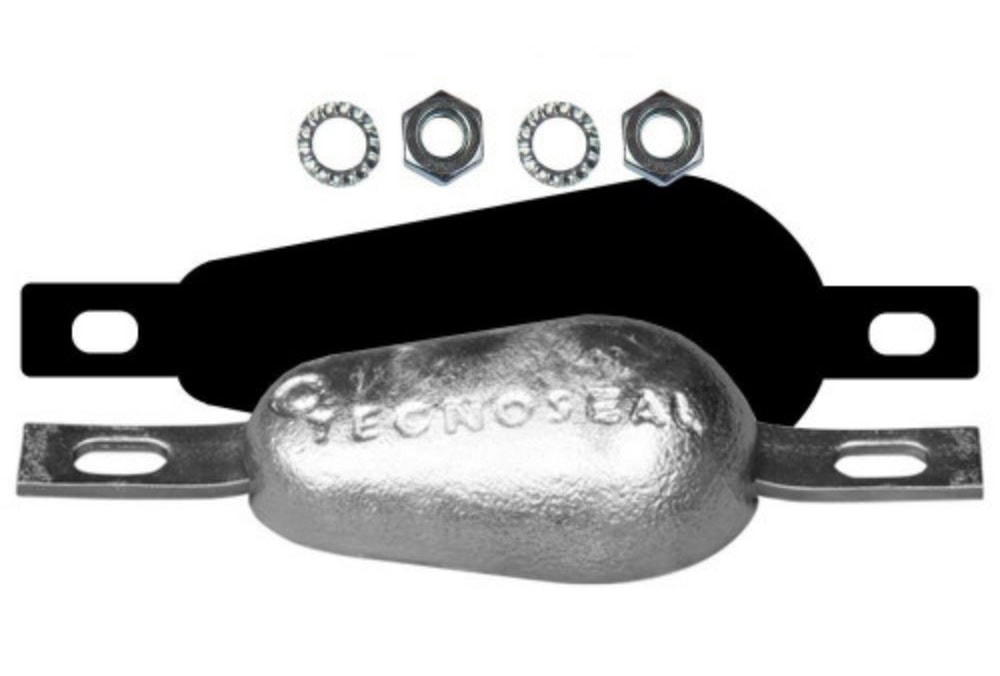
Zn-Al-Cd Zinc Anodes
Containing 0.3%~0.6% Al and 0.05%~0.12% Cd, with the remainder being zinc and trace impurities, this is the most widely used type of bolt-on zinc anode. Al refines the anode grain size and improves mechanical strength; Cd reduces the anode polarization rate and prevents passivation. This type of anode exhibits excellent current efficiency in seawater, brackish water, and low-resistivity soil. Its current efficiency is ≥95% in seawater and ≥65% in soil, making it suitable for conventional corrosive environments.
Zn-Al-Ma Zinc Anodes
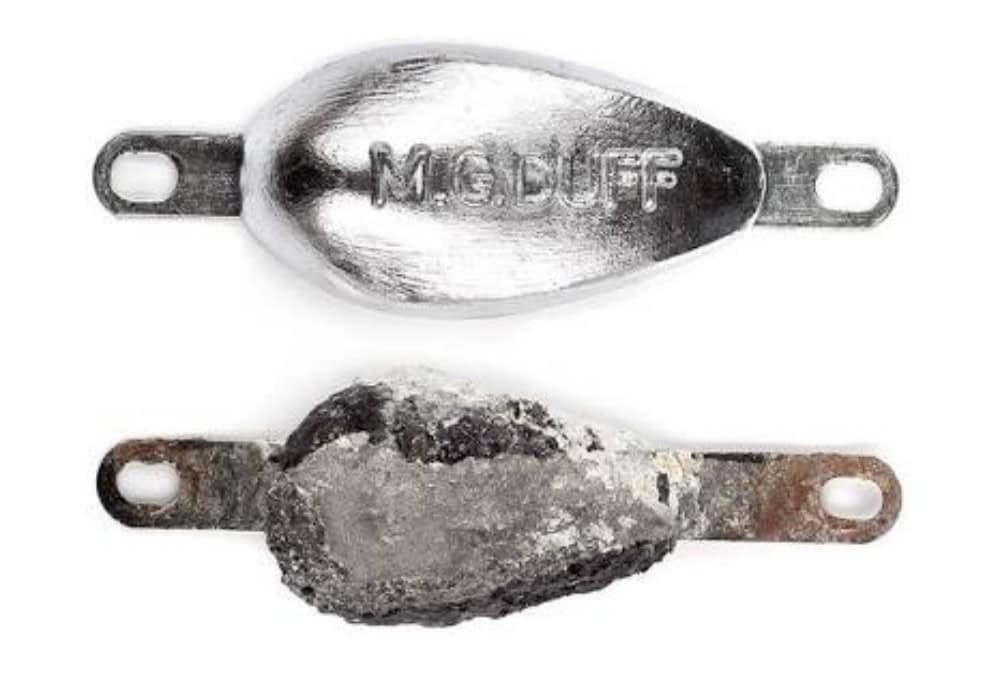
Cadmium-free. Its core components are zinc (93%~96%), aluminum (0.5%~3%), and magnesium (0.5%~1.5%). Some products may add trace amounts of rare earth elements (≤0.1%) to optimize performance. Rare earth elements refine the grain structure, and the current efficiency can reach over 90%. This type of anode is suitable for special corrosive environments such as low-temperature seawater and high resistivity environments. It is an important environmentally friendly alternative to zinc-aluminum-cadmium alloy anodes.
The structural design of bolt-on zinc sacrificial anodes needs to be adapted to the bolted connection. Its core components include the zinc anode body and an integrated bolt/bolt hole structure. Different anode structures offer advantages in terms of contact area, current distribution, and installation space compatibility.
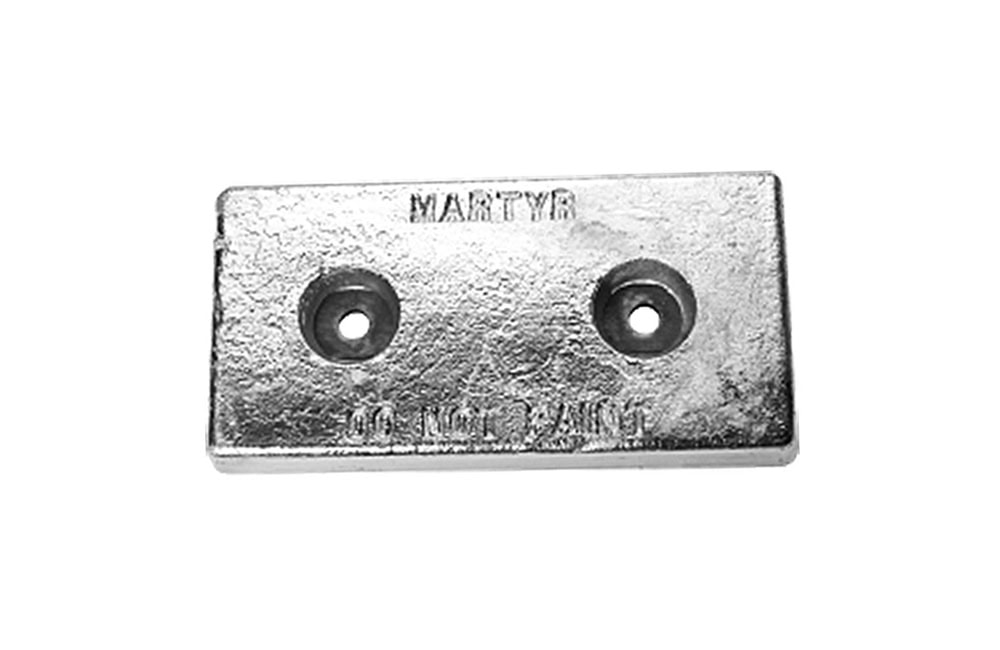
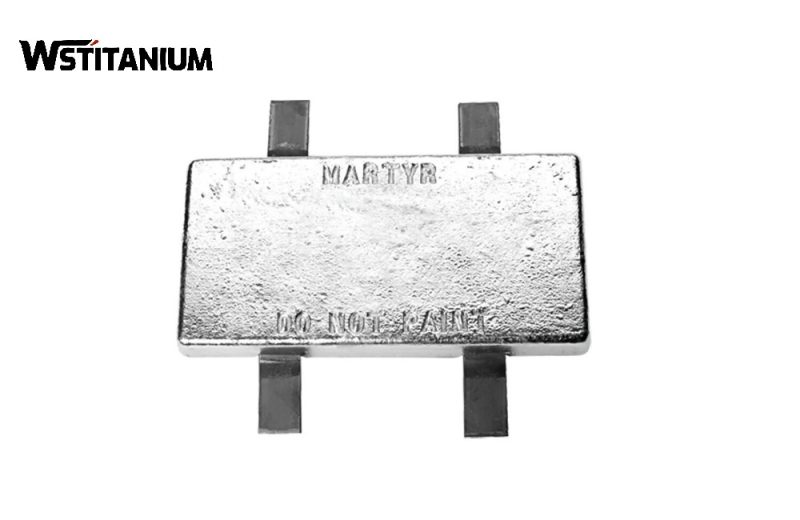
Flat Plate Bolt-on Zinc Anode
The anode body is a rectangular flat plate with 1 to 4 bolt holes pre-drilled on the surface, or stainless steel bolts are directly cast into the anode as connecting ends. The anode thickness is typically 20-100mm. Its characteristics include a large contact area and uniform current distribution, making it suitable for tank inner walls, ship bulkheads, steel structure platforms, etc.
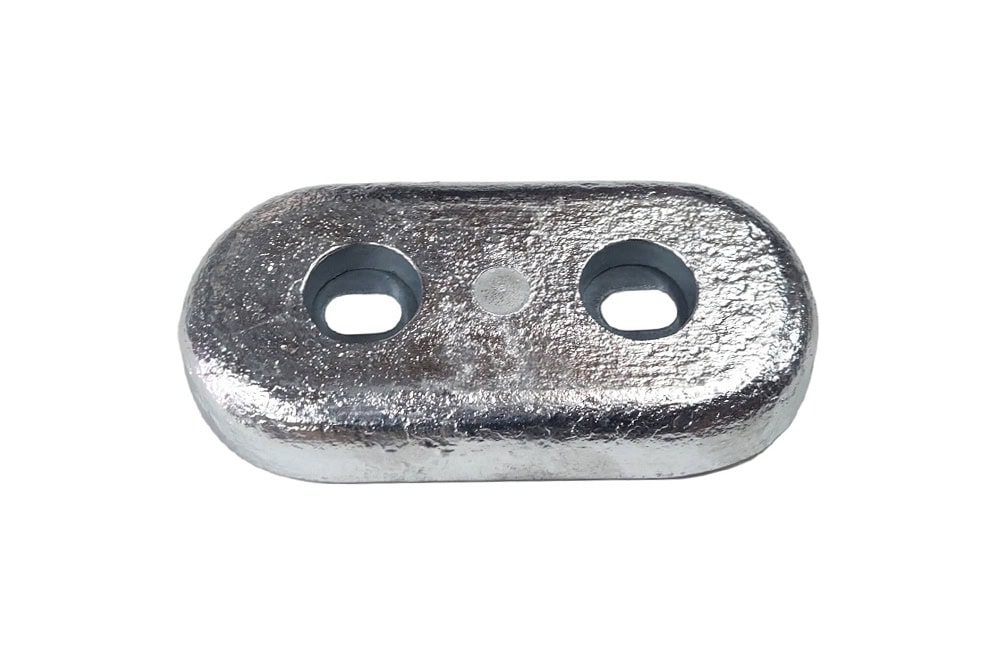
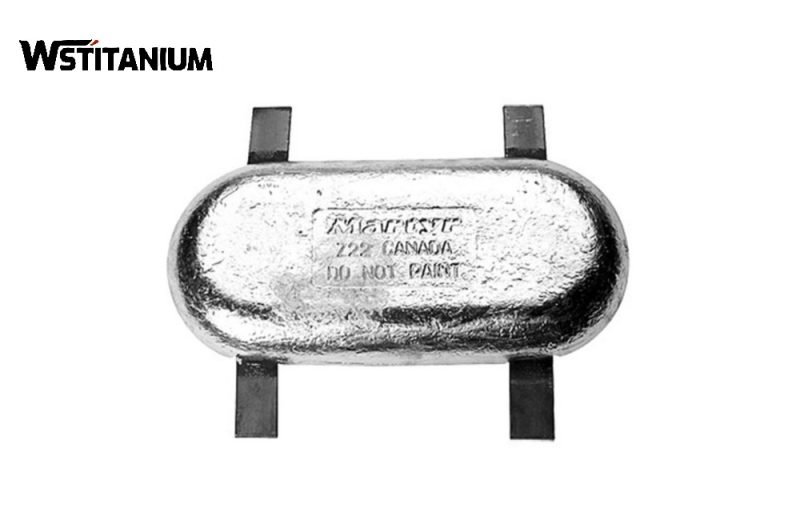
Block Bolt-on Zinc Anode
The anode body is a cubic or rectangular block, with a smaller volume compared to the flat plate type. Bolts are cast into one or both ends. Its characteristics include high mechanical strength and good impact resistance, making it suitable for protection in vibrating environments (such as near ship propellers and pump casings).
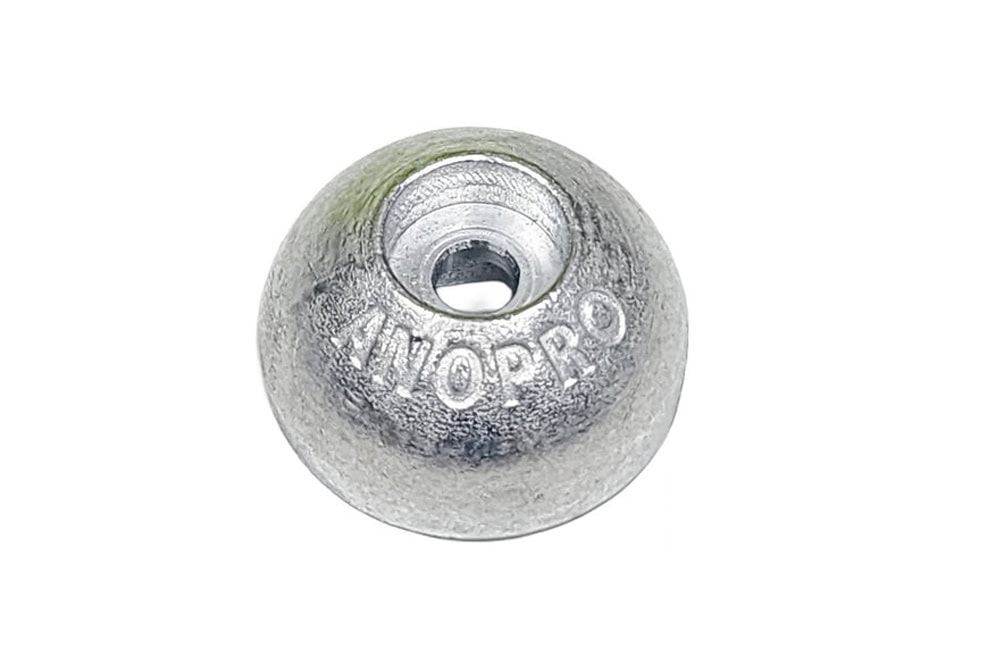
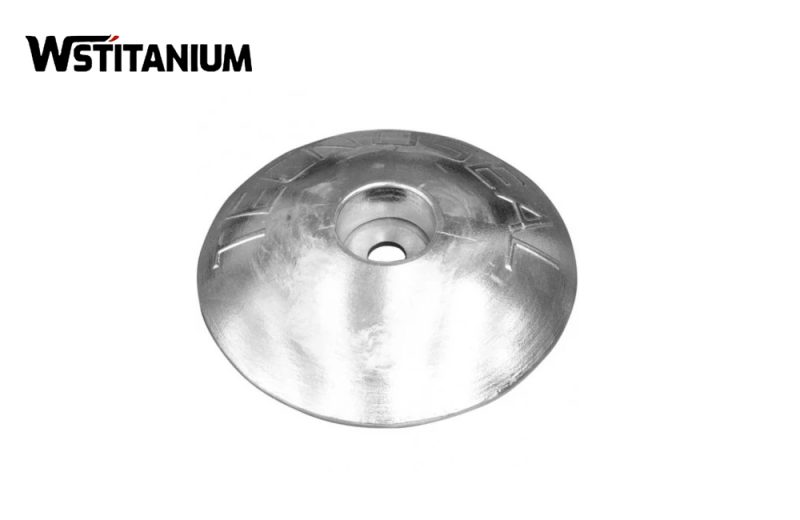
Disc-shaped Bolt Zinc Anode
The anode body is a circular disc with a pre-drilled bolt hole in the center. Its thickness ranges from 15 to 50 mm, and its diameter from 50 to 300 mm. Its features include a compact shape and uniform radial current distribution, making it suitable for protecting circular components such as pipe elbows, valves, and heat exchangers.
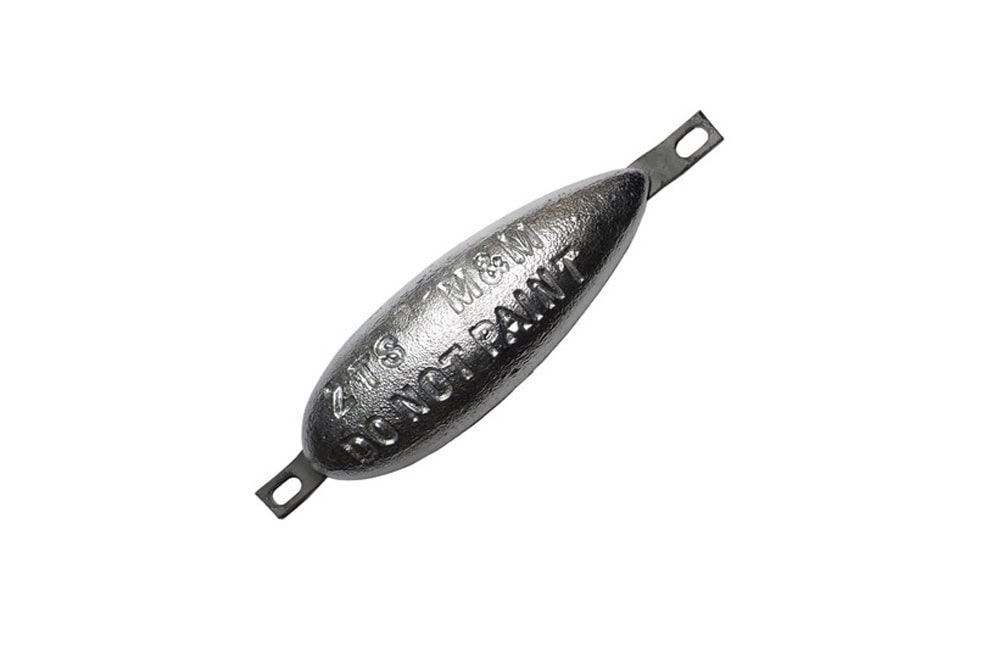
Irregularly Shaped Bolt Zinc Anode
Customized according to the specific shape of the protected structure, such as arc-shaped, trapezoidal, or wedge-shaped. The bolt position and quantity are designed to match the structure, suitable for the protection of non-standard scenarios such as irregularly shaped steel structures and precision equipment casings.
Based on the applicable corrosive media, bolt-type zinc sacrificial anodes are classified into seawater type, soil type, and freshwater type. Different types of anodes are designed by adjusting alloy elements and structural design to match the resistivity and ion concentration characteristics of the medium, ensuring optimal protection in the corresponding environment.
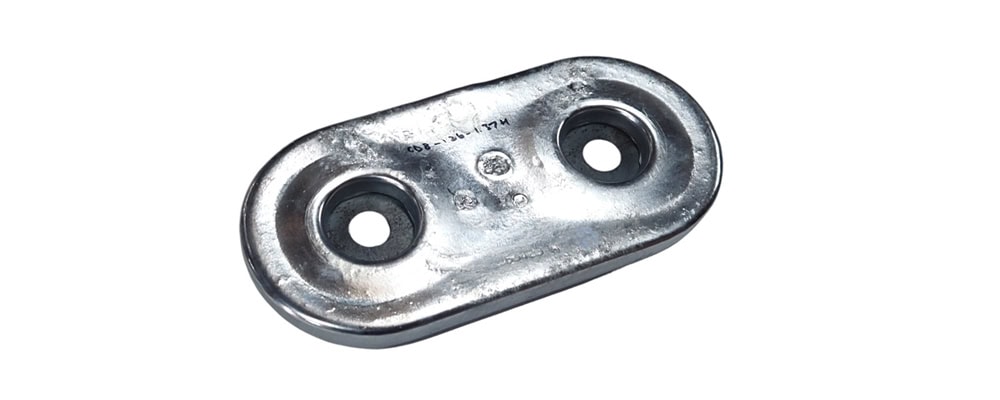
Seawater Medium
Suitable for high electrolyte concentration environments such as seawater, brackish water, and salt mud. The alloy composition is designed according to ASTM B418 Type I requirements. The working potential is controlled at -1.05~-1.08V (relative to Cu/CuSO₄), with uniform surface dissolution and easily removable corrosion products. It is suitable for marine engineering, ships, seawater cooling systems, etc.
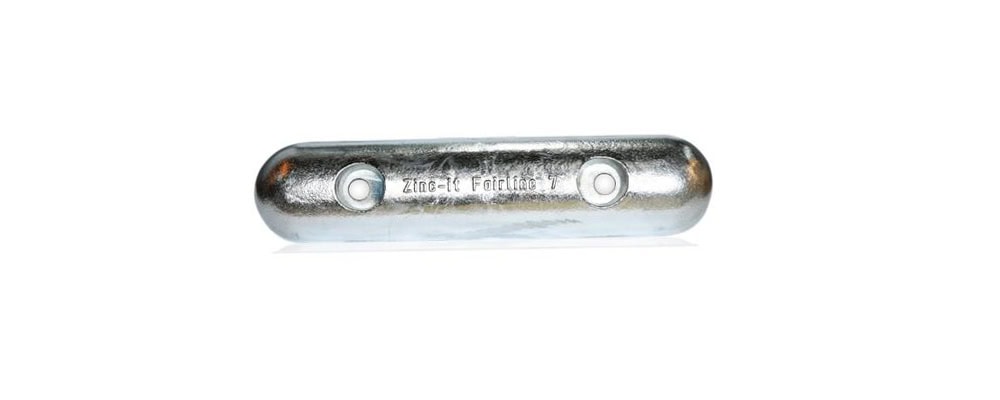
Soil Medium
Suitable for low-resistivity soil environments with resistivity <15 Ω·m. Some pre-packaged units contain a gypsum-bentonite-sodium sulfate composite backfill to reduce soil contact resistance, with an operating potential ≤-1.03V (relative to Cu/CuSO₄), suitable for buried pipelines, underground storage tanks, etc.
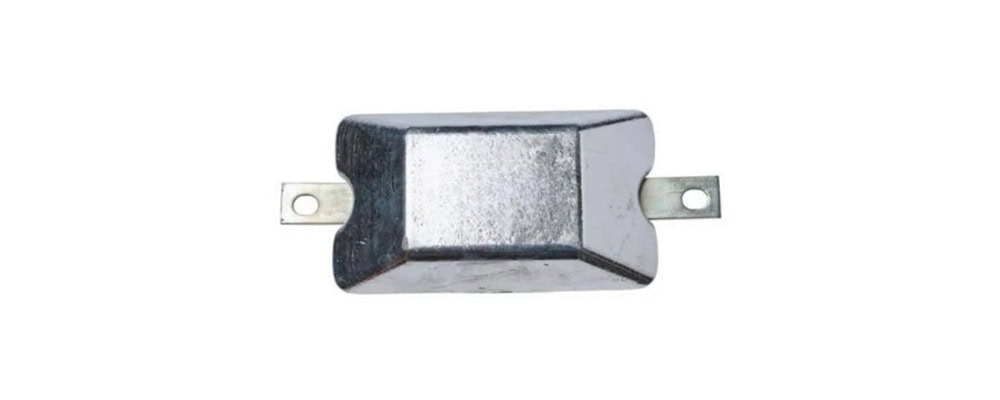
Freshwater Medium
Suitable for low chloride ion concentration environments such as freshwater and brackish water. Strict control of impurity content prevents anode passivation, achieving a current efficiency ≥ 70%. Suitable for the protection of freshwater storage tanks, freshwater cooling systems, inland waterway vessels, etc.
Bolt-on Zinc Sacrificial Anodes Specifications
The specifications of bolt-type zinc sacrificial anodes are the core basis for engineering design, mainly including chemical composition specifications, electrochemical performance specifications, geometric dimensions and weight specifications, and mechanical performance specifications. All specification parameters must meet the requirements of the corresponding standards.
Chemical Elements
The chemical elements of bolt-type zinc sacrificial anodes determine their electrochemical performance. The core requirements are strict control of harmful impurity content and precise control of alloy element ratios. The Zn-Al-Cd ternary alloy is the mainstream system, and its chemical composition specifications must comply with standards such as ASTM B418-12 and MIL-DTL-18001.
- Table 1. Chemical composition specifications (%) of bolt-type zinc sacrificial anodes (Zn-Al-Cd)
| Standards | Aluminum (Al) | Cadmium (Cd) | Iron (Fe) | Copper (Cu) | Lead (Pb) | Silicon (Si) | Zinc (Zn) | Others |
| GB/T 4950-2002 | 0.3 ~ 0.6 | 0.05 ~ 0.12 | ≤ 0.005 | ≤ 0.005 | ≤ 0.006 | ≤ 0.125 | Remainder | ≤ 0.15 |
| ASTM B418-12 Type I | 0.1 ~ 0.5 | 0.025 ~ 0.07 | ≤ 0.005 | ≤ 0.005 | ≤ 0.006 | ≤ 0.08 | Remainder | ≤ 0.10 |
| MIL-DTL-18001 | 0.1 ~ 0.5 | 0.025 ~ 0.07 | ≤ 0.003 | ≤ 0.003 | ≤ 0.004 | ≤ 0.05 | Remainder | ≤ 0.08 |
Note: Harmful impurities such as Fe, Cu, and Pb can form micro-batteries with zinc, accelerating anodic self-dissolution and reducing current efficiency. Therefore, all standards strictly limit their content; military standards have the strictest impurity control requirements and are suitable for high-reliability applications.
Electrochemical Performance
Electrochemical performance is a core technical indicator of bolt-type zinc sacrificial anodes and directly determines the effectiveness of cathodic protection. It mainly includes open-circuit potential, working potential, actual capacity, consumption rate, and current efficiency. Performance indicators vary significantly in different media environments (seawater, soil).
- Table 2. Electrochemical Performance Specifications
| Property | Condition | GB/T 4950-2002 | ASTM B418-12 | MIL-DTL-18001 |
| Open Circuit Potential (V) | Seawater (1mA/cm²) | -1.09 ~ -1.05 | -1.06 ~ -1.03 | -1.07 ~ -1.04 |
| Operating Potential (V) | Seawater (1mA/cm²) | -1.05 ~ -1.08 | -1.05 ~ -1.07 | -1.06 ~ -1.08 |
| Actual Capacity (Ah/kg) | Seawater (1mA/cm²) | ≥780 | ≥790 | ≥800 |
| Consumption Rate (kg/(A·a)) | Seawater (1mA/cm²) | ≤11.23 | ≤11.0 | ≤10.8 |
| Current Efficiency (%) | Seawater (1mA/cm²) | ≥95 | ≥95 | ≥96 |
| Open Circuit Potential (V) | Soil (0.03mA/cm²) | ≤-1.05 | ≤-1.04 | ≤-1.05 |
| Operating Potential (V) | Soil (0.03mA/cm²) | ≤-1.03 | ≤-1.02 | ≤-1.03 |
| Actual Capacity (Ah/kg) | Soil (0.03mA/cm²) | ≥530 | ≥540 | ≥550 |
| Consumption Rate (kg/(A·a)) | Soil (0.03mA/cm²) | ≤17.25 | ≤17.0 | ≤16.8 |
| Current Efficiency (%) | Soil (0.03mA/cm²) | ≥65 | ≥66 | ≥68 |
| Dissolution Performance | Seawater / Soil | Uniform dissolution, corrosion products easy to fall off. | Uniform dissolution, no passivation. | Uniform dissolution, no pitting. |
Note: All potentials are relative to the copper/copper sulfate (Cu/CuSO₄) reference electrode; current efficiency refers to the ratio of the actual charge output of the anode to the theoretical charge capacity. It is a key indicator for measuring anode utilization.
Geometric Dimensions and Weight
The geometric dimensions of the bolted zinc sacrificial anode need to be designed in conjunction with the current requirements of the protected structure and the available installation space. This primarily includes the anode body dimensions, bolt/bolt hole specifications, and overall weight.
- Table 3: Specifications for Buried Pipeline Bolt-Type Zinc Sacrificial Anodes
| Model | Ax (B1+B2)×C (mm) | Bolt Hole Size / Bolt Spec (mm) | Net Weight (kg) | Gross Weight (kg) | Applicable Tank Volume (m³) |
| ZC-1 | 750×(115+135)×130 | M16, 4 holes | 82 | 85 | ≥10000 |
| ZC-2 | 500×(115+135)×130 | M16, 2 holes | 55 | 56 | 5000~10000 |
| ZC-3 | 500×(115+135)×100 | M16, 2 holes | 39 | 40 | 1000~5000 |
| ZC-4 | 300×(105+135)×100 | M12, 2 holes | 24.6 | 25 | ≤1000 |
- Table 4: Specifications for Offshore Engineering Bolt-Type Zinc Sacrificial Anodes
| Model | Ax (B1+B2)×C (mm) | Bolt Spec (mm) | Iron Foot Size (mm) | Net Weight (kg) | Gross Weight (kg) | Applicable Pipe Diameter (mm) |
| ZP-1 | 1000×(78+88)×85 | M16 | 700×16 | 49 | 50 | ≥800 |
| ZP-3 | 800×(60+80)×65 | M12 | 600×12 | 24.5 | 25 | 400~800 |
| ZP-5 | 650×(58+64)×60 | M12 | 400×12 | 17.6 | 18 | 200~400 |
| ZP-8 | 600×(40+48)×45 | M10 | 360×10 | 8.7 | 9 | ≤200 |
- Table 5: Specifications for Marine Engineering Bolt-Type Zinc Sacrificial Anodes
| Model | Anode Spec A×B×C (mm) | Bolt Spec (mm) | Rebar Foot Size (mm) | Net Weight (kg) | Gross Weight (kg) | Application Scenario |
| ZT-1 | 1000×200×100 | M20, 2 bolts | 1000×20 | 65 | 67 | Offshore Platforms |
| ZT-3 | 800×150×80 | M18, 2 bolts | 800×18 | 38 | 39 | Ship Bulkheads |
| ZT-5 | 500×100×60 | M16, 1 bolt | 600×16 | 15 | 15.5 | Seawater Coolers |
Note: All bolts are made of stainless steel (304 or 316L); the metal base is made of steel and cast integrally with the zinc alloy anode body.
Mechanical Properties
The bolted zinc sacrificial anode must possess sufficient mechanical strength to withstand the mechanical stresses of transportation, installation, and service environments. The main mechanical properties include casting strength, compressive strength, and impact resistance, with specific requirements shown in Table 6.
- Table 6: Bolts Zinc Sacrificial Anode: Mechanical Properties Specifications
| Property | Test Item | Standard | Reference |
| Casting Strength | Iron foot / bolt and anode casting joint | Tensile force ≥30kN, no cracking | GB/T 10123-2022 |
| Compressive Strength | Anode body | ≥120MPa | GB/T 231.1-2018 |
| Impact Resistance | Normal temperature, impact energy 10J | Anode body: no cracks, no chipping | GB/T 229-2020 |
| Bolt Connection Strength | After bolt tightening | Torque ≥200N·m, no slipping | GB/T 3098.1-2010 |
Standards for Bolt Zinc Sacrificial Anodes
The manufacturing, quality inspection, and application of bolt-type zinc sacrificial anodes must adhere to strict technical standards. The current standard system mainly includes Chinese standards, international standards, and military standards. International standards are primarily based on those of the American Society for Testing and Materials (ASTM), DNV GL (Det Norske Veritas Germanischer Lloyd), and the National Association of Corrosion Engineers (NACE). Military standards are represented by the MIL series standards issued by the US Department of Defense (DOD). All standards clearly define the chemical composition, electrochemical performance, dimensional accuracy, testing methods, and packaging requirements of bolt-type zinc sacrificial anodes.
Chinese Standards
The core Chinese standards for bolt-type zinc sacrificial anodes are national standards and petrochemical industry standards. The national standards specify the general technical requirements for zinc alloy sacrificial anodes. Industry standards specify specific requirements for particular application scenarios (such as buried pipelines and offshore engineering).
This is the basic national standard for zinc alloy sacrificial anodes in China, covering the technical requirements for all zinc alloy sacrificial anodes, including bolt-type anodes. It specifies the chemical composition of Zn-Al-Cd, electrochemical performance, geometric dimensions, testing methods, inspection rules, and packaging, marking, and transportation requirements. Its electrochemical performance indicators are basically consistent with ASTM B418-12 Type I.
SY/T 0019-2019 "Cathodic Protection of Buried Sacrificial Anodes"
This is a petrochemical industry standard. It sets forth specific requirements for the selection, design, installation, and testing of bolt-type zinc sacrificial anodes used for buried steel pipelines, specifying the anode spacing, backfill material ratio, and potential testing standards in soil media. This is a core design basis for cathodic protection engineering of buried pipelines.
CB/T 3241-2013 "Marine Zinc Alloy Sacrificial Anodes"
This is a shipbuilding industry standard, applicable to bolt-type zinc sacrificial anodes for ships and marine applications. It specifies the performance requirements, installation methods, and testing methods for anodes in seawater environments, adapting to the protection needs of ship bulkheads, ballast tanks, and other scenarios.
International Implementation Standards
The international standards for bolt-type zinc sacrificial anodes are primarily based on standards issued by European and American countries and international organizations, covering anode materials, cathodic protection system design, installation, and testing. Their core standards are recognized by most countries and regions worldwide and are essential for overseas engineering applications.
This core standard published by the American Society for Testing and Materials (ASTM) is one of the most authoritative standards globally for the manufacture and application of zinc sacrificial anodes. The standard classifies zinc sacrificial anodes into Type I and Type II. Type I anodes meet the chemical composition requirements of MIL-A-18001K and are suitable for media such as seawater and saltwater mud. It specifies the bolt hole accuracy, casting strength, and electrochemical performance testing methods for bolt-type anodes.
ASTM F1182-07 (2019) "Anodes, Sacrificial Zinc Alloy"
This ASTM standard is specifically designed for zinc sacrificial anodes used in ships and marine engineering. It classifies bolt-type anodes into Class 1 (with cast-in core) and Class 2 (without core). It specifies the structural requirements and applicable scenarios (such as ship hulls, submarines, and heat exchangers) for different types of bolt anodes, and also specifies the material and connection strength standards for stainless steel bolts.
DNVGL-RP-B401-2017 "Cathodic Protection Design"
This industry standard, published by DNVGL (Det Norske Veritas – Germanischer Lloyd), applies to the design of sacrificial anode cathodic protection for ships and offshore steel structures. It specifies the selection principles, arrangement methods, and current density calculation methods for bolted zinc sacrificial anodes.
DNVGL-RP-F103-2016 "Cathodic Protection of Submarine Pipelines"
This DNVGL standard is specifically for the cathodic protection of submarine pipelines. It sets out specific regulations for the installation spacing, backfill requirements, and performance testing of bolted/bracelet zinc anodes used for submarine pipelines. Parts of this standard have been adopted by the Chinese petroleum industry standard SY/T 6878.
EN 12496-2013 "Galvanic Anodes for Cathodic Protection in Seawater and Saline Mud"
This European standard specifies the chemical composition, electrochemical performance, and installation requirements for zinc, aluminum, and magnesium sacrificial anodes in seawater and saline mud. It is applicable to marine engineering, shipbuilding, and other projects in Europe. The bolt connection accuracy and corrosion protection requirements for bolted zinc anodes must comply with this standard.
AS 2239-2003 (R2016) "Galvanic (Sacrificial) Anodes for Cathodic Protection"
This Australian standard covers comprehensive technical requirements for zinc, aluminum, and magnesium sacrificial anodes. It includes requirements for the core material of bolted anodes, filler material composition, and pre-filled anode design.
Military Standards
The application of zinc sacrificial anodes in military equipment (such as ships, military docks, and defense pipelines) demands extremely high levels of performance reliability, long service life, and resistance to interference. Military forces in various countries have developed their own specific military standards. The U.S. Department of Defense’s MIL series standards are representative of these, and they serve as the core implementation standards for military zinc sacrificial anodes globally.
This military standard, issued by the U.S. Department of Defense and formerly known as MIL-A-18001K, is the core standard for military zinc sacrificial anodes and is adopted by military forces in many countries worldwide. This standard strictly controls the content of harmful impurities in the zinc alloy (Fe, Cu, and Pb are all ≤0.003%), requiring a casting pull-off force of ≥35kN for bolt anodes and a current efficiency of ≥96% in seawater. It is suitable for high-end protection scenarios such as military ships, submarines, and national defense marine engineering. The chemical composition of ASTM B418-12 Type I anodes fully meets the requirements of this standard.
MIL-DTL-24779C《Anodes, Sacrificial Aluminum Alloy》
This military standard for aluminum alloy sacrificial anodes, also issued by the U.S. Department of Defense, is used in conjunction with MIL-DTL-18001. It specifies the electrical connection requirements when bolt zinc anodes and aluminum alloy anodes are used together for protection, and is suitable for composite cathodic protection systems of large military vessels.
- Table 7: Comparison of Standards Across Different Systems
| Index | (GB/T 4950-2002) | ASTM B418-12 Type I | MIL-DTL-18001 |
| Iron (Fe) content (%) | ≤0.005 | ≤0.005 | ≤0.003 |
| Copper (Cu) content (%) | ≤0.005 | ≤0.005 | ≤0.003 |
| Current efficiency in seawater (%) | ≥95 | ≥95 | ≥96 |
| Actual capacity in seawater (Ah/kg) | ≥780 | ≥790 | ≥800 |
| Casting pull-off force (kN) | ≥30 | ≥30 | ≥35 |
| Dissolution performance | Uniform dissolution. | Uniform dissolution, no passivation. | Uniform dissolution, no pitting, no passivation. |
| Application scenarios | Civil conventional engineering. | Civil high-end engineering, overseas engineering. | Military equipment, national defense engineering. |
Applications of Bolt-Type Zinc Sacrificial Anodes
Bolt-type zinc sacrificial anodes have been widely used in various fields, including marine engineering, petrochemical engineering, municipal engineering, shipbuilding, and power engineering. The core principle of their application is suitability for media with resistivity ≤ 50 Ω·m and service temperature < 49°C.
Marine engineering is a core application area for bolt-on zinc sacrificial anodes. The marine environment (seawater, saline mud) is characterized by high electrolyte concentration and high chloride ion content, leading to rapid corrosion of steel structures. Due to their current efficiency of ≥95% and uniform dissolution in seawater, bolt-on zinc anodes are the preferred anode material for steel structures in marine engineering.

- Subsea pipelines: subsea pipeline elbows, valves, and joints.
- Drilling platforms: platform main structures, ballast tanks, oil pipelines, seawater separators, etc.;
- Offshore wind power platforms: platform legs, deck structures, nacelle casings, seawater cooling systems, etc.;
- Seaports and docks: dock steel piles, mooring posts, approach bridge steel structures, fender steel components, etc.;
Shipbuilding
The steel structures of ships(boat), such as hulls, bulkheads, and ballast water tanks, are constantly exposed to seawater and brackish water. Bolt-on zinc sacrificial anodes have become the main material for cathodic protection in ships due to their easy installation and good vibration resistance.
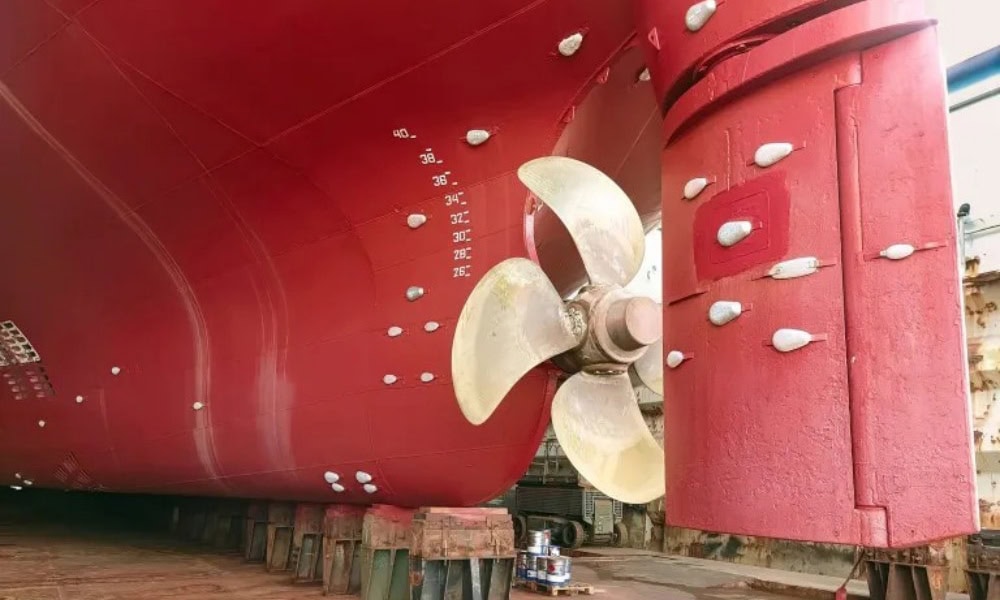
- Military vessels: Ship bulkheads, submarine hulls, shipboard equipment casings, seawater piping, etc.;
- Civilian vessels: Hull exterior, ballast water tanks, fuel tanks, seawater coolers, pump casings, etc.;
- Inland waterway vessels: Hull bottom, bulkheads, freshwater cooling systems, etc.
Petrochemical Industry
Bolt-type zinc sacrificial anodes are suitable for cathodic protection of the inner walls of storage tanks, buried pipeline accessories, and the outer shells of refining and chemical equipment. They are used in conjunction with impressed current cathodic protection systems to form a composite protection system.

- Storage Tanks: Inner walls and bottoms of steel oil tanks, water tanks, and chemical raw material storage tanks;
- Buried Pipelines: Elbows, valves, joints, etc., of buried pipelines for crude oil, refined oil, and chemical media;
- Refining and Chemical Equipment: Heat exchangers, condensers, pump casings, reactor supports, etc.
Municipal Engineering
Bolt-type zinc sacrificial anodes are suitable for cathodic protection of buried pipe networks in low-resistivity soil (<15 Ω·m), the inner walls of sewage treatment tanks, and steel structural supports of bridges.
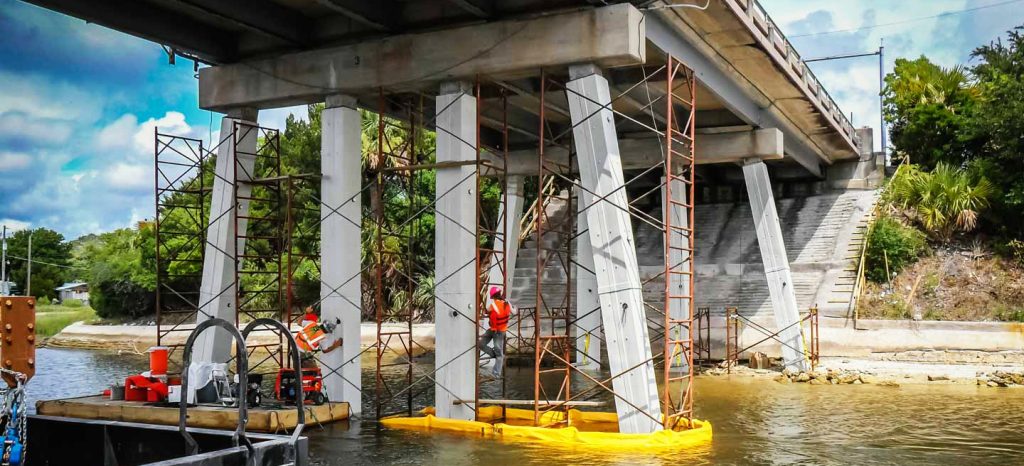
- Underground pipe networks: Buried steel pipelines for tap water, natural gas, and sewage;
- Sewage facilities: Sewage treatment tanks, sedimentation tanks, pumping stations;
- Bridges: Urban bridges, steel structures of cross-sea bridges, etc.
Conclusion
Zinc sacrificial anodes, as a key component of cathodic protection systems, play an irreplaceable role in marine engineering, shipbuilding, petrochemicals, municipal engineering, power engineering, and other fields. Bolt-type zinc sacrificial anodes: The mainstream type is the Zn-Al-Cd ternary alloy, classified by structure into plate, block, disc, and irregular shapes. Specifications must comply with standards such as GB/T 4950-2002, ASTM B418-12, and MIL-DTL-18001, with strict control over the content of harmful impurities such as Fe, Cu, and Pb. They are suitable for media environments with low resistivity (≤50Ω・m) and temperatures <49℃, such as seawater, soil, and freshwater.
References
[1] ASTM B418-12 (2023),Cast and Wrought Galvanic Zinc Anodes [2]. West Conshohocken: ASTM International,2023.
[3] MIL-DTL-18001,Anodes, Sacrificial Zinc Alloy [S]. Washington: U.S. Department of Defense,2021.
[4] DNVGL-RP-B401-2017,Cathodic Protection Design [S]. Oslo: DNVGL,2017.