


CNC Machining Titanium Parts Manufacturer & Supplier
Wstitanium is a Chinese manufacturer and supplier specializing in CNC machining of titanium parts, dedicated to solving all pain points in titanium manufacturing and applications. Wstitanium has in-house investments in 3-axis, 4-axis, and 5-axis CNC machining centers, Swiss CNC machining centers, and EDM equipment, enabling integrated precision machining services from milling, turning, cutting, drilling, tapping, grooving to surface treatment. Certified by ISO 9001 and 13485, all raw materials strictly adhere to ASTM standards, and complete material certification reports are provided. Dimensional tolerances are within ±0.005mm, and full-size coordinate measuring machine (CMM) quality inspection reports are available. Wstitanium’s customers are located in over 30 countries worldwide, spanning industries such as aerospace, defense, robotics, medical, automotive, marine, petrochemical, and bicycles.
- 24/7 Rapid Response
- Competitive Price
- Great Experience
- Fast Turnaround
- Excellent Quality
CNC Machining Titanium Parts Ultimate Guide
Wstitanium, a Chinese manufacturer specializing in CNC machining titanium parts, has compiled a comprehensive knowledge system for CNC machining of titanium based on over a decade of practical experience and adhering to international standards such as ASTM, ISO, and ASM. This guide covers a full range of titanium grades, from Grade 1 to medical-grade Grade 23, including 3-axis to 5-axis machining, Swiss machining, EDM, and solutions for aerospace, medical, automotive, and marine applications. It also includes modules on design for manufacturability, tolerance control, cost optimization, quality inspection, and supplier evaluation, aiming to help you quickly build a professional understanding of CNC titanium machining.

CNC Machining of Titanium Grades
Titanium alloys are classified into four categories based on their elemental composition and metallographic structure: pure titanium (CP titanium), α titanium alloys, α+β titanium alloys, and β titanium alloys. ASTM standards such as B265 and B348 clearly specify the chemical composition, mechanical properties, and applications of each grade. Different grades of titanium differ significantly in strength, corrosion resistance, formability, machinability, and cost. Wstitanium provides CNC machining services for a full range of titanium grades. All titanium materials require a Material Test Report (MTR) to ensure that the chemical composition and mechanical properties comply with the corresponding ASTM standards.

Grade 1 Titanium
Oxygen content less than 0.18wt%. Alpha-type single-phase microstructure. Its core characteristics are excellent plasticity, superior cold formability, and corrosion resistance. Tensile strength ≥240MPa, yield strength ≥170MPa, elongation ≥24%, hardness approximately 70-80HV, reduction of area ≥50%.

Grade 2 Titanium
Oxygen content less than 0.25wt%. Tensile strength ≥345MPa, yield strength ≥275MPa, elongation ≥20%, hardness approximately 85-95HV, reduction of area ≥45%. For chemical reactors, marine fasteners, heat exchanger tubes, medical housings, marine piping, etc. Excellent resistance to acid and seawater corrosion.

Grade 3 Titanium
Oxygen content less than 0.35 wt. Its strength is significantly higher than Grade 2. Tensile strength ≥ 450 MPa, yield strength ≥ 380 MPa, elongation ≥ 18%, hardness approximately 100-110 HV, reduction of area ≥ 40%. For medium-pressure vessels, non-load-bearing structural components in aviation, chemical pipelines, etc.

Grade 4 Titanium
Grade 4 is the highest strength pure titanium. Oxygen content is less than 0.40 wt%. Tensile strength ≥ 550 MPa, yield strength ≥ 483 MPa, elongation ≥ 15%, hardness approximately 120-130 HV, reduction of area ≥ 35%. For aerospace fasteners, surgical instruments, high-strength chemical valves, etc.

Grade 5 Titanium - Ti-6Al-4V
Grade 5, also known as Ti-6Al-4V, is an α+β two-phase titanium alloy. It contains 6% aluminum and 4% vanadium. Tensile strength ≥895MPa, yield strength ≥828MPa, elongation ≥10%, hardness approximately 300-320HV, reduction of area ≥25%. For aero-engine blades, aircraft landing gear, aerospace structural components, etc.

Grade 7 Titanium - Ti-0.2Pd
Grade 7 (0.12-0.25wt% palladium) is one of the most corrosion-resistant titanium alloys. Tensile strength ≥345MPa, yield strength ≥275MPa, elongation ≥20%, hardness 90-100HV, reduction of area ≥45%. Applications: High-temperature components, valves, and pumps for seawater desalination.

Grade 9 Titanium-Ti-3Al-2.5V
Grade 9 is a near-alpha titanium alloy with strength between pure titanium and Grade 5, commonly used in tubing manufacturing. Tensile strength ≥ 620 MPa, yield strength ≥ 483 MPa, elongation ≥ 15%, hardness 180-200 HV, reduction of area ≥ 35%. It has good weldability and excellent fatigue resistance. Applications: High-pressure gas cylinders, heat exchanger tube bundles.

Grade 12 Titanium-Ti-0.3Mo-0.8Ni
Grade 12 has performance close to Grade 7 but at a lower cost. Tensile strength ≥483MPa, yield strength ≥345MPa, elongation ≥18%, hardness 130-140HV, reduction of area ≥40%. Excellent high-temperature corrosion resistance and higher strength than Grade 2. Applications: Seawater heat exchangers, chemical reaction vessels.

Grade 23 Titanium-Ti-6Al-4V ELI
Grade 23 is an ultra-low interstitial version of Ti-6Al-4V, with oxygen content strictly controlled below 0.13wt%. It is a benchmark material for medical implants. Tensile strength ≥860MPa, yield strength ≥795MPa, elongation ≥10%, hardness 290-310HV, reduction of area ≥30%. Applications: orthopedic implants (hip joints, knee joints, spinal screws), etc.
Titanium Alloy Grade Comparison
To help you quickly select the right titanium alloy, Wstitanium has compiled a comparison table of key performance and characteristics for different grades of titanium alloys based on authoritative standards such as ASTM B265 and ASTM F136. All data are minimum values under annealed conditions; actual supply values are typically higher than standard requirements. Disclaimer: Wstitanium reserves the right of final interpretation.
| Titanium Grade | Alloy System | Tensile Strength (MPa) | Yield Strength (MPa) | Elongation (%) | Hardness (HB) | Reduction of Area (%) | Advantages | Disadvantages | Applications | Standards |
|---|---|---|---|---|---|---|---|---|---|---|
| Grade 1 | Commercially Pure Titanium | ≥240 | ≥170 | ≥30 | ≤120 | ≥55 | Best ductility, premium corrosion resistance, easy machining | Lowest strength, poor high-temperature performance | Chemical heat exchangers, food processing equipment, anode hangers | ASTM B265, ISO 5832-1 |
| Grade 2 | Commercially Pure Titanium | ≥345 | ≥275 | ≥20 | ≤140 | ≥45 | Top cost-performance ratio, excellent corrosion resistance, reliable weldability | Moderate strength, limited load-bearing capacity | Chemical pipelines, offshore marine facilities, medical devices | ASTM B265, AMS 4902 |
| Grade 3 | Commercially Pure Titanium | ≥450 | ≥380 | ≥18 | ≤170 | ≥40 | High-strength pure titanium grade, dependable corrosion resistance | Average formability, low market consumption volume | High-pressure vessels, aerospace tubes and valve bodies | ASTM B265, ISO 5832-3 |
| Grade 4 | Commercially Pure Titanium | ≥550 | ≥483 | ≥15 | ≤200 | ≥35 | Highest strength among pure titanium grades, good biocompatibility | High machining difficulty, expensive material cost | Heavy-duty medical tools, deep-sea hull housings | ASTM B265, ASTM F67 |
| Grade 5 | α+β Alloy (Ti‑6Al‑4V) | ≥895 | ≥828 | ≥10 | ≤300 | ≥25 | Balanced comprehensive performance, heat treatable, mature global supply chain | Hard machining, low thermal conductivity, poor tolerance to reducing acid | Aerospace structural parts, high-performance automotive components, sporting goods | ASTM B348, AMS 4911 |
| Grade 6 | Near-α Alloy (Ti‑5Al‑2.5Sn) | ≥828 | ≥758 | ≥12 | ≤280 | ≥30 | Outstanding high-temperature creep resistance, reliable thermal stability | Ordinary room-temperature strength, weak cold forming performance | High-temperature aeroengine components, industrial furnace structural parts | ASTM B348, AMS 4914 |
| Grade 7 | Corrosion-resistant Pure Titanium (Ti‑0.2Pd) | ≥345 | ≥275 | ≥20 | ≤140 | ≥40 | Industry-leading crevice corrosion resistance, stable in reducing acid media | Very high material cost, relatively low mechanical strength | Chemical equipment serving harsh corrosive environments, subsea oil & gas infrastructure | ASTM B265, ASTM B337 |
| Grade 9 | Near-α Alloy (Ti‑3Al‑2.5V) | ≥620 | ≥520 | ≥15 | ≤220 | ≥35 | Excellent cold formability, reliable weld performance, great low-temperature toughness | Lower strength rating compared with Grade 5 | Aerospace hydraulic tubing, bicycle frames, cryogenic processing equipment | ASTM B338, AMS 4943 |
| Grade 12 | Corrosion Resistant Alloy (Ti‑0.3Mo‑0.8Ni) | ≥483 | ≥380 | ≥18 | ≤180 | ≥40 | Cost-effective anti-corrosion performance, good hydrochloric acid tolerance | Corrosion resistance under extreme media falls short of Grade 7 | Hydrometallurgy facilities, flue gas desulfurization assemblies | ASTM B265, ASTM B348 |
| Grade 23 | Medical α+β Alloy (Ti‑6Al‑4V ELI) | ≥860 | ≥795 | ≥10 | ≤290 | ≥25 | Premium biocompatibility, high fracture toughness, strong fatigue resistance | High production expense, strict cleanliness requirements throughout machining | Orthopedic implants, dental implants, precision surgical instruments | ASTM F136, ISO 5832‑11 |
CNC Machining Technology for Titanium Parts
Titanium is a typical material difficult to CNC machine. Its low thermal conductivity, high chemical reactivity, and tendency to work harden place stringent demands on manufacturing technology. Wstitanium offers a full range of CNC machining centers, covering 3-axis to 5-axis machining, including Swiss CNC machining, enabling full-size machining capabilities from millimeter-scale parts to meter-scale large structural components.

5-axis simultaneous CNC machining is a core technology for complex titanium alloy parts. It completes the machining of all five sides of a part in a single setup, avoiding the cumulative tolerances caused by multiple setups. It enables the machining of complex curved surfaces and deep cavities with oblique holes, such as aero-engine impellers. Tolerances reach 0.005mm, and repeatability is ±0.002mm.

4-Axis CNC Machining
4-axis CNC machining is suitable for manufacturing shaft-type and disc-type titanium parts with circumferential holes, keyways, and helical grooves. Compared to 3-axis machining, it completes multi-directional feature machining of cylindrical surfaces in one operation, improving the coaxiality accuracy of rotating parts. Applications include: drive shafts, valve cores, spindles, etc.

3-Axis CNC Machining
3-axis vertical/horizontal machining centers are the basic machining facilities for titanium alloy parts. The tool moves along the X, Y, and Z linear directions. It is suitable for manufacturing titanium parts with conventional geometric features such as planes, cavities, and simple hole systems. The equipment and programming costs are lower than those for multi-axis (4-axis, 5-axis) machining.

Swiss CNC Machining
Swiss CNC machining is specifically designed for slender shafts and miniature precision parts. It solves the problem of deflection during cutting slender titanium parts. High precision is maintained even with a length-to-diameter ratio exceeding 20:1. Radial dimensional tolerances reach ±0.003mm. Turning, milling, drilling, and tapping are completed in a single setup, reducing secondary clamping errors.

Milling is the most important material removal technique for titanium alloy parts, divided into rough milling, semi-finish milling, and finish milling. Rough milling prioritizes removing large allowances and leaves 0.5-1.5mm for finishing. Finish milling refers to using sharp-coated tools, small depths of cut, uniform feed, and controlled cutting temperature to ensure surface roughness and dimensional accuracy.

Turning is used for machining the outer diameter, inner diameter, end faces, and threads of titanium alloy parts. Titanium has a low elastic modulus, resulting in significant springback after cutting, which can easily lead to dimensional deviations. Chips tend to adhere to the tool tip, forming built-up edge. Using tools with a positive rake angle reduces cutting forces and heat, minimizing workpiece deformation.

CNC Grinding
Grinding is used for high-precision dimensional correction and high-smooth surface preparation of titanium parts. Grinding heat can easily cause surface burns and residual stress in titanium parts. Silicon carbide or diamond grinding wheels should be used to reduce clogging. Low grinding depth, high coolant flow rate, and strict temperature control in the grinding zone are essential.

CNC Drilling & Tapping
Drilling and tapping titanium are challenging processes. The low thermal conductivity and high springback properties of titanium easily lead to drill burnout and tap breakage. Carbide twist drills with a 135°-140° point angle should be used to reduce axial force. Staged feed, intermittent retraction, and regular chip removal and drill cooling are essential. Extrusion taps are preferred to avoid chip clogging.

EDM (Electrical Discharge Machining)
Electrical Discharge Machining (EDM) removes material through pulsed discharge between an electrode and the workpiece, without mechanical cutting force. It is suitable for features such as deep and narrow grooves, complex cavities, and sharp corners. It can create parts with special structures such as extremely small internal fillets (R≤0.1mm) and deep cavities with thin walls.

WEDM Machining
Wire Electrical Discharge Machining (WEDM) uses a continuously moving metal wire as an electrode to cut titanium alloy sheets and bars through pulsed electrical discharge. It is divided into fast wire EDM and slow wire EDM. Slow wire EDM: Dimensional accuracy reaches ±0.003mm, surface roughness Ra≤0.8μm, suitable for high-precision titanium parts and complex contour machining.

Heat Treatment
Heat treatment is a core technology for controlling the microstructure and properties of titanium alloys. It includes stress-relief annealing, full annealing (recrystallization annealing), and solution treatment + aging. Titanium alloys absorb hydrogen, oxygen, and nitrogen intensely above 500℃, forming a brittle surface layer. Heat treatment must be carried out in a vacuum furnace or under argon protection.

Finishing Services
Ideal surface finish is not just about aesthetics, but also about performance, durability, and safety. Wstitanium offers a range of surface treatment solutions designed to meet the stringent requirements of the US aerospace, medical, and industrial markets. These include machined (Ra < 125), sandblasting, anodizing (Type II and III) (black, blue, gold, etc., as per requirements), and polishing.
Applications of CNC Machining of Titanium Parts
The unique properties of titanium alloys make them irreplaceable in many manufacturing sectors. Wstitanium services cover 12 core industries, having manufactured over 100,000 titanium parts to date. Below is an in-depth analysis of mainstream application scenarios.
Aerospace
Aerospace is the largest application area for titanium alloys. Approximately 45% of titanium parts worldwide are used in the aerospace industry. Titanium alloys have only 60% the density of steel, yet their strength is comparable to high-strength steel, achieving a 30%-40% reduction in structural weight. Titanium parts can operate continuously at temperatures of 400-600℃.
- Engine: Fan blades, compressor discs, combustion chamber casings, turbine impellers.
- Fuse: Wing spars, fuselage frames, landing gear components, fasteners, hydraulic lines.
- Spacecraft: Satellite structural supports, engine casings, space probe components.
Industry Standards: Must comply with AS9100 aerospace quality management system, AMS material standards, and some key components require NADCAP certification.
Case Studies: The Boeing 787 uses 15% titanium alloy in its structural weight, while the Airbus A350 uses up to 14%, primarily in the fuselage frame and engine system.

Defense and Military
Defense and military industry is a traditional and important application area for titanium alloys. The requirements for reliability, lightweight, and adaptability to extreme environments in military products have driven continuous progress in titanium processing technology. Titanium alloys are non-magnetic, avoiding triggering by landmine magnetic fuses. They are resistant to seawater corrosion, making them suitable for the marine environment of naval equipment. Their high strength allows them to withstand explosive impacts and high-speed loads.
- Firearms and Small Arms: Gun components, barrels, magazines, scope mounts, etc.
- Armor and Protection: Lightweight armor plates, bulletproof plates, helmet components, etc.
- Warships: Nuclear submarine piping, valves, sonar domes, underwater weapon hulls.
- Guidance and Radar: Precision guidance structures, radar antenna bases, microwave cavities, etc.

Medical Applications
Medical applications are among the fastest growing for titanium alloys. Titanium’s biocompatibility and resistance to corrosion from body fluids make it the preferred metal material for implantable medical components.
Orthopedic Implants: Artificial hip, knee, shoulder, and elbow joint prostheses; bone plates, screws, intramedullary nails, spinal fusion cages, interbody fusion cages, etc. Grade 23 (Ti-6Al-4V ELI) is the gold standard material for orthopedic implants, achieving osseointegration with human bone tissue and ensuring long-term stable service.
Dental Implants and Restorations: Dental implants, abutments, healing caps, crown frameworks, orthodontic brackets, etc. Pure titanium Grade 4 and Grade 23 titanium alloys are widely used in dentistry, exhibiting good biocompatibility, no metallic odor, and not interfering with MRI scans.
Surgical Instruments: Minimally invasive surgical instruments, orthopedic surgical tools, dental surgical instruments, endoscopic components, surgical robot arm components, etc. Titanium alloys can withstand repeated high-temperature and high-pressure sterilization, resulting in a long service life.

Materials must meet medical-grade titanium standards such as ASTM F136 and ASTM F67, and medical-grade material certification must be provided. The production environment must comply with the ISO 13485 medical device quality management system, with some processes completed in a cleanroom. Full traceability is required, with every step from raw materials to finished product traceable. Extremely high surface quality requirements are necessary. The implant surface must undergo special roughening or polishing treatment to adapt to bone integration requirements.
Automobiles and High-Performance Motorcycles
The automotive industry is moving towards lightweighting, high performance, and new energy. The application of titanium alloys in high-end passenger cars, racing cars, and new energy vehicles continues to expand.
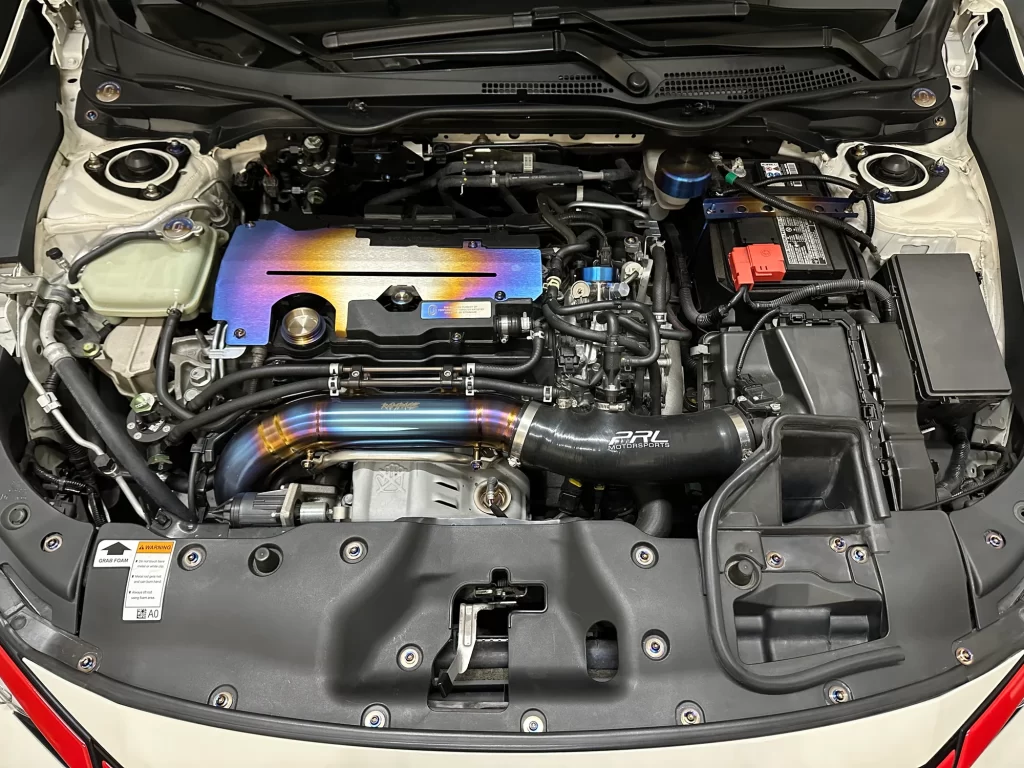
High-performance gasoline cars and racing cars: Engine valves, valve spring seats, connecting rods, piston pins, exhaust system manifolds, mufflers, turbocharger housings, suspension springs, brake caliper pistons, etc. Titanium alloys effectively reduce the weight of reciprocating engine components, improving speed response and handling performance. Formula 1 cars and rally cars extensively use titanium alloy components.
New energy vehicles: Battery pack structural components, motor housing cooling pipes, lightweight chassis components, fasteners, high-voltage system connectors, etc. Titanium alloys improve the range and lifespan of electric vehicles, making them particularly suitable for high-end new energy models.
Motorcycles: Exhaust systems, frame components, engine side covers, fasteners, footpegs, etc.
High fatigue performance and reliability requirements necessitate long-term bench and road testing. Some exterior parts have high requirements for surface quality and anodized color consistency.
Chemical Industry and Corrosion Resistance
The chemical industry is one of the largest application areas for pure titanium and corrosion-resistant titanium alloys. Titanium exhibits excellent corrosion resistance in most oxidizing acids, salt solutions, and seawater. Its service life is several times, even tens of times, longer than that of stainless steel.
Chlor-alkali and Electrolysis Industry: MMO titanium anode substrates, electrolytic cell plates, conductive beams, clamps, electrode holders, etc. The chlor-alkali industry is a traditional application area for titanium. Grade 2 pure titanium is the preferred anode substrate, resistant to high-temperature, high-concentration salt water corrosion.
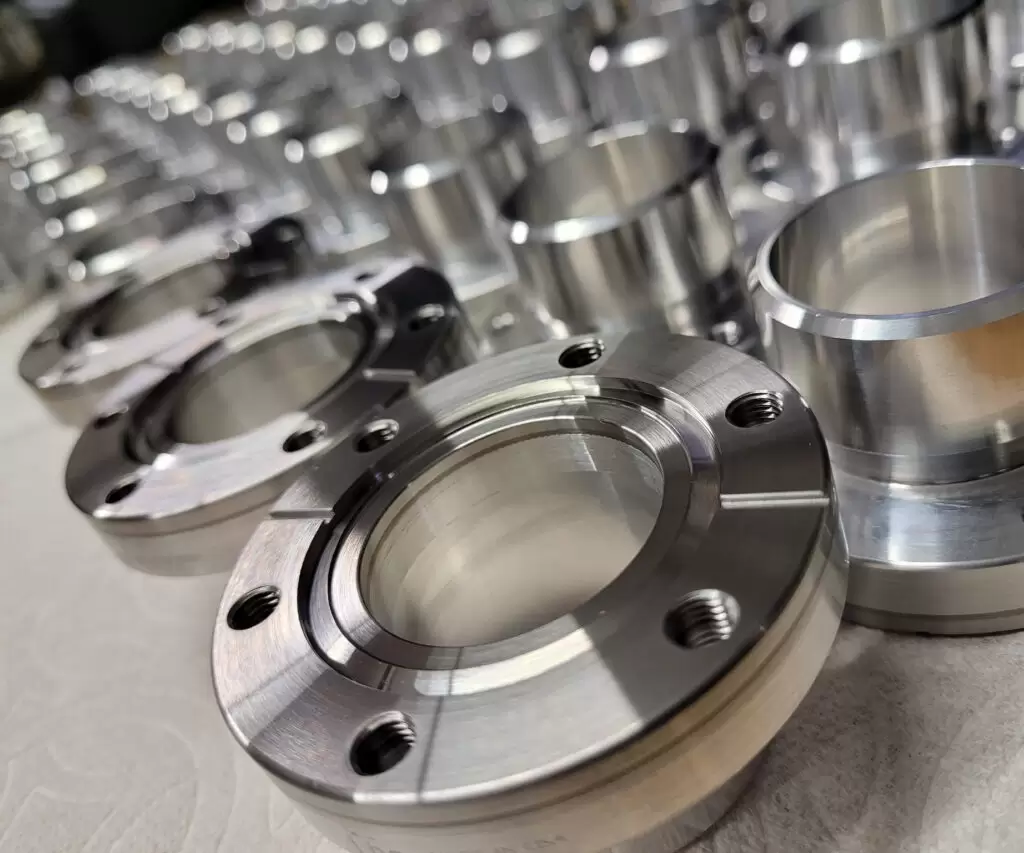
Hydrometallurgical and Chemical Reaction Equipment: Reactor linings, agitators, heat exchanger tube sheets, tower components, pipes, valves, pump impellers, flanges, etc. Titanium is widely used in non-ferrous metal smelting, fine chemicals, pharmaceuticals, pesticides, and other industries, resistant to corrosive media such as sulfuric acid, hydrochloric acid, and nitric acid.
Environmental Protection and Water Treatment: Wastewater treatment electrodes, desulfurization and denitrification equipment components, seawater desalination equipment, reverse osmosis equipment components, etc.
Electroplating and Surface Treatment: Electroplating racks, conductive rods, anode baskets, heating tubes, etc., resistant to acid and alkali plating solutions, with stable electrical conductivity.
Corrosion resistance is a core indicator. The appropriate titanium grade must be selected based on the corrosive medium. High welding technology is required. The weld must ensure corrosion resistance is no less than that of the base material. Some pressure vessel parts must comply with pressure vessel manufacturing standards.
Marine Projects and Ships
Marine environments are characterized by high salt spray, high humidity, and strong corrosion. Titanium alloys, with their superior resistance to seawater corrosion, are ideal materials for high-end marine equipment.
Offshore Oil and Gas Equipment: Subsea pipelines, valves, wellhead equipment, heat exchangers, underwater production system components, etc. Titanium parts are resistant to seawater and hydrogen sulfide corrosion, requiring no anti-corrosion coating and requiring minimal maintenance for extended periods.
Ship and Ship Equipment: Propeller shafts, marine valves, seawater cooling system piping, fire protection system components, sonar domes, marine fasteners, etc.
Deep-Sea Equipment: Pressure chambers for manned submersibles, hulls for underwater robots (ROV/AUV), seabed sensor housings, structural components for deep-sea exploration equipment, etc.
Offshore Wind Power and New Energy: Offshore wind turbine tower fasteners, seawater cooling system components, underwater foundation structural components, etc.

Robotics and Automation
The demand for lightweight, high-precision, and high-reliability industrial robots, service robots, and special-purpose robots continues to increase. The application of titanium alloys in high-end robotics is growing rapidly.
Titanium alloys are used in robot joint structures, reducer housings, robotic arm links, and end effector components. They reduce arm weight, improving load capacity and motion response speed.
Titanium alloys are also used in the fuselage structure, sensor housings, and transmission components of special-purpose robots (explosion-proof, corrosion-resistant, deep-sea robots) to adapt to extreme working environments.
Titanium alloys are used in the precision structural components of collaborative robots and medical robots to ensure motion accuracy and biosafety.
High dimensional accuracy and geometric tolerances are required to ensure repeatable positioning accuracy. Strict lightweighting requirements necessitate weight reduction through topology optimization and precision machining. Good fatigue performance is essential for long-life applications in high-frequency reciprocating motion.

Titanium CNC Machining Parts (DFM) Guide
Excellent design is a prerequisite for achieving high-quality, low-cost titanium parts machining. Titanium alloys are expensive, difficult to machine, and prone to deformation. Inappropriate design can significantly increase machining costs, extend delivery times, and even lead to part scrap.
Wall Thickness Design Guidelines
Wstitanium, combining industry-standard DFM guidelines, summarizes a design guide for titanium CNC machining. It aims to help you mitigate risks and achieve the optimal balance between performance and cost.
Wall thickness is one of the most critical factors in the design of titanium parts. Titanium alloys have a low elastic modulus (approximately 114 GPa, only 57% of that of steel). Under cutting forces, they are prone to elastic deformation and springback. The machining difficulty of thin-walled parts increases exponentially.
Wall Thickness Design Considerations
Wall Thickness Uniformity: Maintain overall wall thickness uniformity as much as possible, avoiding abrupt changes in wall thickness to reduce stress concentration and deformation risks during machining. Areas with significant wall thickness differences should be designed with transition slopes to avoid stress concentration.
Height-to-Wall Thickness Ratio Control: The height-to-wall thickness ratio for cantilever walls and independent ribs should ideally be controlled within 5:1. Exceeding this ratio significantly increases the risk of chatter and deformation.
| Component Type | Absolute Minimum Wall Thickness | Recommended Wall Thickness | Remarks |
|---|---|---|---|
| Short Wall (Height ≤ 2 × Wall Thickness) | 0.8 mm | ≥ 1.5 mm | 3-axis machining, no custom tooling required |
| Load-Bearing Structural Wall & Mid-Rise Wall (Height: 2~5 × Wall Thickness) | 1.0 mm | ≥ 2.0 mm | Optimize machining sequence with alternating milling passes |
| Tall Thin-Wall Section (Height > 5 × Wall Thickness) | 1.5 mm | ≥ 3.0 mm | Reinforcing ribs are recommended, or adopt 5-axis machining |
| Medical Ultra-Thin Wall Components | 0.5 mm | ≥ 0.8 mm | Dedicated support fixtures & micro-cutting processes are mandatory |
Cavity and Internal Corner Design
Machining deep cavities and sharp corners in titanium alloys not only results in high tooling costs and low efficiency, but also easily leads to tool breakage and poor surface quality. A well-designed internal corner and cavity layout can significantly improve machining efficiency and reduce costs.
Internal Corner Rounding Design
The larger the internal corner radius, the lower the machining cost and the better the surface quality. The internal corner radius determines the usable tool diameter; larger tools have better rigidity, higher efficiency, and longer lifespan.
Recommendation: The internal corner rounding radius R ≥ 1/3 of the cavity depth, with a minimum of 1.0mm. Prioritize using standard tool rounding sizes, such as R1.5, R2, R3, R5, etc., and avoid non-standard sizes.
Deep Cavities
When the cavity depth exceeds 3 times the tool diameter, it is recommended to further increase the corner rounding radius. Alternatively, design a draft angle to reduce chatter risk.
Right Angle Design: Unless functionally necessary, 90° sharp internal corners are strictly prohibited. Sharp internal corners must be machined using EDM (Electrical Discharge Machining), increasing costs by over 50%.
Cavity Depth-to-Width Ratio Design
For 3-axis machining, the recommended cavity depth-to-width ratio is ≤3:1. Exceeding this ratio makes chip removal and cooling difficult, accelerates tool wear, and significantly reduces machining efficiency.
For 5-axis machining, cutting conditions can be improved by tilting the tool, allowing the depth-to-width ratio to be increased to 6:1, but sufficient tool clearance space must still be provided.
For deep cavities, a stepped approach is recommended, wider at the top and narrower at the bottom, providing sufficient tool entry space and improving chip removal efficiency.
Hole Machining Design Guidelines
Drilling and tapping titanium alloys is difficult and costly. An unreasonable hole design will significantly increase scrap rate and machining time.
Hole Depth to Diameter Ratio
For standard drilling: A hole depth to diameter ratio (D/D ratio) of ≤3:1 is recommended, as machining difficulty and cost are controllable.
For deep holes: A D/D ratio of 3:1-5:1 requires a pecking drill and internally cooled drill bit, increasing costs by 15-30%. A D/D ratio exceeding 5:1 requires a gun drill or BTA drill, significantly increasing costs.
Design Recommendations: Avoid ultra-deep holes as much as possible. Use stepped holes and drills at both ends to reduce the depth at one end. Design non-through holes with a 120° taper at the bottom to match the drill tip angle, avoiding flat-bottom designs.
Hole Diameter and Tolerances
Use standard drill bit sizes for the preferred hole diameter to avoid non-standard diameters and reduce custom tool costs.
Hole position tolerances: A tolerance of ±0.1mm is sufficient for most needs. High-precision holes require specified datum points and coordinate boring, increasing costs accordingly.
Hole tolerances should be set appropriately: Standard mounting holes use H11/H12 free tolerances. Mating holes use H7/H8 tolerances. Precision mating holes require reaming or grinding, significantly increasing costs; these should only be used when functionally necessary.
Thread Design
Metric standard threads are preferred. Coarse threads are preferred, as fine threads are more difficult to machine and more prone to tool breakage.
Thread Depth: The effective thread depth is recommended not to exceed 1.5-2 times the nominal diameter. Excessive thread depth in titanium alloys can easily lead to tap breakage and thread profile damage.
Process Selection: Threads M6 and above should be designed to allow for thread milling, which offers higher stability and lower scrap rate than tapping. Smaller thread sizes should be designed as through holes for easy chip removal and cooling.
Boot Hole Design: The threaded boot hole should have a chamfer, with an entry chamfer of C1-C2, to guide the tool entry and reduce chipping at the entry point.
Tolerance Design Guidelines
The thermal expansion coefficient, elastic rebound, and machining stress characteristics of titanium alloys determine that achieving high-precision tolerances is significantly more expensive than for steel and aluminum. The design should adhere to the principle of “tolerances determined by needs” to avoid cost waste caused by excessive precision requirements.
| Tolerance Category | Economical Grade | Precision Grade | High-Precision Grade | Remarks |
|---|---|---|---|---|
| Linear Dimension | ±0.1 mm | ±0.05 mm | ±0.01 mm | High-precision outputs require constant-temperature inspection & repeated finish machining |
| Hole Diameter (H Tolerance Class) | H8 | H7 | H6 | H6 and tighter tolerances demand reaming or grinding operations |
| Outer Diameter (h Tolerance Class) | h8 | h7 | h6 | h6 and tighter tolerances require grinding processes |
| Flatness | 0.05 mm / 100 mm | 0.02 mm / 100 mm | 0.01 mm / 100 mm | High-precision results need grinding plus stress-relief treatment |
| Concentricity | Φ0.05 mm | Φ0.02 mm | Φ0.01 mm | High-precision tolerance is achieved via single-setup machining |
| Surface Roughness (Ra) | 1.6–3.2 μm | 0.8 μm | 0.2 μm | Surface finish of 0.2 μm or finer calls for lapping / polishing work |
Tolerance Design Principles
Tolerance Grading: Strict tolerances are only specified for functional mating surfaces. Non-mating surfaces and non-critical dimensions can use the general tolerances mentioned above. Each increase in tolerance precision increases the machining cost of titanium parts by 50%-200%.
Unified Datum: All tolerance markings must be based on a unified datum system (A/B/C datums), conforming to ASME Y14.5 or GB/T 1182 standards, to avoid increased clamping times and error accumulation caused by multiple datums.
Consideration of Springback and Deformation: Dimensional tolerances for thin-walled and cantilever structures should not be too tight. Machining springback and stress release can lead to dimensional fluctuations. Excessively tight tolerances will significantly increase the scrap rate.
Inspection Temperature Convention: For dimensions with an accuracy higher than ±0.02mm, the ambient inspection temperature must be specified (typically 20℃±2℃). The coefficient of thermal expansion of titanium is 8.6×10⁻⁶/℃. Temperature fluctuations will significantly affect measurement results.
Clamping
Consider clamping during the design phase to significantly reduce costs and errors, and improve machining efficiency.
**Provide Clamping Allowance:** For small, thin-walled parts, reserve clamping positions during design. These will be removed after machining to avoid deformation and indentation caused by directly clamping the functional surfaces of the part.
**Unify Machining Orientation:** Design most features on the same side or in a few orientations to reduce the number of clamping operations. Design multi-faceted features to be machinable in a single 5-axis clamping operation.
**Avoid Overhang Machining:** Features such as holes and slots should have sufficient support underneath to avoid vibration and chipping caused by overhang machining. Thin-walled holes without back support should be designed with reinforcing bosses.
**Diameter Surface Design:** Design clear machining datum surfaces and positioning holes. Datum surfaces should be flat and have a sufficiently large area. Positioning holes should have high accuracy to ensure accurate and reliable clamping and positioning.
Threads and Connections
Titanium alloy threaded connections have unique characteristics. Improper design can easily lead to problems such as seizing, stripping, and stress corrosion.
Thread Fit Grade: Medium fit precision is recommended for titanium alloy threads, such as 6g for external threads and 6H for internal threads. Excessive tightness can easily cause seizing due to titanium’s high coefficient of friction and susceptibility to cold welding adhesion.
Anti-Seizing Design: For frequently disassembled titanium threaded connections, it is recommended to design a titanium-steel mating system or use surface treatments (such as anodizing or molybdenum disulfide coating) to reduce the coefficient of friction and prevent seizing.
Bolt Connections: The preload of titanium bolt connections needs precise control to avoid overload leading to thread failure. Sufficient wrench operating space should be provided in the design.
Avoiding Thread Stress Concentration: Design a relief groove or transition fillet at the thread termination to reduce stress concentration and improve fatigue strength.
Challenges of CNC Machining Titanium Alloys
Titanium alloys are widely recognized as one of the most difficult commonly used metal materials to machine. Their machining difficulty far exceeds that of carbon steel, stainless steel, and aluminum alloys. It is generally believed in the industry that the machining cost of titanium alloys is 5-10 times that of aluminum alloys. This is due to the multiple machining challenges brought about by their material properties. A deep understanding of these challenges is a prerequisite for developing reasonable machining solutions.
Low Thermal Conductivity, Concentrated Cutting Heat
Titanium alloys have extremely low thermal conductivity. Grade 5 (Ti-6Al-4V) has a thermal conductivity of only about 6.7 W/m·K, while 45 steel has about 42 W/m·K, and 6061 aluminum alloy has about 167 W/m·K. Titanium’s thermal conductivity is only 1/25 that of aluminum and 1/6 that of steel.
Problems Caused:
Rapid Tool Wear: The heat generated during cutting cannot be quickly conducted away through the workpiece and chips. Approximately 80% of the cutting heat is concentrated in the tool tip area. This leads to a sharp increase in tool temperature, softening of the tool material, and accelerated wear. Tool life is significantly shortened. Under normal operating conditions, the lifespan of carbide tools machining titanium alloys is only 1/3 to 1/5 that of tools machining steel.
Workpiece thermal deformation: Localized high temperatures cause thermal expansion of the workpiece. Dimensional accuracy is difficult to control. Cooling and shrinkage after finishing can lead to dimensional deviations. Localized temperature differences in thin-walled parts can also cause thermal stress deformation.

Surface burning: Excessive temperature can cause oxidation of the titanium alloy surface, forming a hardened layer, and even microcracks, reducing the fatigue performance and corrosion resistance of the parts.
Safety risks: Titanium chips are fine and prone to spontaneous combustion at high temperatures, posing a fire hazard. This is also an important reason why sufficient cooling is necessary for titanium machining.
High Chemical Reactivity, Tool Adhesion
Titanium exhibits extremely high chemical reactivity, readily adhering to, diffusing, and reacting with tool materials at high temperatures. This leads to adhesive wear, diffusion wear, and chipping of the tool.
Problems Caused:
Built-up Edge and Tool Adhesion: Under high temperature and pressure, titanium adheres to the cutting edge, forming a built-up edge. This alters the tool geometry, increases cutting forces, and also worsens surface roughness. When the built-up edge detaches, it carries away tool material particles, exacerbating tool wear.
Diffusion Wear: At high temperatures, titanium diffuses with elements in the tool such as carbon, cobalt, and tungsten, weakening the tool’s surface structure, leading to decreased tool strength and accelerated wear. This is why diamond tools are unsuitable for machining titanium alloys—at high temperatures, titanium reacts with carbon to form titanium carbide, causing rapid tool wear.

Tool Chipping: Tool adhesion causes large fluctuations in cutting forces, increasing the impact load on the cutting edge, making it prone to micro-chipping or even complete chipping. This is especially noticeable during interrupted cutting and entry/exit cuts.
Significant Machining Hardening Tendency
During machining, titanium alloys undergo work hardening of the surface material under plastic deformation and thermal effects. This significantly increases hardness, further exacerbating machining difficulties.
Problems Caused:
Secondary Milling is Difficult: If the first cut is incomplete, subsequent cuts into the hardened layer will experience a dramatic increase in wear rate, potentially even resulting in tool tip breakage.
Deterioration in Surface Quality: The work-hardened layer is brittle and prone to microcracks, reducing the fatigue strength of the part. Uneven hardness within the hardened layer also makes dimensional accuracy difficult to control.
Strict Process Requirements: Each cut must ensure a depth of cut greater than the hardened layer depth to prevent the tool from “slipping” within it. The cutting edge must remain sharp; a dull tool will accelerate work hardening.

Deformation and Springback
The elastic modulus of titanium alloys is approximately 114 GPa, only about half that of steel. This means that under the same cutting force, the elastic deformation of titanium is twice that of steel.
Problems Caused:
Deformation of Thin-Walled Parts: Thin-walled, fine-ribbed, and cantilevered structures experience elastic yielding under cutting forces. This results in the actual cutting amount being less than the programmed value. After the tool passes through, the material springs back, leading to dimensional errors, uneven wall thickness, and taper.
Dimensional Springback: After turning and milling sidewalls, the material elastically springs back. This results in problems such as smaller hole diameters, larger outer diameters, and inaccurate groove widths. This requires repeated trial cuts for compensation, reducing machining efficiency.
Cutting Chatter: Low-rigidity structures are prone to chatter under cutting force, producing chatter marks, severely deteriorating surface quality, accelerating tool wear, and even causing part scrap.

Residual Stress
During forging, rolling, and machining, titanium alloy parts develop significant residual stress. Stress release causes dimensional changes over time, affecting long-term dimensional stability.
Problems Caused:
Machined Deformation: After rough machining, the stress balance is disrupted, causing parts to slowly warp and bend. If precision machining is performed directly, the final product dimensions will gradually exceed tolerances as stress release occurs.
Geometric Tolerance Exceeding Tolerances: Flatness, parallelism, and perpendicularity tolerances are most affected by stress deformation. High-precision flat and frame-type parts are particularly prone to flatness deviations.
Service Failure: Parts with high residual stress, under the influence of temperature and load, may experience stress release during service, potentially leading to deformation, seal failure, and loose connections.

Threading and Deep Hole Machining: Challenges
Threading and deep hole machining of titanium alloys are recognized as difficult. The scrap rate is significantly higher than for other metals.
Threading Challenges
Due to titanium’s high springback, the thread pitch diameter tends to decrease after tapping. This leads to malfunctions in the go gauge. An excessively large pilot hole results in insufficient thread strength.
Taps easily stick to titanium, making chip removal difficult and increasing the risk of tap breakage within the workpiece. Removal is extremely difficult, often resulting in the scrapping of the entire part.
Deep Hole Machining Challenges
Deep holes have extremely poor heat dissipation, causing the drill bit temperature to rise rapidly and resulting in severe wear. The long chip removal path easily leads to chip blockage within the hole, scratching the hole wall and even causing drill bit breakage. Insufficient drill bit rigidity makes it prone to skew, causing deviations in the straightness and coaxiality of the hole.
CNC Machining Titanium Solution
Addressing the challenges of CNC machining of titanium alloys, Wstitanium, combining its own experience with industry best practices, summarizes solutions for CNC machining of titanium alloys from the dimensions of tools, cooling, parameters, and strategies, effectively improving machining efficiency, extending tool life, and ensuring the quality of titanium parts.
Tool Selection
Tools are a crucial factor in titanium CNC machining. Choosing the right tool can significantly improve efficiency.
Prefer ultra-fine grain carbide tools: Select ultra-fine grain WC-Co carbide tools with a grain size of 0.2-0.5μm. They offer a good balance of bending strength and wear resistance, making them the preferred substrate for titanium machining tools.
Prefer TiAlN/TiSiN coatings: PVD TiAlN coatings offer high high-temperature hardness and good chemical stability, making them a general-purpose first choice. For demanding conditions such as high-speed and dry cutting, TiSiN coatings are preferred. They offer superior thermal stability and better anti-sticking performance. Avoid TiN coatings. They have a strong affinity for titanium and cause severe sticking.
Large rake angle + large helix angle design: Positive rake angle tools reduce cutting deformation, lower cutting forces, and reduce cutting heat; a large helix angle (35°-45°) increases the number of teeth cutting simultaneously, improving cutting smoothness and chip removal.

Edge dulling treatment: Sharp cutting edges are prone to chipping. Dulling treatment rounds the cutting edge to 0.015-0.025mm, improving edge strength and preventing work hardening caused by excessive dullness.
Regular tool replacement to avoid overuse: Titanium machining tools wear rapidly after reaching a certain level. Typically, carbide end mills have a lifespan of approximately 60-120 minutes for roughing Ti-6Al-4V and approximately 120-200 minutes for finishing.
Cooling and Lubrication
Cooling and lubrication are crucial for titanium CNC machining.
High-Pressure, High-Flow Cooling: A high-pressure cooling system is essential, with a pressure ≥70 Bar, preferably 100 Bar or higher. The coolant should directly flow into the cutting edge area, forcibly breaking up chips and carrying away heat. Internal cooling is far more effective than external cooling; tools with internal cooling orifices should be prioritized.
Special Cutting Fluid for Titanium: Use extreme-pressure emulsions or semi-synthetic cutting fluids containing chlorine and sulfur extreme-pressure additives to improve lubrication and reduce the coefficient of friction. Chlorine-containing cutting fluids are strictly prohibited; at high temperatures, chlorine reacts with titanium to form chlorides, leading to stress corrosion cracking and affecting part lifespan.
Optimized Cooling Direction: Multi-nozzle, multi-angle cooling ensures sufficient cooling of the tool’s rake face, flank face, and chips. For deep hole and deep cavity machining, add auxiliary nozzles to ensure coolant reaches the cutting area.
Oil Cooling Alternative: Oil-based cutting fluids can be used for thin-walled precision parts and grinding. They offer better lubrication and less workpiece thermal deformation, but fire safety precautions must be taken, and fire extinguishing equipment should be provided.
Cryogenic Cooling Technology: High-end applications utilize cryogenic air and liquid nitrogen cooling technologies to significantly reduce cutting temperatures. This substantially improves tool life and surface finish, making it suitable for high-end parts in medical and aerospace applications.
Cutting Path
A well-designed toolpath strategy effectively reduces cutting forces, minimizes heat buildup, and extends tool life. This is a key focus of titanium machining optimization.
**Helical Downcut/Angled Downcut:** Vertical tool penetration is strictly prohibited. Vertical downcuts result in high cutting forces, poor chip removal, and a high risk of tool breakage. Helical downcuts or 45° angled downcuts ensure smooth material entry and reduce impact.
**Chorionic/Dynamic Milling:** The tool moves in a cycloidal motion with a small radial width and high feed rate, minimizing heat buildup. Tool life is more than doubled compared to traditional layer milling, and machining efficiency is increased by 40%.
**Preferred Climb Milling:** Climb milling is essential for finishing. The cutting thickness gradually decreases, resulting in less tool impact, less work hardening, better surface finish, and longer tool life.
**Contour Milling:** Contour milling is used for finishing sidewalls and cavities. Uniform depth of cut per layer ensures stable cutting forces and guarantees sidewall perpendicularity and surface consistency.
Avoid sharp corner turns: Use rounded transitions at toolpath corners to avoid 90° sharp turns, reduce sudden changes in cutting force and machine tool impact, and improve surface quality and tool life at corners.
Anti-sticking and Built-up Edge Control
Keep the cutting edge sharp. Dull tools are a major cause of built-up edge; change tools promptly. Finishing operations must use tools with new cutting edges.
Optimize feed rate: Appropriately increase the feed rate to ensure sufficient chip thickness and prevent thin chips from adhering to the cutting edge.
Improve lubrication: Use high-pressure cutting fluid or micro-volume lubrication (MQL) technology to reduce the coefficient of friction between the tool and the workpiece, reducing sticking.
Avoid the built-up edge speed range: Every material has a speed range where built-up edge is most likely to form. Adjusting the cutting speed through experimentation to avoid this range can significantly reduce sticking.
CNC Machining Cutting Parameters for Titanium Alloys
Wstitanium has compiled a table of standard cutting parameters for commonly used titanium alloys based on mass production verification data and official recommendations from tool manufacturers. Disclaimer: All parameters are recommended values under normal operating conditions. In actual production, adjustments may be necessary based on machine tool rigidity, cooling conditions, part structure, and tool brand. Wstitanium reserves the right of final interpretation.
CNC Milling Titanium Parts Parameters
| Titanium Grade | Cutting Tool | Tool Material | Cutting Speed Vc (m/min) | Per-Tooth Feed fz (mm/z) | Radial Depth of Cut ae (mm) | Axial Depth of Cut ap (mm) | Machining Condition |
|---|---|---|---|---|---|---|---|
| Grade 1 / 2 Commercially Pure Titanium | Solid End Mill | Cemented Carbide / TiAlN Coating | 40–70 | 0.05–0.12 | 0.2×D ~ 0.5×D | 0.5×D ~ 1.5×D | Rough Machining |
| Grade 1 / 2 Commercially Pure Titanium | Solid End Mill | Cemented Carbide / TiAlN Coating | 50–80 | 0.03–0.08 | 0.1×D ~ 0.3×D | 0.1–0.3 | Finish Machining |
| Grade 5 (Ti‑6Al‑4V) | Solid End Mill | Ultra‑Fine Grain Carbide / TiAlN Coating | 30–50 | 0.05–0.10 | 0.1×D ~ 0.3×D | 0.5×D ~ 1.0×D | Rough Machining |
| Grade 5 (Ti‑6Al‑4V) | Solid End Mill | Ultra‑Fine Grain Carbide / TiSiN Coating | 35–55 | 0.03–0.06 | 0.05×D ~ 0.2×D | 0.1–0.2 | Finish Machining |
| Grade 5 (Ti‑6Al‑4V) | Bull Nose Mill / Face Mill | Indexable Inserts / TiAlN Coating | 40–60 | 0.1–0.2 mm/z | 0.5×D ~ 0.8×D | 1.0–3.0 | Surface Rough Milling |
| Grade 23 Medical Titanium | Solid End Mill | Ultra‑Fine Grain Carbide / Uncoated or TiAlN Coating | 25–45 | 0.04–0.08 | 0.1×D ~ 0.25×D | 0.3–1.0 | Rough Machining |
| Grade 23 Medical Titanium | Solid End Mill | Ultra‑Fine Grain Carbide / TiAlN Coating | 30–40 | 0.02–0.05 | 0.05×D ~ 0.15×D | 0.05–0.15 | Finish Machining |
| Grade 7 / 12 Corrosion‑Resistant Titanium | Solid End Mill | Cemented Carbide / TiAlN Coating | 35–60 | 0.05–0.10 | 0.2×D ~ 0.4×D | 0.5×D ~ 1.2×D | General‑Purpose Machining |
CNC Turning Titanium Parts Parameters
| Titanium Grade | Insert Type | Insert Material / Coating | Cutting Speed Vc (m/min) | Feed Rate f (mm/r) | Depth of Cut ap (mm) | Machining Condition |
|---|---|---|---|---|---|---|
| Grade 2 | Diamond Turning Insert | Cemented Carbide / TiAlN Coating | 40–70 | 0.15–0.3 | 1.0–3.0 | Rough Turning |
| Grade 2 | Finish Turning Insert | Cemented Carbide / TiAlN Coating | 50–80 | 0.08–0.15 | 0.1–0.3 | Finish Turning |
| Grade 5 | Diamond Turning Insert | Ultra‑Fine Grain Carbide / TiAlN Coating | 30–50 | 0.1–0.25 | 0.5–2 | Rough Turning |
| Grade 5 | Finish Turning Insert | Ultra‑Fine Grain Carbide / TiSiN Coating | 35–55 | 0.05–0.12 | 0.05–0.2 | Finish Turning |
| Grade 23 | Finish Turning Insert | Ultra‑Fine Grain Carbide / Polished Cutting Edge | 25–40 | 0.05–0.1 | 0.05–0.15 | Finish Turning |
CNC Drilling Titanium Parts Parameters
| Titanium Grade | Drill Bit Type | Drill Bit Material | Cutting Speed Vc (m/min) | Feed Rate f (mm/r) | Max Depth-to-Diameter Ratio | Cooling Method |
|---|---|---|---|---|---|---|
| Grade 2 | Twist Drill / Internal Coolant Drill | Cemented Carbide | 25–40 | 0.08–0.15 | 3:1 | External Cooling / Internal Cooling |
| Grade 2 | Internal Coolant Deep Hole Drill | Cemented Carbide | 20–30 | 0.05–0.1 | 5:1 | High-pressure Internal Cooling + Peck Drilling |
| Grade 5 | Twist Drill / Internal Coolant Drill | Ultra‑Fine Grain Cemented Carbide | 20–30 | 0.06–0.12 | 3:1 | High-pressure Internal Cooling |
| Grade 5 | Gun Drill | Cemented Carbide | 30–50 | 0.03–0.08 | 20:1 | High-pressure Internal Cooling |
| Grade 23 | Precision Drill Bit | Ultra‑Fine Grain Cemented Carbide | 15–25 | 0.04–0.08 | 3:1 | Internal Cooling + Clean Cutting Fluid |
CNC Tapping Titanium Parts Parameters
| Titanium Grade | Tap Type | Tap Material / Coating | Cutting Speed Vc (m/min) | Max Depth-to-Diameter Ratio | Lubrication Method |
|---|---|---|---|---|---|
| Grade 2 | Spiral Flute Tap | Cobalt High‑Speed Steel / TiCN Coating | 5–10 | ≤1.5×D | Extreme Pressure Cutting Oil |
| Grade 5 | Spiral Flute Interrupted Thread Tap | Cemented Carbide / TiAlN Coating | 3–6 | ≤1.2×D | Extreme Pressure Cutting Oil + Peck Tapping |
| All Titanium Grades | Thread Mill | Cemented Carbide / TiAlN Coating | 30–50 | No Restriction | High‑Pressure Cooling |
Finishing Services for CNC Machining of Titanium Parts
Surface treatment is a crucial step in the machining of titanium parts. It not only enhances the appearance and texture but also optimizes properties such as corrosion resistance, wear resistance, biocompatibility, and fatigue strength. Wstitanium offers a full range of surface treatment technologies for titanium parts.
Anodizing
Titanium anodizing refers to applying a DC voltage to titanium as the anode, causing an oxidation reaction on the titanium surface to form an oxide film of varying thickness. The oxide film thickness is controlled by the voltage, and different thicknesses of oxide films exhibit different colors through light interference effects.
Type I/II Anodizing: Voltage typically 5-100V, oxide film thickness 0.1-1μm. Anodized titanium parts exhibit a variety of colors including gold, blue, purple, green, gray, and black, improving corrosion resistance. Complies with AMS 2487 and AMS 2488 standards.
Type III Hard Anodizing: Micro-arc discharge is generated under high voltage, producing a hard ceramic oxide film with a thickness of 10-50μm. It has high hardness, good wear resistance, and strong insulation, mainly used in wear-resistant and insulating applications.

Sandblasting
Sandblasting is a technique that uses a high-pressure airflow to propel abrasive particles against titanium parts, creating a uniform matte finish. It is the most common surface roughening and cleaning process for titanium parts.
Glass Bead Blasting: Using glass microspheres as abrasive, it provides moderate impact and creates a smooth, matte finish. It is the most commonly used titanium blasting technique. Surface roughness is typically Ra 1.6-3.2μm.
Alumina Blasting: Alumina particles have high hardness and impact force, resulting in even higher surface roughness and strong removal power. It is suitable for removing oxide scale, burrs, or creating roughened surfaces. Roughness reaches Ra 3.2-6.3μm.
Wet Blasting: Abrasive mixed with water is sprayed, resulting in a gentler impact, less dust, and a smoother surface. It is suitable for precision parts and medical components.

Electropolishing
Polishing is a technique for improving the surface finish of titanium parts. It achieves a mirror-like surface, improving corrosion resistance, cleanliness, and aesthetic appearance.
Mechanical polishing: Achieving a smooth surface with a Ra of 0.1-0.4μm through progressive grinding with grinding wheels, belts, and cloth wheels. Suitable for simple surfaces such as planes and outer circles.
Electropolishing: Selectively dissolving raised areas on the workpiece surface through electrochemical action to obtain a highly smooth and passivated surface. Titanium electropolishing can achieve a surface roughness of Ra≤0.1μm, with excellent mirror-like finish.
Chemical polishing: Smoothing the surface through the corrosive action of chemical agents. Suitable for complex cavities and irregularly shaped parts. Polishing precision is slightly lower than electropolishing, but it has greater adaptability.

Passivation
Titanium naturally forms a 2-5nm thick oxide film in air. However, cutting heat, oil, and iron ion contamination during processing can damage the integrity of this oxide film, reducing its corrosion resistance. Passivation involves immersion in oxidizing solutions such as nitric acid and citric acid to remove surface contaminants and free iron. This promotes the regeneration of a uniform, dense, and stable oxide film of 5-10nm thickness on the titanium surface, restoring and improving corrosion resistance.
Nitric acid passivation: Immersion in a 20-40% nitric acid solution at room temperature or with heating provides stable passivation results, conforming to ASTM B600 and ASTM F86 standards.
Citrate acid passivation: Environmentally friendly, using a citric acid solution with low corrosiveness and easily treatable waste, suitable for the medical and food industries, conforming to AMS 2488 Method 2.
Passivation is recommended for all industrial titanium parts after machining, especially those used in corrosive environments such as chemical, marine, and medical applications. Passivation does not change the dimensions or appearance of the parts and is considered a basic functional treatment.

Powder Coating
Powder coating is a surface treatment technology that involves electrostatically spraying powder coating onto the surface of a workpiece and then curing it at high temperatures to form a robust coating. It provides titanium parts with a rich variety of colors and enhanced protection.
The coating thickness is typically 50-150μm, with strong adhesion, impact resistance, wear resistance, and corrosion resistance. A wide range of colors are available, including matte, high-gloss, and textured finishes. It is environmentally friendly, with no solvent evaporation and high coating utilization.
Applications include outdoor titanium structural components, sports equipment, and equipment housings. It enhances both aesthetics and weather resistance. Powder coatings possess excellent electrical insulation properties. Note: Powder coating significantly increases dimensional accuracy; precision mating surfaces require pre-planning allowances or partial masking.

Surface Treatment Selection Reference
| Finishing Technology | Surface Roughness Ra | Coating Thickness | Functional Effects | Application Scenarios | Dimensional Variation |
|---|---|---|---|---|---|
| As-Machined Finish | 1.6–3.2 μm | - | Raw machining surface condition | Internal structural parts, non-cosmetic components | No dimensional change |
| Glass Bead Blasting | 1.6–3.2 μm | - | Matte appearance, surface cleaning, texture roughening | General structural components, medical implants | Minimal change (<0.01 mm) |
| Standard Anodizing | 0.8–1.6 μm | 0.1–1 μm | Corrosion resistance, anti-galling, color customization | Fasteners, medical devices, cosmetic parts | Negligible shift |
| Hard Anodizing | 1.6–3.2 μm | 10–50 μm | Wear resistance, electrical insulation, corrosion protection | Wear-resistant parts, insulating components | Approximately half of coating thickness |
| Electropolishing | ≤0.2 μm | 0.01–0.05 mm | High surface smoothness, anti-corrosion, easy sanitization | Medical hardware, fluid system parts, cosmetic components | Minor dimensional reduction |
| Passivation | Unchanged | 5–10 nm | Oxide film restoration, enhanced corrosion resistance | All industrial corrosion-resistant machined parts | Negligible shift |
| Powder Coating | Determined by base substrate | 50–150 μm | Heavy-duty corrosion protection, decorative finish, insulation | Outdoor structural frames, equipment enclosures | Noticeable dimensional increase |
| PVD Coating | Near-unchanged | 1–5 μm | Wear resistance, friction reduction, anti-galling performance | Sporting gear, fasteners, manufacturing molds | Minimal change |
Tolerances for CNC Machining of Titanium Parts
The ability to guarantee tolerances for precision titanium parts is a core indicator of a machining manufacturer’s capabilities. The thermal deformation, springback, and stress of titanium pose significant challenges to tolerance control. Wstitanium has invested in advanced CNC machining centers and implemented optimized ISO9001 full-process management to achieve stable, high-precision titanium parts machining, meeting the precision needs of various industries.
| Feature | Standard Tolerance | Precision Grade Tolerance | Remarks |
|---|---|---|---|
| Linear Dimension (≤100mm) | ±0.05mm | ±0.01mm | Constant-temperature inspection, finish machining compensation |
| Hole Diameter (≤20mm) | H7 (+0.021/0) | H6 (+0.013/0) | H6 tolerance requires reaming / grinding |
| Outer Diameter (≤20mm) | h7 (0/-0.021) | h6 (0/-0.013) | h6 tolerance requires cylindrical grinding |
| Position Tolerance | ±0.05mm | ±0.015mm | Single-setup machining, 5-axis machine tool |
| Concentricity | Φ0.03mm | Φ0.01mm | Single clamping setup, turn-mill composite machining |
| Flatness (100×100mm) | 0.03mm | 0.01mm | Grinding + stress relief treatment |
| Parallelism (100mm span) | 0.03mm | 0.01mm | Precision grinding of datum face |
| Perpendicularity (100mm span) | 0.03mm | 0.015mm | Single-setup machining |
| Surface Roughness Ra | 1.6 μm | 0.2 μm | 0.2 μm finish requires lapping / electropolishing |
| Thread Tolerance Grade | 6H/6g | 5H/5g | Class 5 thread accuracy requires thread grinding |
Factors Affecting Tolerances
The positioning accuracy and repeatability of the CNC machine tool itself are fundamental. High-precision parts require high-end CNC machine tools with a fully closed-loop linear encoder. Wstitanium’s CNC machining centers achieve a positioning accuracy of ±0.002mm.
Temperature: Titanium has a coefficient of thermal expansion of 8.6 × 10⁻⁶/℃. A 100mm long part will have a dimensional change of approximately 4.3μm due to a 5℃ temperature change. High-precision CNC machining must be performed in a temperature-controlled workshop (20℃ ± 1℃).
Tool Wear: Titanium machining tools wear out quickly. Tool wear during finishing can lead to gradual dimensional drift. High-precision parts finishing requires the use of new tools or real-time tool wear compensation.
Part Deformation: Residual stress release and elastic deformation caused by cutting forces are the main causes of tolerance defects in titanium parts, especially thin-walled and long parts. Stress relief, optimized clamping, and micro-cutting must be used to control this.
Measurement error: High-precision dimensions require the use of high-precision measuring equipment, such as coordinate measuring machines (CMMs), micrometers, pneumatic measuring instruments, etc., and the measurement environment temperature must be consistent with the machining environment.
Achieving Strict Tolerances
Wstitanium ensures the tolerance stability of precision titanium parts through four-dimensional control: equipment, technology, inspection, and management. Investments are made in precision equipment such as 5-axis CNC machining centers, high-precision Swiss CNC machining centers, grinding machines, and wire EDM machines. All equipment is calibrated regularly, and calibration records are maintained.
Roughing and finishing are separated, with stress-relief annealing performed in between to eliminate stress deformation. Before finishing, parts are placed at a constant temperature for at least 4 hours to ensure uniform temperature. Specialized fixtures and tools are used, and cutting parameters are optimized to reduce cutting forces and thermal deformation.
The final cut employs a micro-finishing process to compensate for elastic springback. Precision machining and inspection areas are located in temperature- and humidity-controlled workshops, with temperature controlled at 20℃±1℃ and humidity at 40%-60%, avoiding the impact of environmental temperature and humidity fluctuations on accuracy.
CNC Machining Titanium Parts Cost
CNC machining costs for titanium parts are significantly higher than for other metals. Understanding the cost structure and factors helps you plan your budget at the beginning of a project. Wstitanium provides a detailed analysis of the cost structure of titanium parts and offers practical cost reduction suggestions.
| Cost Category | Cost Share | Description |
|---|---|---|
| Raw Material Cost | 40%–50% | Titanium stock carries a high base price. Lower material utilization will raise this cost proportion. |
| Machining Hour Cost | 20%–30% | Machine tool hourly rates plus programming & machine operator labor expenses. Titanium machining runs at slow feed rates, driving far higher hourly costs versus aluminum. |
| Tooling & Consumable Cost | 15%–20% | Specialized cutting tools have premium pricing and short usable lifespans with heavy wear. Includes auxiliary supplies such as cutting fluid and grinding wheels. |
| Heat Treatment & Surface Finishing Cost | 5%–10% | Expenses for stress relief annealing, vacuum heat treatment, anodizing, bead blasting and related finishing processes. |
| Quality Inspection & Certification Cost | 5%–10% | Charges for CMM inspection, non-destructive testing, material mill test reports and special compliance certifications. |
| Overhead & Distribution Expense | 5%–10% | Allocated costs covering factory premises, utilities, administrative labor, packaging and outbound shipment logistics. |
| Case Reference: For a mid-complexity Grade 5 titanium part: raw material ~45%, CNC machining labor ~25%, tooling & consumables ~15%, surface treatment plus quality testing ~10%, remaining miscellaneous overhead ~5%. | ||
Factors Affecting the Cost of CNC Machining Titanium Parts
Titanium Grade: Prices vary significantly between different titanium grades. Grade 2 pure titanium bars cost approximately $15-25/kg, Grade 5 approximately $25-40/kg, Grade 23 medical-grade titanium approximately $60-100/kg, and Grade 7 palladium-containing titanium reaches $150/kg.
Material Utilization: Material utilization is a key factor affecting cost. Hollowed-out parts from solid bars may only have a material utilization rate of 10%-30%. A large amount of material becomes waste, significantly increasing costs. Forgings and 3D-printed near-net-shape blanks can improve utilization and reduce overall costs.
Complexity of CNC Titanium Parts: Simple flat and shaft-type parts have low costs. Multi-faceted, deep-cavity, thin-walled, and complex curved surface parts require multi-axis CNC machining centers. Multiple clamping operations and special tooling significantly increase machining time and costs.
Valume: The cost of programming, clamping, and debugging is spread across a single unit, resulting in the highest cost. For small to medium production volumes (10-100 pieces), the cost per piece can be reduced by 30%-50% after programming cost amortization.
Number of Processes: The more processes and workflows, the higher the cost. Parts completed in a single clamping operation are far less expensive than parts disassembled through multiple processes.
CNC Technology: 3-axis milling is the cheapest, with 4-axis and 5-axis machining costs increasing accordingly. Specialized technologies such as Swiss turning, grinding, EDM, and wire cutting are even more expensive.
Tolerances: Each increase in tolerance accuracy increases machining costs by 50%-200%. This is because slower machining speeds, more inspections, and higher scrap rates are required.
Surface Roughness: The longer the finishing, polishing, and grinding processes, the higher the cost. A Ra 0.2μm mirror polish costs several times more than a conventionally machined surface.
Heat Treatment and Finishing: Standard stress-relief annealing has a lower cost. Vacuum solution aging and special heat treatments have higher costs. Sandblasting and passivation have lower costs. High-end surface treatments such as anodizing, electropolishing, and PVD coating increase costs by 5%-20%.
Quality inspection and documentation requirements: Full-size coordinate measuring machine (CMM), non-destructive testing (UT/PT), metallographic analysis, and mechanical property testing will increase inspection costs. Material certifications (SGS, RoHS), traceability documentation, etc., will further increase management costs.
Optimizing CNC Machining Costs for Titanium Parts
Based on experience, Wstitanium summarizes the following actionable cost reduction suggestions. These suggestions effectively reduce procurement costs without affecting part performance.
Choose the grade according to your needs: Don’t blindly choose high-performance grades. Use alloy titanium for scenarios where pure titanium suffices. Use higher-end alloys where Grade 5 is sufficient. For example, use Grade 2 in ordinary corrosive environments, not Grade 7. Use Grade 2 for non-implantable medical applications, not Grade 23.
Optimize blank shape: Prioritize bar stock and sheet metal, avoiding custom-made blanks with special dimensions. For parts with large removal volumes, prioritize forgings and castings to reduce material waste. Although blank costs increase, reduced machining time and material waste may result in a lower overall cost.
Design DFM Optimization
Avoid excessively thin wall thickness designs to reduce machining difficulty and scrap rate. Increase internal corner radii from R0.5 to R3, and change tooling from φ1 to φ6, resulting in several-fold increases in rigidity, more than double the machining efficiency, and a significant cost reduction.
Reduce unnecessary complex features, deep cavities, and irregular holes. Only specify strict tolerances for critical dimensions, using general tolerances for the rest to avoid excessive precision. Use standard dimensions for hole diameters, threads, chamfers, etc., to avoid the cost of non-standard tools.
Get a quote for CNC machining of titanium parts
Wstitanium specializes in precision CNC machining of titanium alloys. Leveraging the resources of China’s Titanium Valley industrial cluster, we are equipped with over 20 high-end CNC machining centers and a comprehensive quality control system (ISO9001 & ISO13485), serving customers worldwide in the aerospace, medical, marine, and automation industries.
Wstitanium Advantages
Full Grade Coverage: Supports CNC machining of all grades of titanium alloys from Grade 1 to Grade 23, with readily available stock of bars and plates for rapid response.
Comprehensive Technical Capabilities: One-stop service including 3/4/5-axis milling, mill-turning, Swiss-type Swiss-type lathes, EDM wire cutting, heat treatment, and surface treatment.
High Precision Guarantee: ±0.005mm extreme machining accuracy, three-axis full-dimensional inspection, and full-process quality traceability.
Fast Turnaround: Prototype parts delivered in as little as 3 days, low-volume parts in 7-15 days, and stable delivery of mass-produced parts.
Professional Technical Support: A team of senior titanium machining engineers provides free DFM reviews and material selection advice, proactively addressing machining risks.
Compliance Certifications: ISO 9001 and ISO 13485 certifications, medical and aerospace-grade quality control, supports global export, and comes with complete customs clearance documentation.
Required Documents for Quotation
To provide an accurate and fast quotation, please prepare the following documents:
3D model file (STEP/IGS format preferred) + fully annotated 2D engineering drawings (PDF format).
Titanium alloy grade and condition requirements, such as Grade 5 annealed, Grade 23 medical grade.
Purchase quantity and delivery cycle requirements.
Application industry and special usage environment description (optional).
Frequently Asked Questions
Titanium’s difficulty in machining stems primarily from four characteristics: First, its extremely low thermal conductivity, only 1/4 that of steel, concentrates cutting heat at the tool tip, leading to rapid tool wear. Second, it exhibits strong work hardening, resulting in a significant increase in surface hardness after cutting, further exacerbating tool wear. Third, it has high high-temperature chemical reactivity, easily bonding and diffusing with the tool material. Fourth, its low elastic modulus leads to significant springback during cutting, making dimensional accuracy difficult to control. These four characteristics collectively result in low machining efficiency, high tool wear, and demanding process requirements for titanium alloys.
The mainstream choice is fine-grained cemented carbide tools with a TiAlN/AlTiN PVD coating, balancing high-temperature hardness and toughness, making it the most cost-effective option. For finishing or high-requirement applications, PCD diamond-coated tools can be used. These tools have a lifespan 3-5 times longer than ordinary coated tools, but are more expensive. High-speed steel tools are only suitable for low-speed machining of pure titanium and are not recommended for alloy titanium. For tool geometry, a large rake angle and large helix angle are preferred to reduce cutting forces.
Standard tolerances for conventional titanium parts can be consistently achieved at ±0.1mm. Precision machining can achieve ±0.02-0.05mm. High-precision CNC machining centers can reach a limit of ±0.005mm. Specific tolerance capabilities depend on the part’s size, structure, and feature type. For example, tolerances for thin-walled parts and deep holes will be correspondingly more lenient. Tighter tolerances result in higher machining costs; it is recommended to only specify tight tolerances for critical features.
Main reasons for titanium deformation: low elastic modulus, high residual cutting stress, and high thermal sensitivity. Core solutions to prevent deformation: ① Use symmetrical structures, uniform wall thickness, and added reinforcing ribs during the design phase; ② Perform stress-relief annealing after rough machining to release cutting stress; ③ Employ symmetrical layered cutting and shallow depth-of-cut multi-path processes; ④ Use multi-point flexible tooling for uniform clamping to avoid localized deformation; ⑤ Perform precision machining in a constant-temperature environment to control thermal deformation.
There are four main reasons for the high cost: ① Expensive raw materials: Titanium alloy bars are 10-20 times more expensive than aluminum alloys; ② Low machining efficiency: Cutting speed is only 1/5-1/8 that of aluminum alloys, resulting in high per-piece machining costs; ③ High tool wear: Specialized tools are expensive and wear out quickly, with tool costs 3-5 times that of aluminum alloys; ④ High quality control costs: Industries such as aerospace and medical require strict testing and traceability, adding extra costs.
Grade 5 (Ti-6Al-4V) is significantly more difficult to machine than Grade 2 pure titanium. Grade 5 (Ti-6Al-4V) has higher strength, greater cutting forces, more severe work hardening, and poorer thermal conductivity, resulting in faster tool wear. Under the same conditions, the cutting speed of Grade 5 is 30%-40% lower than that of Grade 2, the tool life is about 60% of that of Grade 2, and the overall machining cost is 30%-50% higher. Grade 5 is not recommended for applications where Grade 2 can meet the requirements.
Titanium alloys are very suitable for anodizing, which is the most common surface treatment for titanium. Electrochemical oxidation creates a dense titanium dioxide film on the surface, with benefits including: ① significantly improved corrosion resistance; ② increased surface hardness and wear resistance, reducing seizing; ③ the ability to produce various colors such as gold, blue, purple, and green for marking and decoration; ④ an extremely thin film that hardly affects dimensional accuracy. It is widely used in aerospace fasteners, medical devices, and exterior parts.
Grade 23 is a Ti-6Al-4V ELI (ultra-low interstitial element) version. The content of impurities such as oxygen, nitrogen, and iron is significantly lower than that of ordinary Grade 5. Compared to Grade 5, it has higher fracture toughness and better resistance to fatigue crack propagation, making it safer and more reliable under alternating loads after implantation. The lower impurity content also improves biocompatibility and reduces the risk of tissue reaction. Grade 23 meets the ASTM F136 standard for medical implants and is the preferred material for orthopedic and dental implants.
Titanium can be welded, commonly using techniques such as TIG welding and plasma welding. However, the welding requirements are very strict. Key points to note: ① Welding must be performed under high-purity argon gas protection, both sides must be protected to prevent air, hydrogen, oxygen, and nitrogen from entering the weld and causing embrittlement; ② Thoroughly clean the weld area of oil and oxide scale before welding to avoid contamination; ③ Stress-relief annealing is recommended after welding to eliminate welding stress; ④ Critical welds must undergo non-destructive testing to verify the absence of porosity and cracks.
Three common verification methods: ① Density method: Titanium has a density of 4.51 g/cm³, which is about 40% lighter than stainless steel, making it significantly lighter for the same volume; ② Spectroscopic detection: XRF spectrometers can quickly detect elemental composition and accurately determine the grade, making it the most commonly used on-site testing method; ③ Hardness test: Different grades of titanium alloys have distinct hardness ranges, which can assist in verification. Reputable suppliers will provide original factory material certificates. Wstitanium conducts spectral re-inspection on every batch of materials entering the factory.
Titanium surface treatments include: ① Anodizing: the most mainstream method, improving corrosion and wear resistance, and allowing for coloring; ② Sandblasting: achieving a matte surface, used as a pretreatment for coatings; ③ Grinding/Electropolishing: achieving a high-gloss surface, used in seals and medical components; ④ PVD Coating: an ultra-hard coating, significantly improving wear resistance; ⑤ Powder Coating/Electrophoresis: for corrosion protection and surface finishing.
For CNC machining of thin-walled titanium alloys, a minimum thickness of ≥1mm is recommended to ensure stable tolerances and flatness. With structural reinforcement, 0.8mm is possible. Under extreme conditions, non-load-bearing decorative parts can achieve 0.5mm, but this carries a high risk of deformation and significantly increases costs. The thinner the wall and the greater the height, the more difficult the machining becomes. It is recommended to control the height-to-thickness ratio to within 5:1 during the design phase.
Titanium can be threaded through turning, milling, and tapping. Metric thread precision can consistently reach 6H/6g level, and precision machining can achieve 5H/5g level. Tapping titanium is more difficult; for fine and deep threads, thread milling is recommended for better chip removal, more stable precision, and lower risk of tool breakage. Coarse threads should be prioritized in the design phase to reduce machining difficulty and cost.
Selection principle: Choose the grade with the lowest cost and easiest processing while meeting performance requirements.
① For only corrosion resistance and no high load: Choose Grade 2 pure titanium, the lowest cost and easiest processing;
② For medium strength and cold forming: Choose Grade 9;
③ For high-strength structural components and high-temperature use: Choose Grade 5;
④ For medical implants: Choose Grade 23;
⑤ For highly corrosive environments and crevice corrosion environments: Choose Grade 12 or Grade 7;
⑥ For high-temperature creep requirements: Choose Grade 6.
Ordinary milling achieves Ra 1.6-3.2μm; finish milling can reach Ra 0.8-1.6μm; finish turning can reach Ra 0.4-0.8μm; grinding can reach Ra 0.1-0.4μm; electropolishing can achieve a mirror finish with Ra 0.02-0.2μm. Higher surface roughness requirements result in higher processing costs.