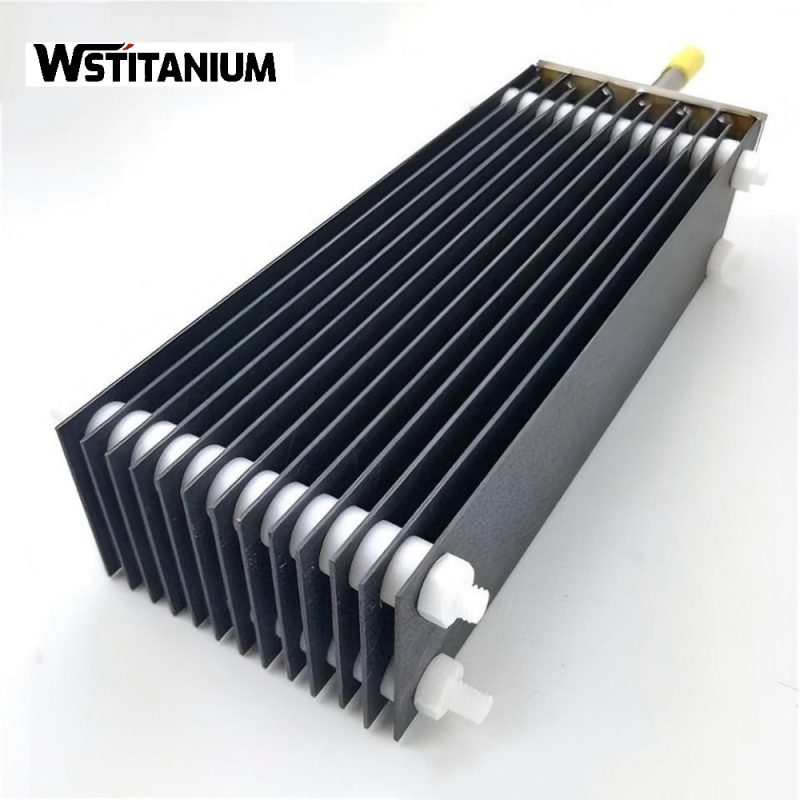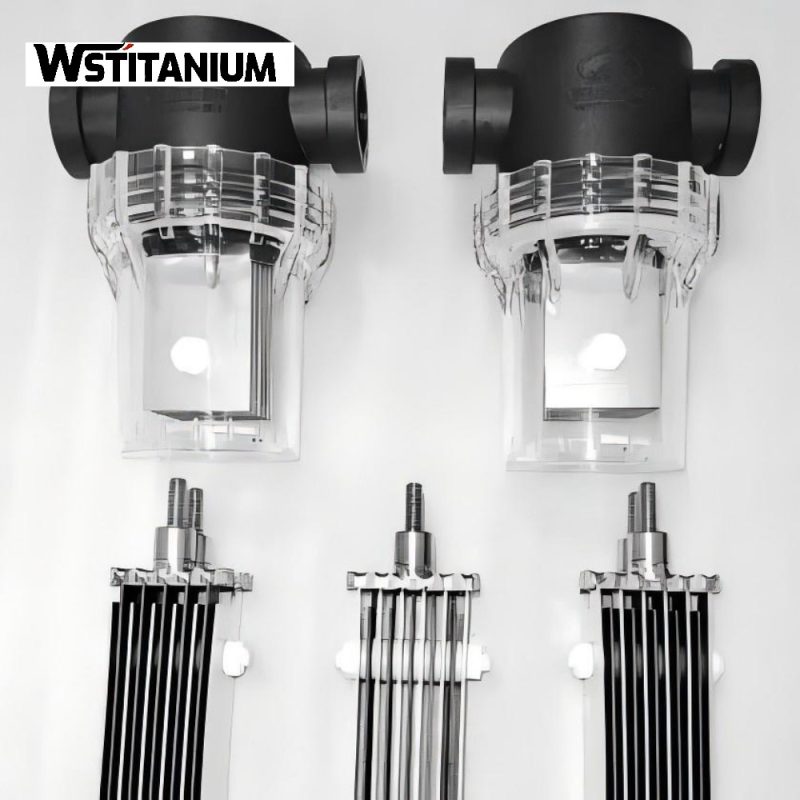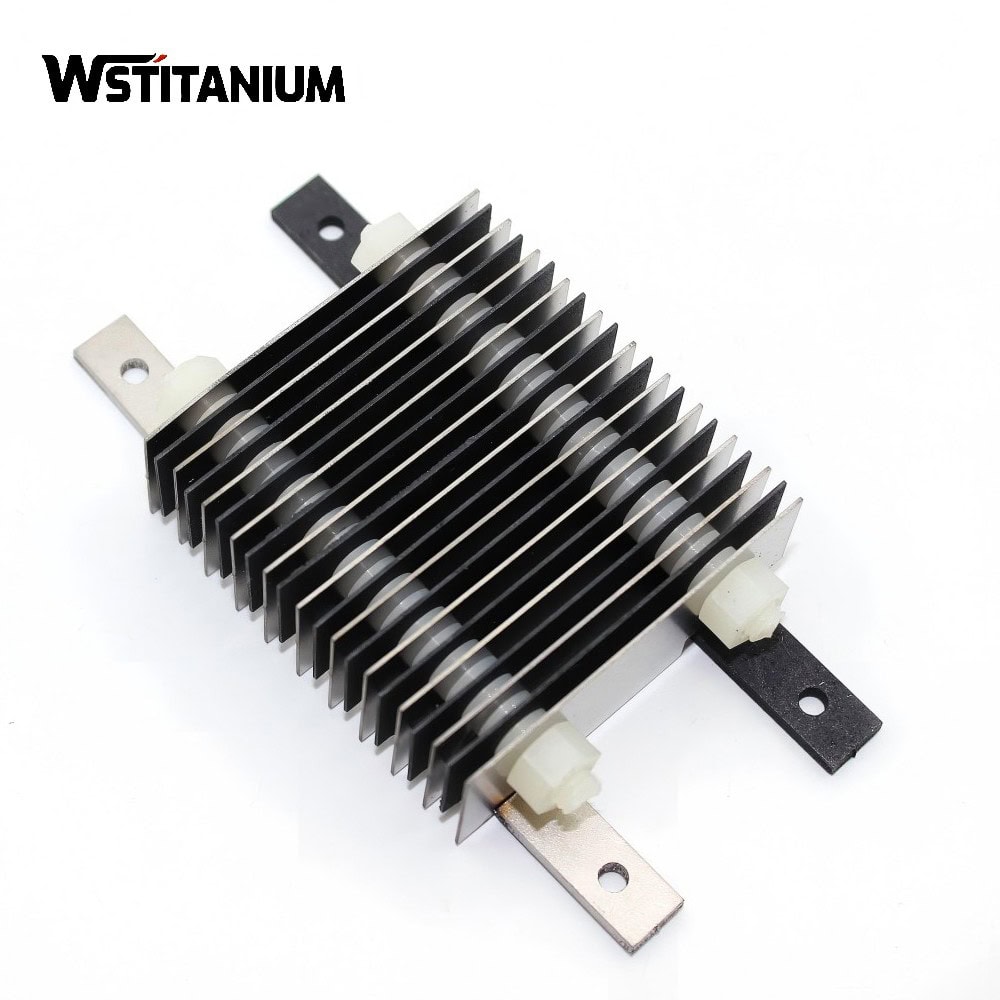

In seawater desalination technology, MMO (mixed metal oxide) titanium anodes play an indispensable core role. In reverse osmosis seawater desalination systems, MMO titanium anodes electrolyze seawater to produce hypochlorous acid, effectively killing bacteria, algae, and microorganisms. In electrodialysis seawater desalination systems, MMO titanium anodes are used directly as electrodes to achieve seawater desalination. In thermal seawater desalination systems, MMO titanium anodes are used for sterilization and algae removal in circulating cooling water.
MMO Coating System for Seawater Desalination
The performance of MMO titanium anodes depends primarily on the mixed metal oxide coating on their surface. Different coatings exhibit different electrochemical properties, making them suitable for various seawater desalination technologies and operating conditions. Wstitanium has developed four main coating systems for seawater desalination, each of which has undergone rigorous laboratory testing and field validation.
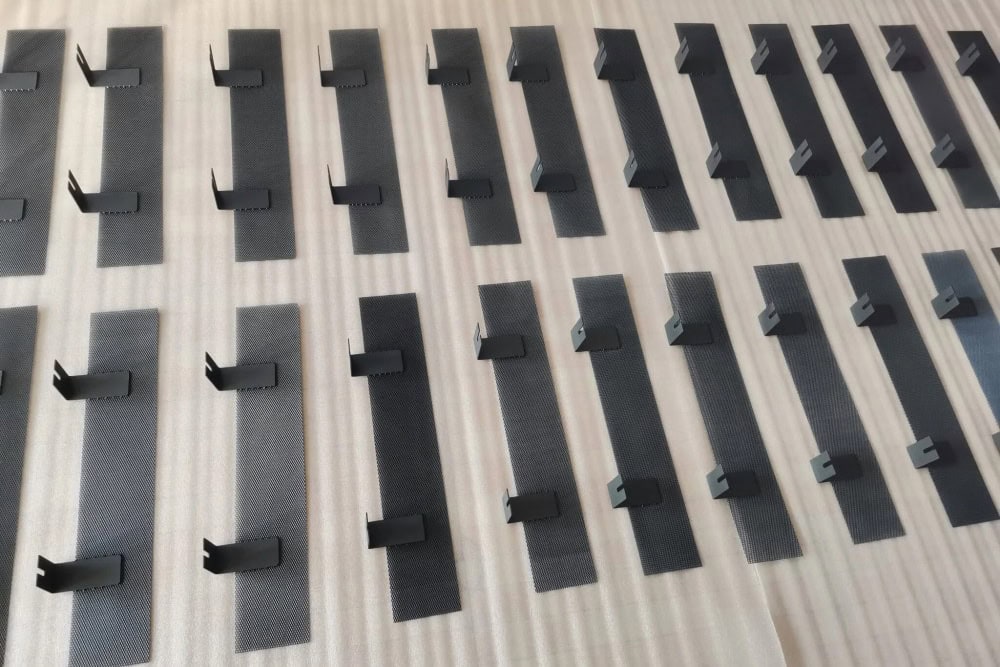
- Chlorine evolution overpotential: ≤1.13V (vs SCE)@2kA/m²
- High coating bonding strength: ≥15MPa
- Typical 30%RuO₂-10%IrO₂-60%TiO₂
- Low annual loss rate: ≤1mg/A・a
- Current efficiency: ≥92%
Ruthenium-iridium-titanium (TiO₂) coating is the most widely used coating system in seawater desalination, primarily for the chlorine evolution reaction (CER). This coating system uses ruthenium oxide (RuO₂) as the main catalytically active component, iridium oxide (IrO₂) as a stabilizer, and titanium oxide (TiO₂) as the support.
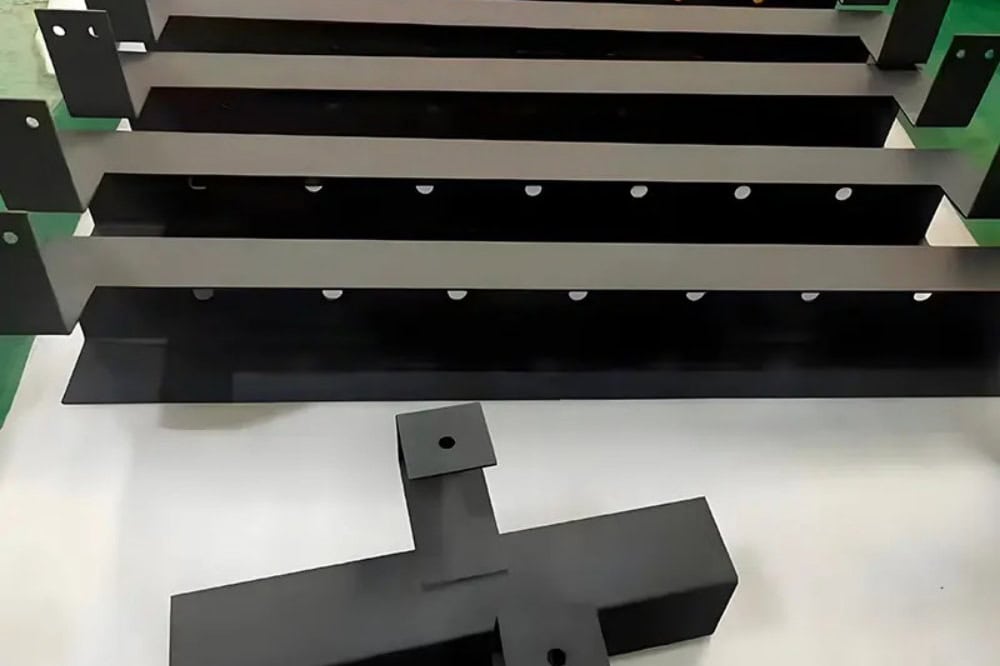
- Oxygen Evolution Overpotential: ≤1.4V (vs SCE)@2kA/m²
- Strong resistance to fluoride ions
- Current Density: ≤5000A/m²
- Good electrochemical stability
- Current efficiency: ≥95%
Iridium-tantalum-titanium coatings are primarily used for the oxygen evolution reaction (OER), suitable for electrodialysis seawater desalination systems and high-oxygen seawater treatment environments. Iridium oxide (IrO₂) is the main catalytically active component, tantalum oxide (Ta₂O₅) is the stabilizer, and titanium oxide (TiO₂) is the support.
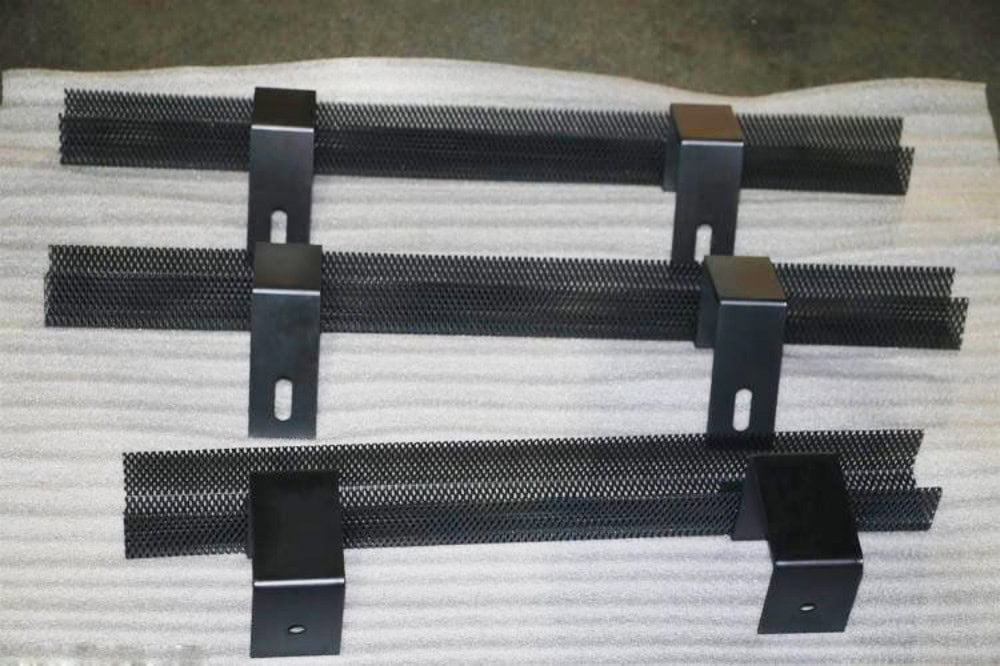
RuO₂-IrO₂-SnO₂
- Chlorine evolution overpotential: ≤1.10V (vs SCE)@2kA/m²
- Higher current efficiency: ≥97%
- Better resistance to poisoning
- Lifespan 20-30% longer than Ruthenium-iridium
- Good resistance to organic contamination
RuO₂-IrO₂-SnO₂ coating is a high-performance chlorine-electrode coating. The tin oxide (SnO₂) enhances the coating’s electrocatalytic activity and corrosion resistance. Simultaneously, the tin oxide fills the pores in the coating, making it more dense. This results in improved corrosion resistance and anti-scaling properties.
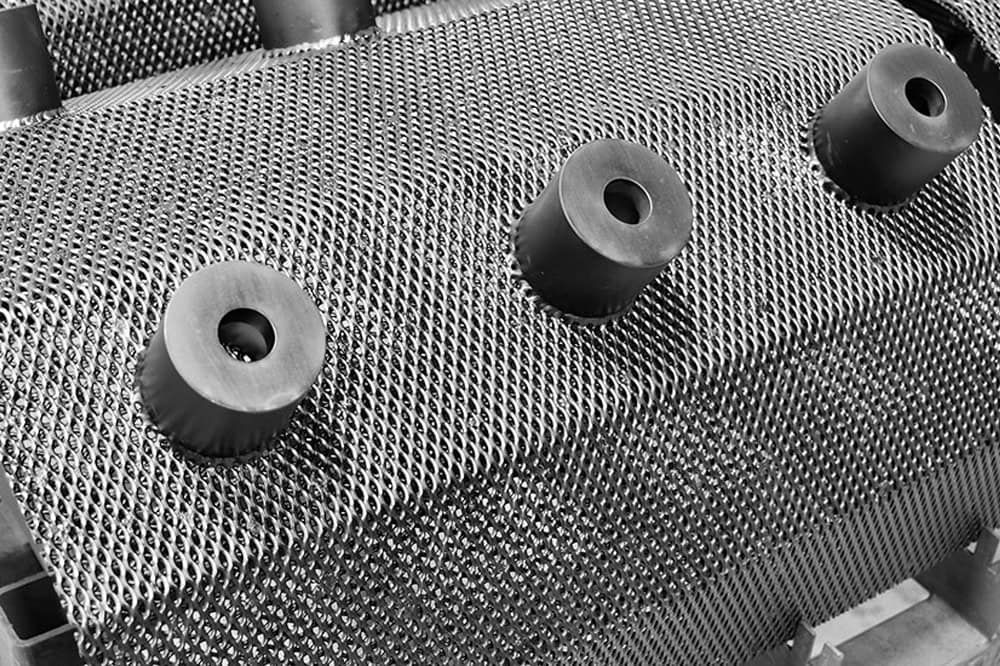
- Does not pollute water
- Extremely high chemical stability
- Excellent resistance to fluoride ion corrosion
- Stable operation at extremely low current densities
- Extremely low hydrogen evolution and oxygen evolution
Platinum coating is a high-purity electrode coating with excellent chemical stability and electrocatalytic performance. While it is more expensive, it offers irreplaceable advantages in certain specialized seawater desalination applications. It is insoluble in various electrolytes and operates efficiently at extremely low current densities.
MMO Titanium Anode Comparison
To help you more intuitively choose the right coating system for your seawater desalination project, Wstitanium has provided a detailed comparison of the technical parameters of four main coating systems. (Data source: Wstitanium Laboratory Test Report (2026), ASTM G5-14 Electrochemical Test Standard.)
| Parameters | RuO₂-IrO₂-TiO₂ (Chlorine Evolution, CER) |
IrO₂-TaO₅-TiO₂ (Oxygen Evolution, OER) |
RuO₂-IrO₂-SnO₂ (Chlorine Evolution, CER) |
Pt (H₂ Evolution / O₂ Evolution) |
|---|---|---|---|---|
| Chlorine evolution overpotential (vs SCE) @2kA/m² | ≤1.13V | ≥1.5V | ≤1.10V | ≥1.3V |
| Oxygen evolution overpotential (vs SCE) @2kA/m² | ≥1.6V | ≤1.4V | ≥1.55V | ≤1.35V |
| Current efficiency | ≥95% | ≥90% | ≥97% | ≥98% |
| Current density | 100-2000A/m² | 100-5000A/m² | 100-2500A/m² | 50-10000A/m² |
| pH | 0-12 | 0-14 | 0-12 | 0-14 |
| Applicable temperature | ≤80℃ | ≤100℃ | ≤85℃ | ≤120℃ |
| Coating thickness | 5-15 μm | 8-20 μm | 6-18 μm | 1-5 μm |
| Precious metal loading | 8-35g/m² | 12-40g/m² | 10-38g/m² | 5-20g/m² |
| Annual consumption rate | ≤1mg/A·a | ≤0.5mg/A·a | ≤0.8mg/A·a | ≤0.1mg/A·a |
| Service life | 5-15 years | 10-30 years | 7-20 years | 15-40 years |
| Anti-fluoride ion capacity | Poor (<10ppm) | General (<20ppm) | Poor (<10ppm) | Good (<100ppm) |
| Anti-scaling capacity | General | Good | Excellent | Good |
| Anti-organic pollution capacity | General | Good | Excellent | Excellent |
| Cost | Medium | Relatively high | Medium-high | High |
| Application | RO chlorination pretreatment, circulating water treatment | Electrodialysis/CEDI system, acidic wastewater treatment | Electrochlorination in large-scale seawater desalination plants, high turbidity seawater treatment | High-purity water production, fluorine-containing seawater treatment |
MMO Titanium Anode Structures
Wstitanium offers custom manufacturing services for MMO titanium anodes in various shapes to suit the structural and installation requirements of different seawater desalination equipment. Each anode shape has its specific advantages and applicable scenarios.
1. Plate Titanium Anode
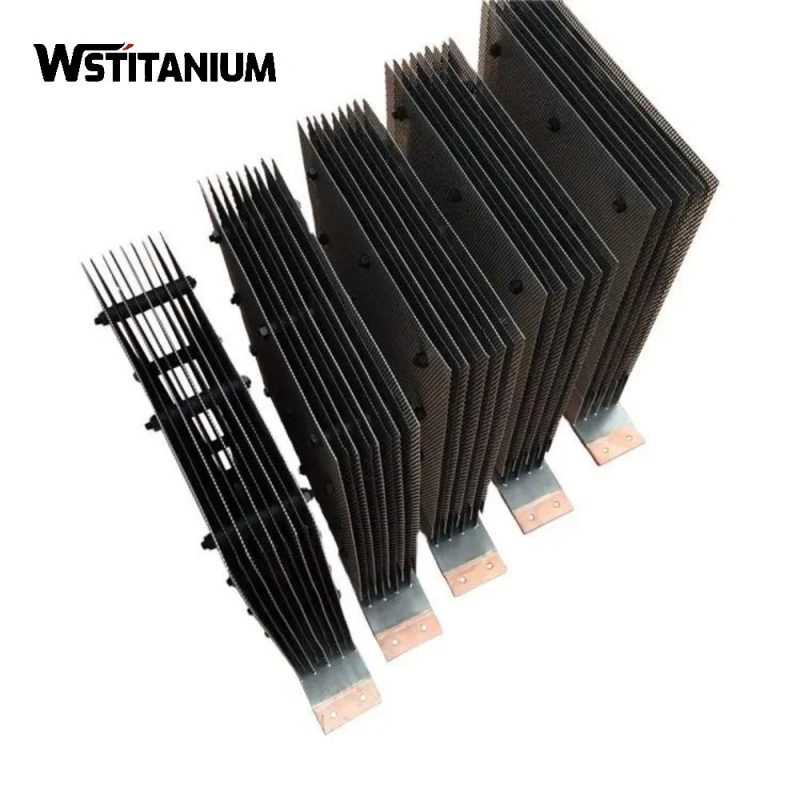
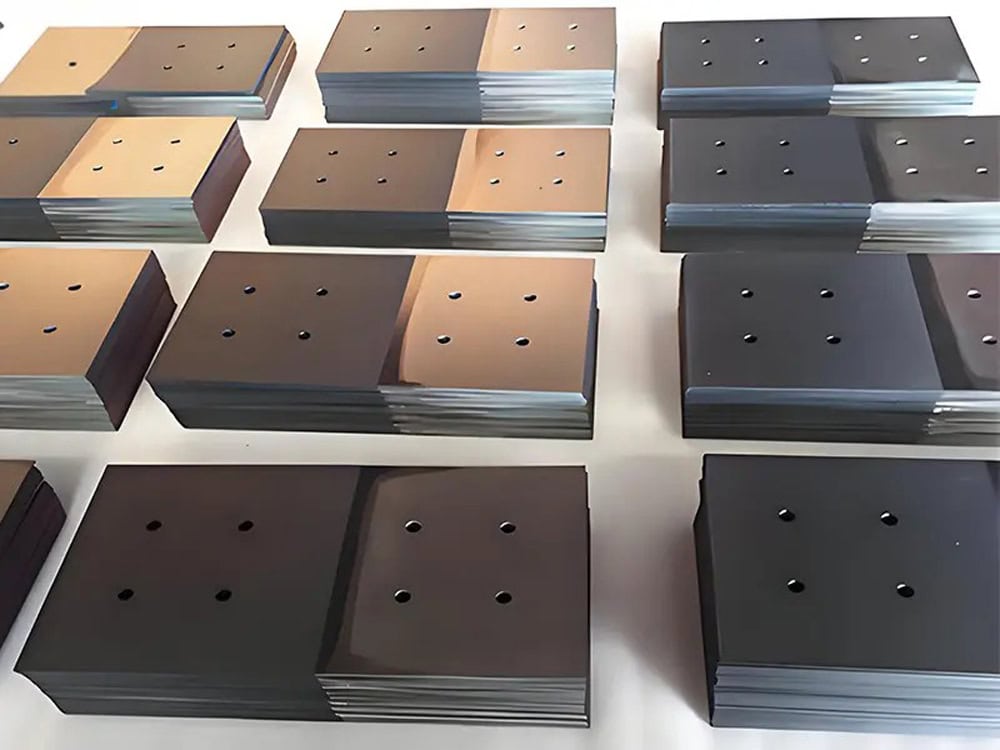
Plate titanium anodes are the most common anode shape, with a simple structure, easy manufacturing, and uniform current distribution. They have high mechanical strength, are not easily deformed, and have a lower cost.
- Thickness: 0.5-10mm
- ASTM B265-25 Grade 1/2 Titanium Plate
- Maximum Size: 2000mm × 1000mm
- Coating: Single-sided or double-sided
- Terminals: Titanium screws or copper
- Surface: Sandblasting, pickling
- Tolerance: ±0.1mm
- Flatness: ≤0.5mm/m
2. Titanium Mesh Anode
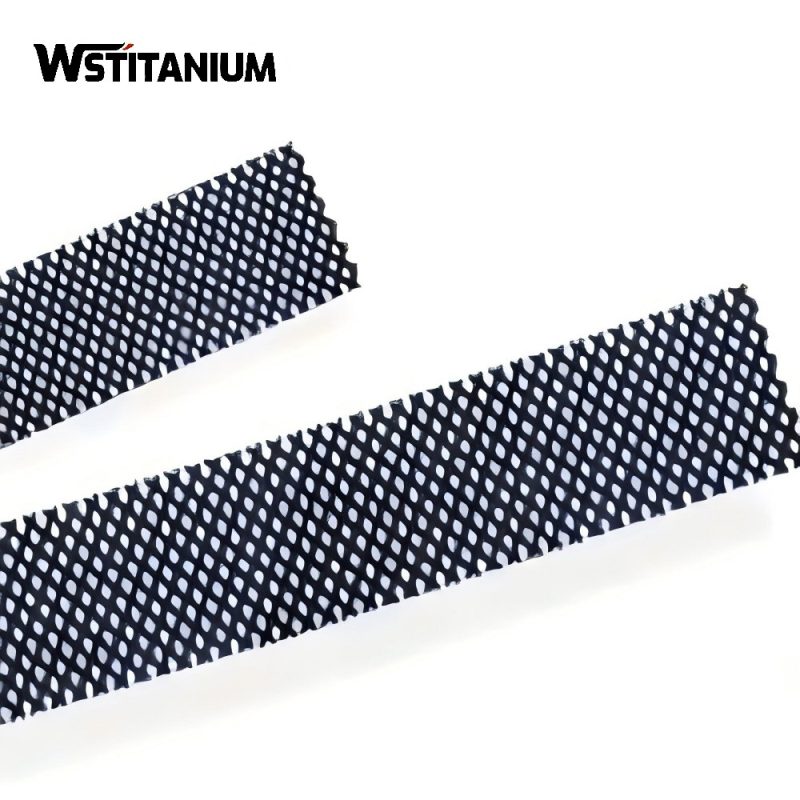
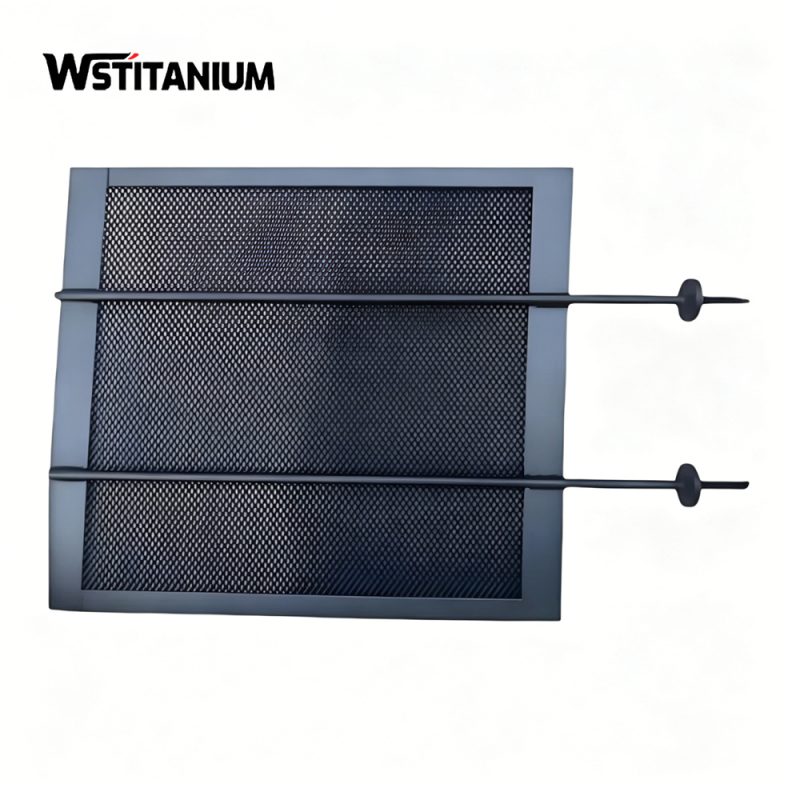
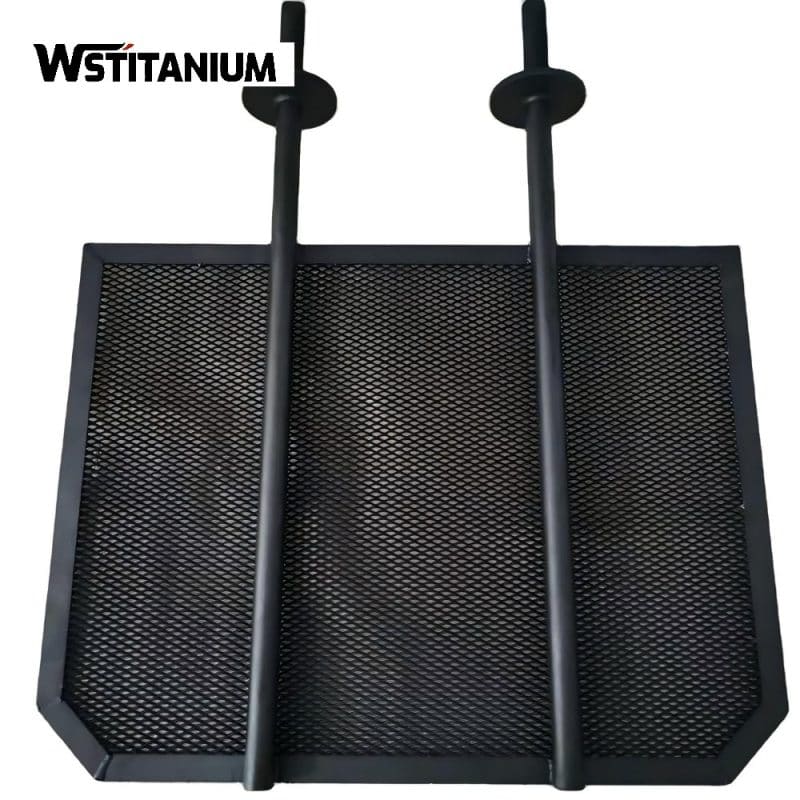
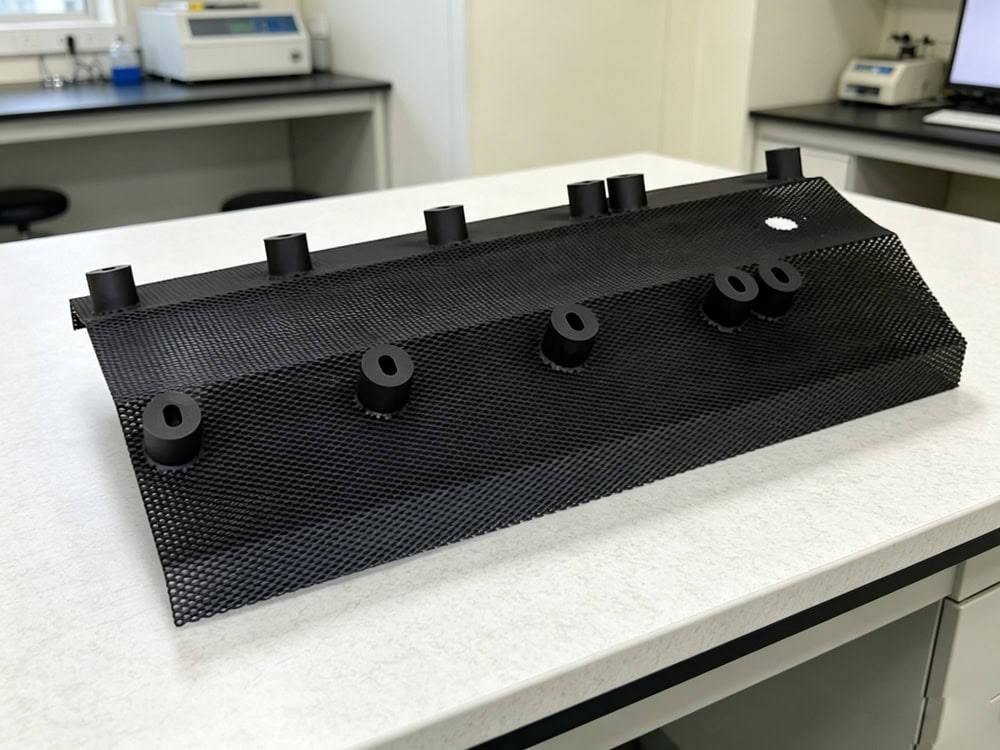
Titanium mesh anodes have a larger specific surface area and better fluid permeability, making them suitable for high-flow-rate seawater treatment systems. They offer low fluid resistance, low energy consumption, and are less prone to scaling. Common mesh types include diamond, square, and hexagonal meshes.
- ASTM B265-25 Grade 1/2 Titanium
- Mesh Size: 5×5mm-20×20mm
- Plate Thickness: 0.5-3mm
- Wire Diameter: 0.5-2mm
- Maximum Size: 2000mm×1000mm
- Coating: Double-sided coating
- Connection: Titanium screw
- Surface Finish: Sandblasting, acid pickling
3. Tubular Titanium Anode
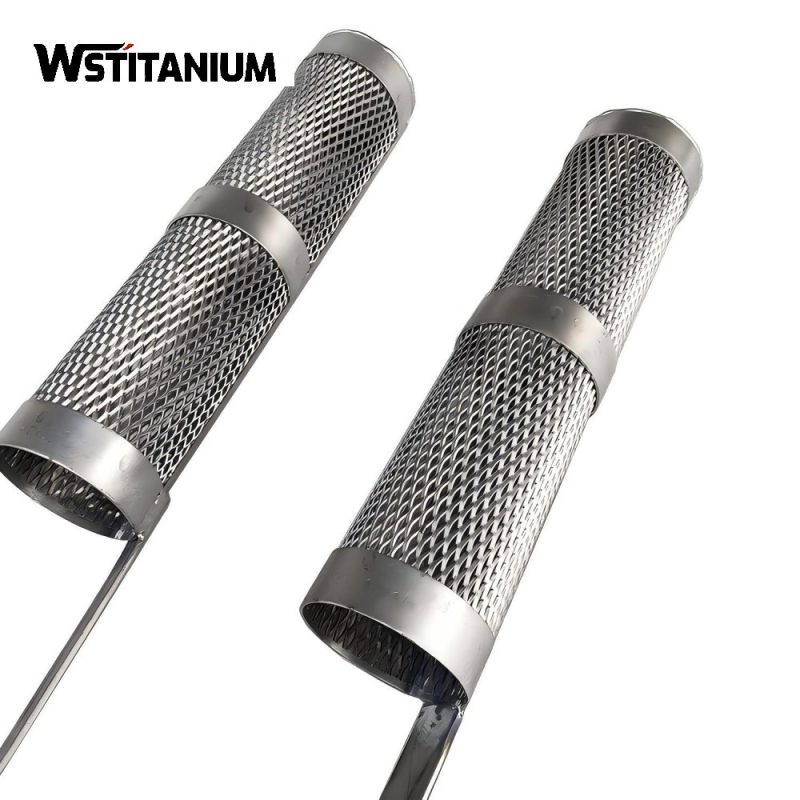
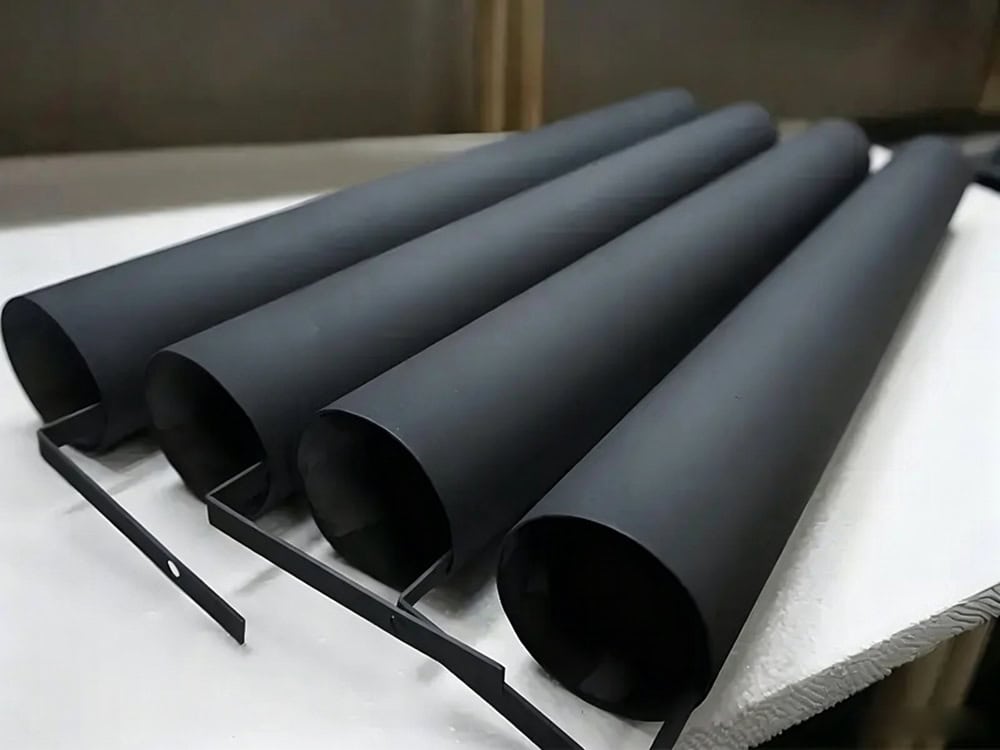
Titanium tube anodes feature a 360° uniform current distribution, suitable for applications requiring all-around protection. They offer high mechanical strength and strong impact resistance. Applications include sterilization and algae control inside seawater pipelines, cathodic protection for large storage tanks, cathodic protection for offshore platforms, and pipeline electrochlorination generators.
- ASTM B338 Gr1/2 Titanium Tube
- Diameter: Φ10mm-Φ100mm
- Wall Thickness: 0.5-5mm
- Length: 100mm-6000mm
- Epoxy resin sealing or PTFE sealing
- Surface Treatment: Sandblasting, pickling
- Tolerance: ±0.1mm
- Coating: External surface coating
4. Titanium Rod Anodes
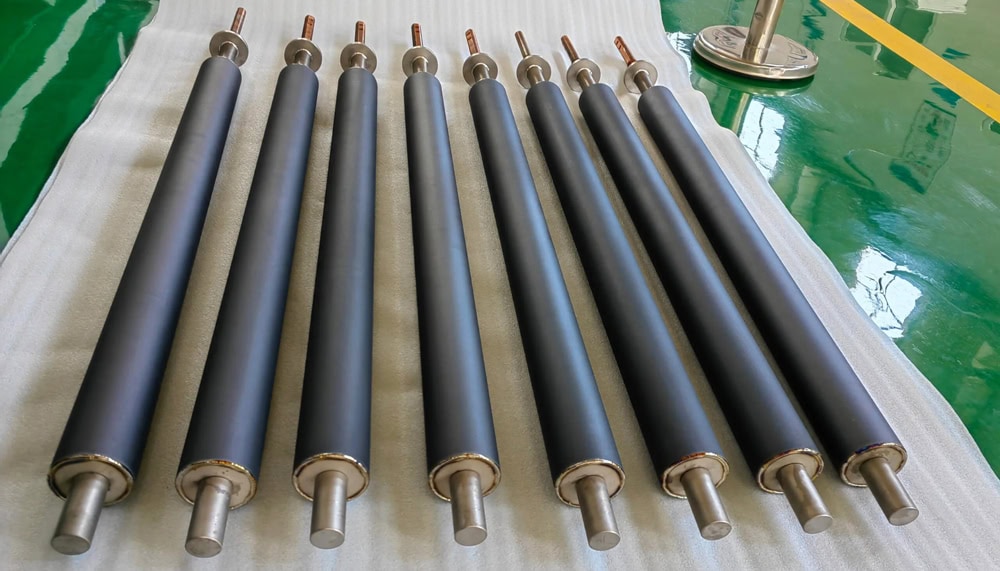
Titanium rod anodes are compact and suitable for small equipment with limited space. They offer high mechanical strength, are easy to install and replace, provide uniform current distribution, and are cost-effective. Applications include cathodic protection for small-scale seawater desalination equipment, portable seawater desalination units, laboratory electrolyzers, small sodium hypochlorite generators, and small storage tanks.
- ASTM B348/B348M Gr 1/2 bar
- Diameter: Φ5mm-Φ50mm
- Length: 50mm-2000mm
- Coating: External surface coating
- Surface Treatment: Sandblasting, pickling
- Tolerance: ±0.1mm
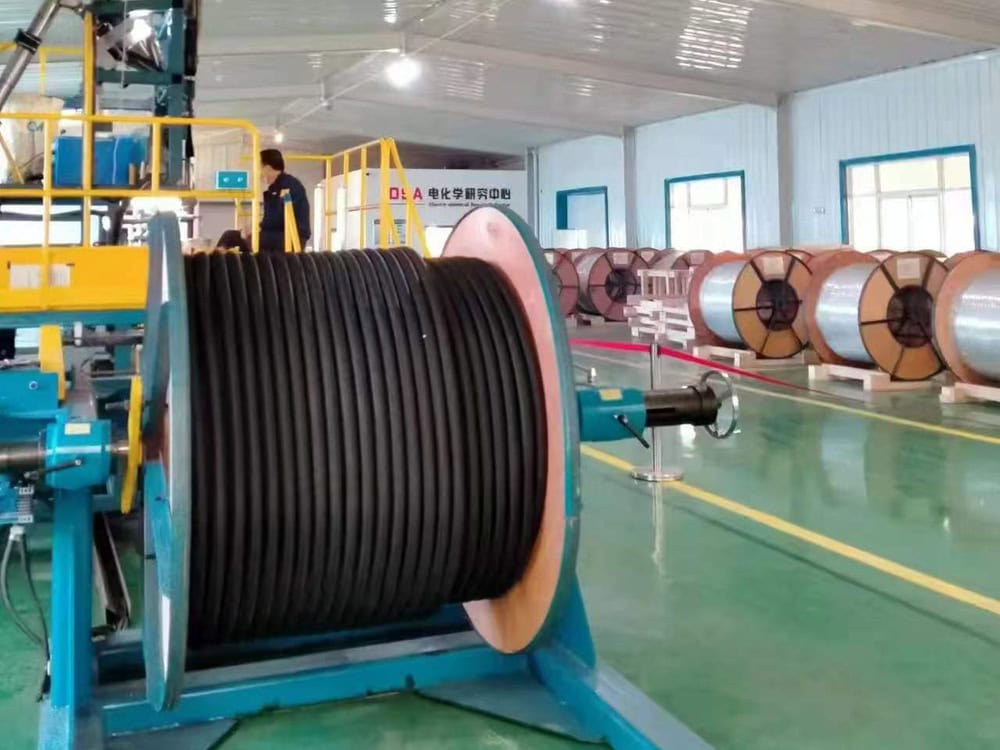
5. Titanium Strip Anodes
Strip titanium anodes offer excellent flexibility, allowing them to be bent into various shapes, making them suitable for treating irregular surfaces. They provide uniform current distribution and are cost-effective. Applications include cathodic protection of tank interiors, pipe exteriors, concrete structures, small-scale seawater desalination equipment, and ship hulls.
- ASTM B265 Gr 1/2 Titanium Strip
- Thickness: 0.1-1mm
- Width: 10-100mm
- Maximum Length: 10000m
- Coating: Double-sided coating
- Surface: Sandblasting, pickling
- Number of Bending Cycles: ≥1000 times
- Bending Radius: ≥5 times strip thickness
6. Customized Titanium Anodes
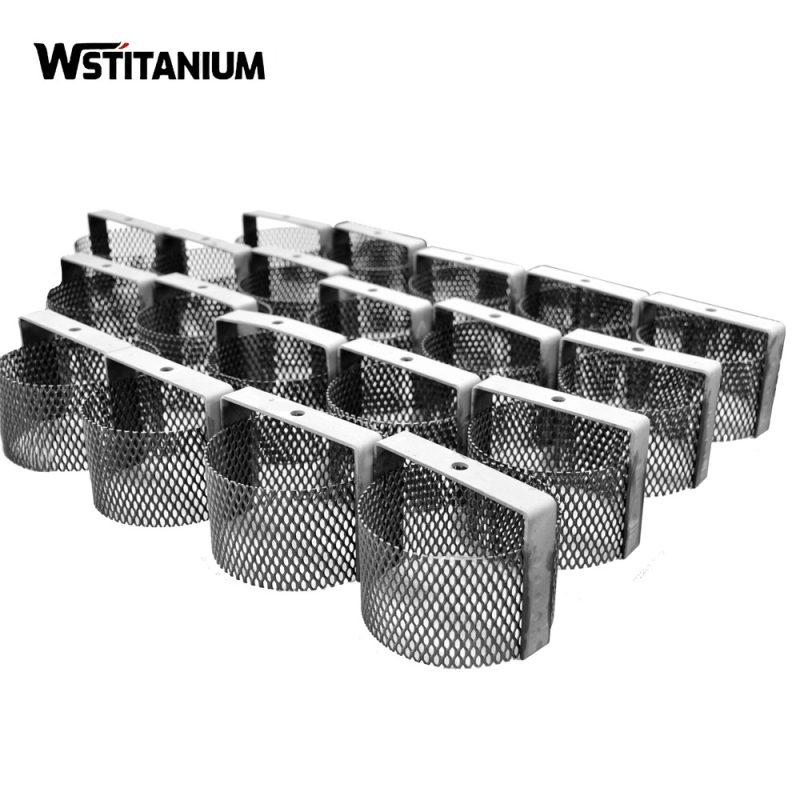
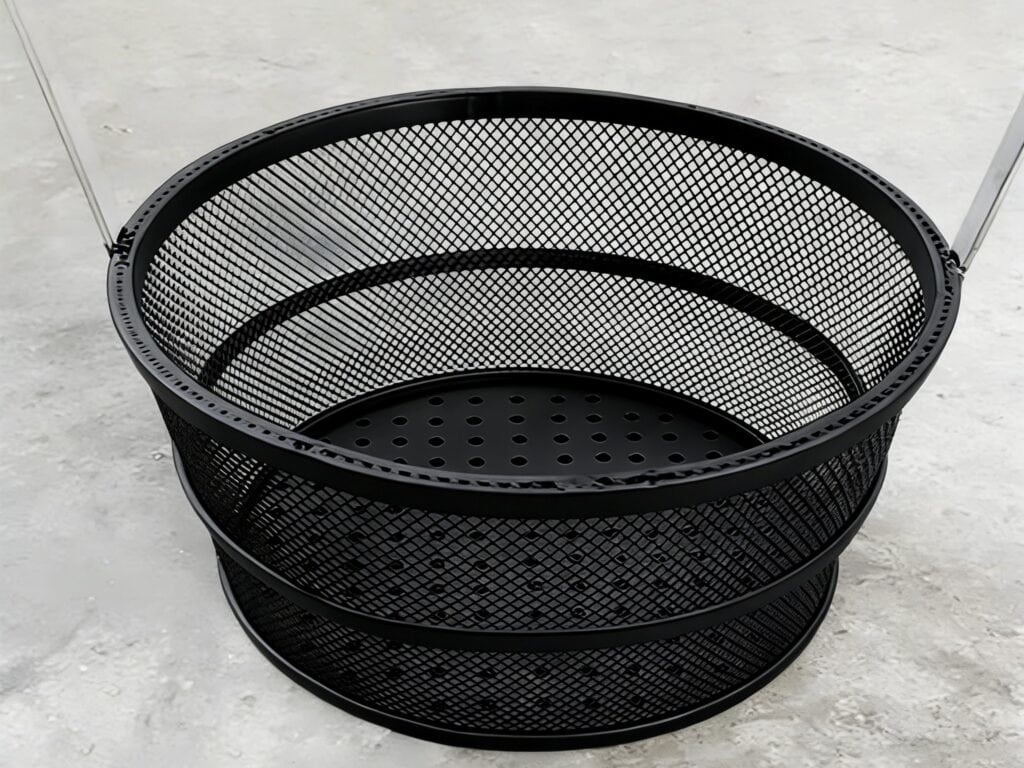
In addition to the standard shapes mentioned above, Wstitanium customizes various special shapes of titanium anodes according to specific needs, such as discs, rings, baskets, combs, and spirals. Wstitanium has invested in advanced CNC machining centers and a professional technical team to provide 1:1 customized manufacturing based on drawings or samples.
- Tolerance: ±0.1mm
- Maximum: 3000×2000×1000mm
- Surface Roughness: Ra≤6.3μm
- Argon Arc Welding, Plasma Welding
Wstitanium Customized Solutions for Seawater Desalination
Wstitanium understands that every desalination project has its unique operating conditions and requirements. Therefore, we offer comprehensive customized solutions, from coating to anode structure optimization, from manufacturing to installation guidance, providing a one-stop service for your desalination project.
1. Customized Coatings
Wstitanium customizes the most suitable coating formulation for you based on specific operating conditions, such as seawater quality, operating temperature, current density, and design life.
- Coating Thickness
- Noble Metal Loading
- Noble Metal Oxide Coatings
- Coating Structure (Single Layer, Multilayer, Gradient Layer)
- Coating Technology (Thermal Decomposition, Sol-Gel, Electroplating)
- Determination of Chlorine and Oxygen Evolution Overpotentials
- Determination of Current Efficiency and Stability
- Accelerated Life Testing
- Coating Adhesion Testing
- Corrosion Resistance Testing
2. Customized Substrate Specifications
| Properties | Grade 1 | Grade 2 | Grade 5 |
|---|---|---|---|
| Tensile Strength (MPa) | ≥240 | ≥345 | ≥895 |
| Yield Strength (MPa) | ≥170 | ≥275 | ≥825 |
| Elongation (%) | ≥24 | ≥20 | ≥10 |
| Hardness (HB) | ≤120 | ≤140 | ≤350 |
- Substrate Material: Grade 1, Grade 2, Grade 5 (Ti-6Al-4V)
- Shape and Size: Customized according to drawings
- Surface Finish: Sandblasting, pickling, polishing, etc.
- Tolerance: ±0.1mm
- Welding: TIG welding, plasma welding
| Element | Grade 1 | Grade 2 | Grade 5 (Ti-6Al-4V) |
|---|---|---|---|
| Ti | Balance | Balance | Balance |
| Al | ≤0.20 | ≤0.20 | 5.5-6.75 |
| V | ≤0.10 | ≤0.10 | 3.5-4.5 |
| Fe | ≤0.20 | ≤0.30 | ≤0.40 |
| C | ≤0.08 | ≤0.08 | ≤0.10 |
| N | ≤0.03 | ≤0.03 | ≤0.05 |
| H | ≤0.015 | ≤0.015 | ≤0.015 |
| O | ≤0.18 | ≤0.25 | ≤0.20 |
3. Customized Titanium Anodes for Electrodialysis Seawater Desalination
| Parameters | Specifications |
|---|---|
| Base Material | ASTM B265-25 Grade 1 Titanium Plate |
| Coating | IrO₂-TaO₅-TiO₂ Gradient Coating |
| Coating Thickness | 10-15 μm |
| Oxygen Evolution Overpotential (vs SCE) @500A/m² | ≤1.35V |
| Chlorine Evolution Overpotential (vs SCE) @500A/m² | ≥1.5V |
| Operating Current Density | 100-1000A/m² |
| Applicable pH Range | 0-12 |
| Applicable Temperature | ≤60℃ |
| Design Service Life | 8-15 Years |
| Plate Thickness | 0.8-3mm |
| Maximum Dimension | 1200mm × 600mm |
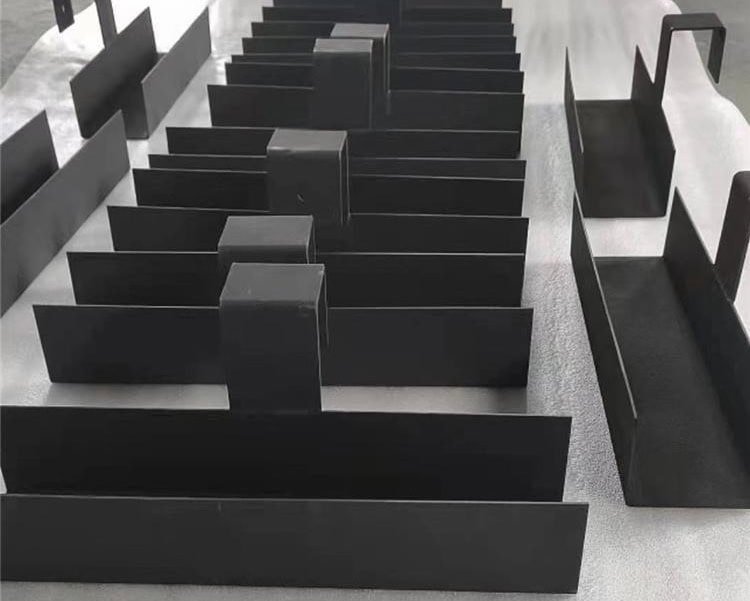
Electrodialysis seawater desalination systems have specific requirements for titanium anodes, such as high oxygen evolution activity, low chlorine evolution activity, and good corrosion resistance. Wstitanium has developed titanium anode products specifically for electrodialysis seawater desalination.
4. Customized titanium anodes for reverse osmosis electrochlorination
| Parameters | Specifications |
|---|---|
| Base Material | ASTM B265-25 Grade 2 Titanium Mesh |
| Coating | RuO₂-IrO₂-SnO₂ Coating |
| Coating Thickness | 8-12 μm |
| Chlorine Evolution Overpotential (vs SCE) @1000A/m² | ≤1.10V |
| Current Efficiency | ≥97% |
| Operating Current Density | 500-2000A/m² |
| pH | 3-10 |
| Temperature | ≤45℃ |
| Design Service Life | 7-12 Years |
| Mesh Specification | 10×10mm |
| Plate Thickness | 1.0-2.0mm |
| Maximum Dimension | 2000mm×1000mm |
| Coating Coverage | Double-sided Coating |
| Terminal Connection | Welded Titanium Frame and Titanium Screw |
| Surface Treatment | Sandblasting, Pickling |
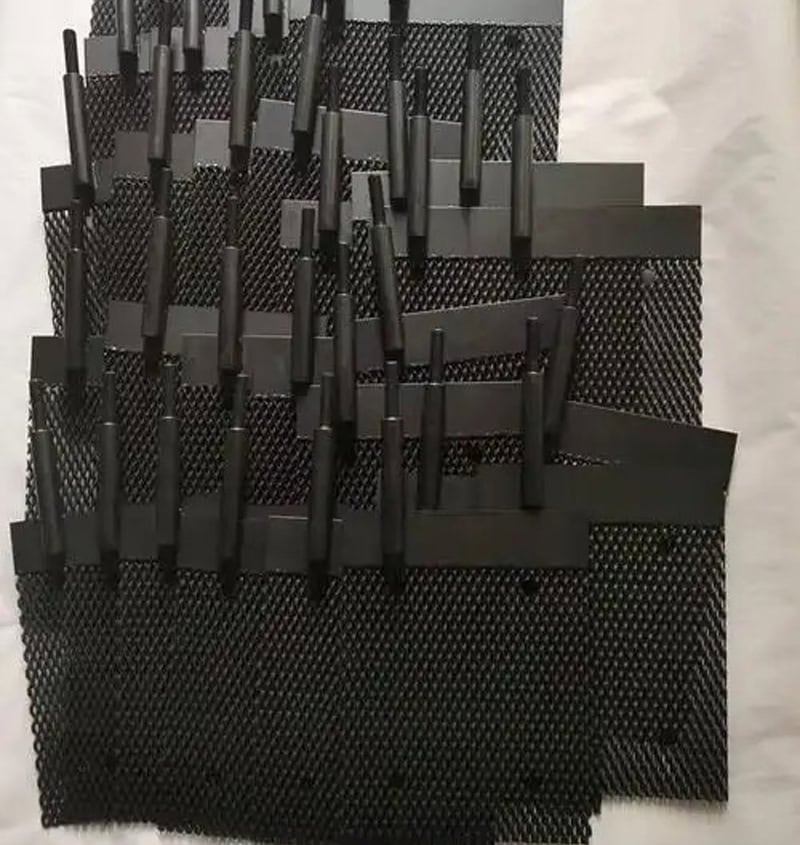
The electrochlorination pretreatment of reverse osmosis seawater desalination systems requires titanium anodes with high chlorine evolution activity, low energy consumption, and long lifespan. Wstitanium has developed a dedicated ruthenium-iridium-tin coated titanium anode for reverse osmosis systems.
5. Customized Titanium Anodes for Thermal Seawater Desalination
| Parameters | Specifications |
|---|---|
| Base Material | ASTM B338-17 (2021) Grade 2 Seamless Titanium Tube |
| Coating | RuO₂-IrO₂-TiO₂ Coating |
| Coating Thickness | 10-15 μm |
| Chlorine Evolution Overpotential (vs SCE) @1000A/m² | ≤1.13V |
| Current Efficiency | ≥95% |
| Operating Current Density | 500-1500A/m² |
| Applicable pH Range | 2-12 |
| Applicable Temperature | ≤80℃ |
| Design Service Life | 5-10 Years |
| Tube Diameter | Φ25mm-Φ50mm |
| Wall Thickness | 1.0-2.0mm |
| Length | 1000mm-3000mm |
| Coating Coverage | Outer Surface Coating |
| Terminal Connection | Titanium Screw Welded at One End |
| Sealing | Epoxy Resin Sealing |
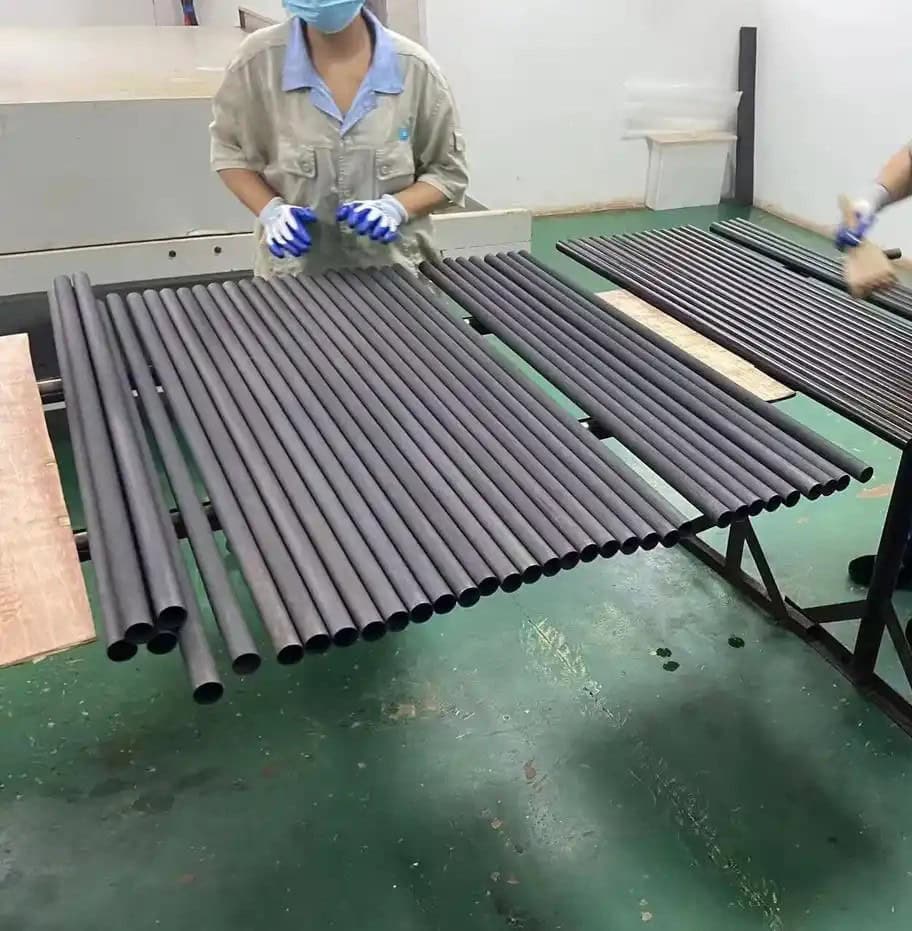
The circulating cooling water in thermal seawater desalination systems requires efficient sterilization and algae removal treatment to prevent scaling and corrosion of heat exchangers. Wstitanium has developed dedicated titanium anode products for thermal seawater desalination systems.
FAQ
MMO titanium anodes primarily serve two roles in seawater desalination:
Electrochlorination pretreatment: In reverse osmosis seawater desalination systems, MMO titanium anodes electrolyze seawater to produce hypochlorous acid (HClO) and hypochlorite ions (ClO⁻). These strong oxidants kill bacteria, algae, and microorganisms in seawater, preventing biofouling of the reverse osmosis membrane. Simultaneously, hypochlorous acid can also oxidize organic matter and reducing substances in seawater, reducing membrane fouling.
Electrodialysis desalination: In electrodialysis seawater desalination systems, MMO titanium anodes act as electrodes. Under the influence of a DC electric field, they drive ions in seawater to migrate through the ion exchange membrane, achieving seawater desalination.
Furthermore, in thermal seawater desalination systems, MMO titanium anodes are also used for sterilization and algae removal of circulating cooling water, preventing scaling and corrosion of heat exchangers.
The choice of coating system depends primarily on your seawater desalination technology and operating conditions:
Reverse osmosis electrochlorination pretreatment: Ruthenium-iridium-titanium (RuO₂-IrO₂-TiO₂) or Ruthenium-iridium-tin (RuO₂-IrO₂-SnO₂) coatings are recommended. Both coatings offer excellent chlorine evolution activity and resistance to chloride ion corrosion. The Ruthenium-iridium-tin coating offers better resistance to scaling and organic contamination, making it suitable for large-scale desalination plants and situations with poor water quality.
Electrodialysis (ED) and continuous electrodeionization (CEDI) systems: Iridium-tantalum-titanium (IrO₂-Ta₂O₅-TiO₂) coatings are recommended. This coating offers excellent oxygen evolution activity and resistance to acid corrosion.
High-purity drinking water systems: Platinum (Pt) coatings are recommended. This coating exhibits extremely high chemical stability, with no heavy metal ion leaching, and will not pollute water quality.
For seawater desalination systems containing fluoride ions: Platinum (Pt) coatings are recommended, as they offer excellent resistance to fluoride ion corrosion.
For circulating water treatment in thermal seawater desalination systems: Ruthenium-iridium-titanium (RuO₂-IrO₂-TiO₂) coatings are recommended, as they offer good temperature resistance and chloride ion corrosion resistance.
ASTM B265-25: Standard for Titanium and Titanium Alloy Sheets, Plates, and Strips
ASTM B338-17 (2021): Standard for Seamless and Welded Titanium and Titanium Alloy Tubes for Condensers and Heat Exchangers
ASTM B348/B348M-21: Standard for Titanium and Titanium Alloy Rods and Wires
ASTM G5-14: Standard for Test Methods of Electrochemical Reference Electrodes
GB/T 3620.1-2016: Grades and Chemical Compositions of Titanium and Titanium Alloys
GB/T 23756-2021: Standard for Titanium-Based Oxide Coated Electrodes for Electrochemical Use
HG/T 2471-2007: Technical Conditions for Coating Metal Anodes for Electrolytic Cells
ISO 9001:2015: Quality Management System Standard
RoHS: Restriction of Hazardous Substances Directive
CE: European Conformity Certification
No. The coating of the MMO titanium anode is composed of stable noble metal oxides. During electrolysis, it does not dissolve or release heavy metal ions, and therefore will not pollute the water. Wstitanium products meet drinking water hygiene standards and are safe for use in drinking water production systems.
The platinum coating has a purity ≥99.99%, and will not release any harmful substances, making it particularly suitable for high-purity drinking water production systems and seawater desalination systems in the medical and pharmaceutical industries.
The main differences between the MMO titanium anodes used in electrodialysis systems and those used in electrochlorination systems lie in the coating system and performance requirements:
Coating System: Electrodialysis systems primarily involve the oxygen evolution reaction, therefore an iridium-tantalum-titanium (IrO₂-Ta₂O₅-TiO₂) coating is used. Electrochlorination systems primarily involve the chlorine evolution reaction, therefore a ruthenium-iridium-titanium (RuO₂-IrO₂-TiO₂) or ruthenium-iridium-tin (RuO₂-IrO₂-SnO₂) coating is used.
Performance Requirements: Electrodialysis systems require anodes with high oxygen evolution activity and low chlorine evolution activity to reduce chlorine production and improve water quality. Electrochlorination systems require anodes with high chlorine evolution activity and low oxygen evolution activity to increase sodium hypochlorite production and reduce energy consumption.
Structural Design: Electrodialysis systems generally use plate-shaped anodes with a single-sided coating. Electrochlorination systems generally use mesh-shaped anodes with double-sided coatings to improve specific surface area and fluid permeability.
Operating Conditions: Electrodialysis systems generally have lower operating current densities (100-1000 A/m²) and a wider pH range (0-12); electrochlorination systems generally have higher operating current densities (500-2000 A/m²) and a narrower pH range (3-10).
The energy consumption of MMO titanium anodes in a seawater desalination system depends on the operating current density and cell voltage.
Electrochlorination system: Energy consumption is approximately 2-4 kWh/kg sodium hypochlorite.
Electrodialysis system: Energy consumption is approximately 3-6 kWh/m³ freshwater.
Compared to traditional anodes, MMO titanium anodes reduce energy consumption by 10-30% due to their lower chlorine and oxygen evolution overpotentials. For example, compared to graphite anodes, MMO titanium anodes can reduce energy consumption by more than 20% in electrochlorination systems. Compared to lead anodes, MMO titanium anodes can reduce energy consumption by more than 30% in electrodialysis systems.
Wstitanium’s high-performance coated products can further reduce energy consumption; for example, our ruthenium-iridium-tin coated titanium anodes can achieve energy consumption as low as below 2 kWh/kg sodium hypochlorite in electrochlorination systems.